View methods side by side.
Choose up to four methods. Add them using the search and share the comparison by copying its link.
Selected:PARA MethodLASR (Lightweight Approach for Software Reviews)VRIO FrameworkBusiness Model Canvas
| Criterion |  Knowledge Modeling PARA Method |  Architecture LASR (Lightweight Approach for Software Reviews) | 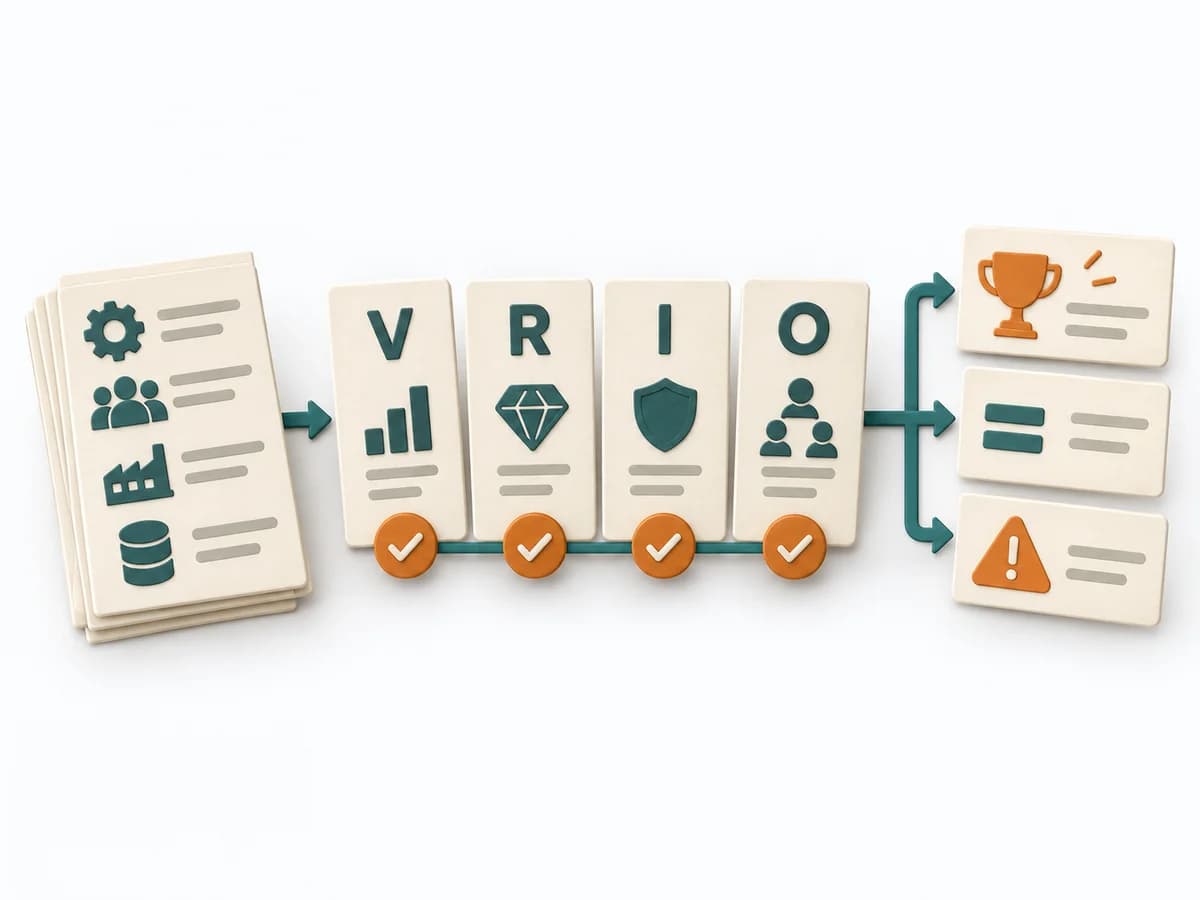 Business Strategy VRIO Framework | 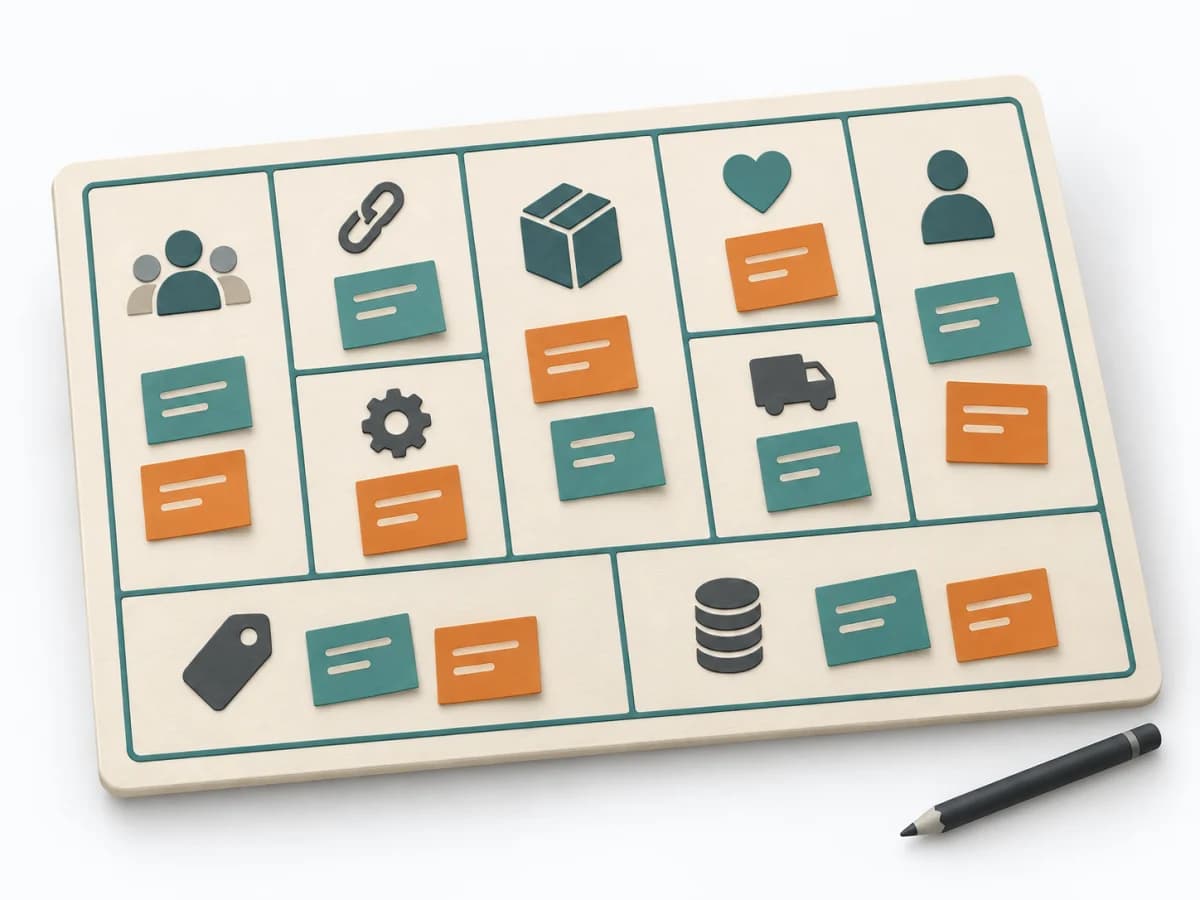 Business Strategy Business Model Canvas |
|---|---|---|---|---|
Purposedifferent | The PARA Method organizes knowledge into Projects, Areas, Resources, and Archives. It creates order when digital notes, files, and tasks no longer cleanly fit current work. | LASR helps development teams identify where their software falls short of important quality goals and which improvements to consider. A small group with existing system knowledge can make an initial assessment and investigate open questions in more detail. | The VRIO Framework rates resources and capabilities on whether they are Valuable, Rare, Inimitable, and Organized. It compares strengths, risks, market logic, and courses of action. The result is captured as a VRIO table and strategic actions. | The Business Model Canvas condenses a business model to its key building blocks and assumptions. It makes variants quickly comparable and reveals gaps before validation or implementation begins. |
Complexitysame | Medium | Medium | Medium | Medium |
Timedifferent | 1-3 h Setup, laufend | 3–4 h for initial assessment; preparation and deeper analysis additional | 90-180 min | 1-2 h |
Participantsdifferent | 1 | 1 or a small team; particularly suitable for 3–4 people | 3-6 | 2-8 |
Formatdifferent | Async | Workshop + async | Workshop | Workshop + async |
Outputdifferent | PARA Structure, Project Notes, Knowledge Archive | Lean Mission Statement describing the software’s purpose, Prioritized quality goals and evaluation criteria, Risks and estimated gaps against quality goals, More closely examined findings and open checks | VRIO Table, Strategic Actions | Business Model Canvas, Assumption List, Business Hypotheses |
Tagsno overlap | KnowledgeProductivityOrganization | ArchitectureQualityRiskAssessmentLean | StrategyDiagnosisBusiness modelCapability | Business modelStrategyValueInnovation |