View methods side by side.
Choose up to four methods. Add them using the search and share the comparison by copying its link.
| Criterion |  Knowledge Modeling PARA Method | 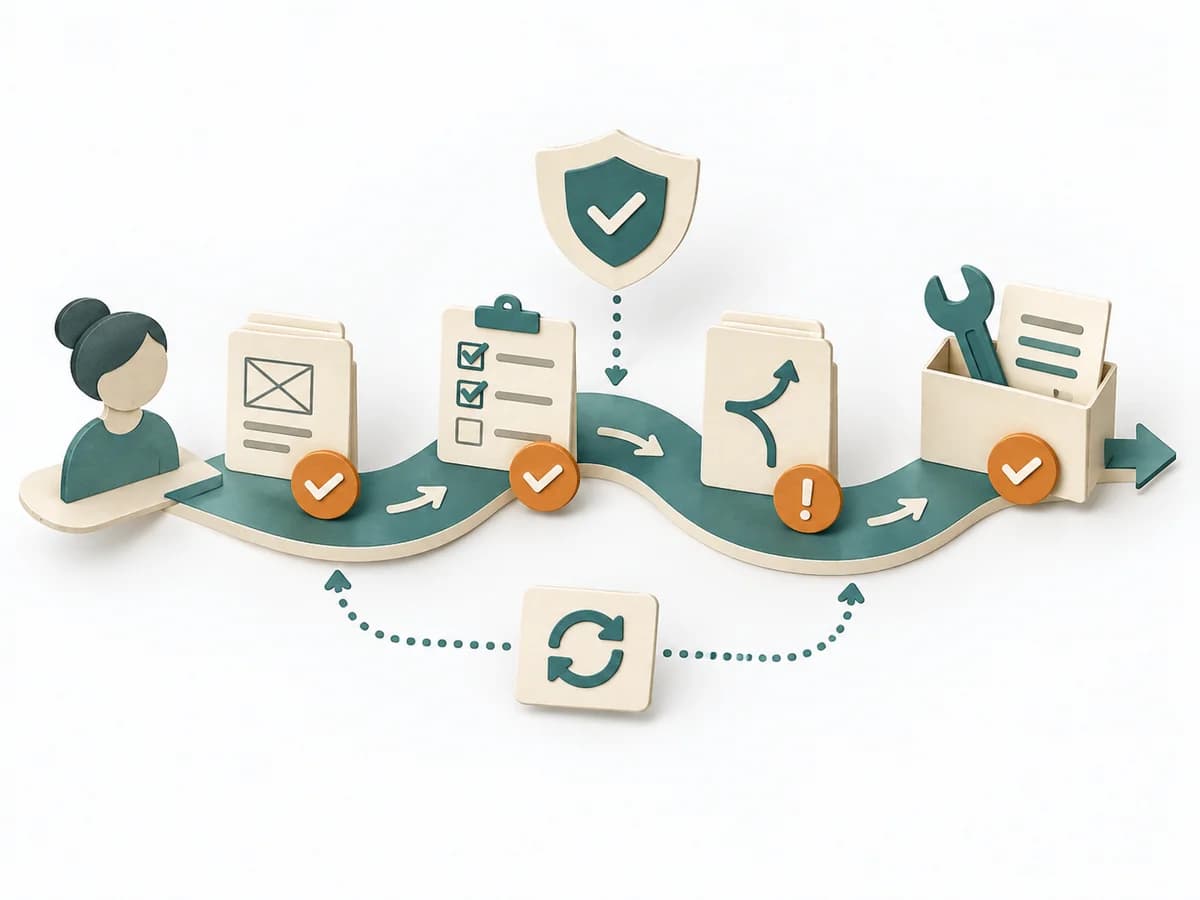 Engineering Golden Path |  Agile ROAM Board |  Decision Making Decision Rights Mapping |
|---|---|---|---|---|
Purposedifferent | The PARA Method organizes knowledge into Projects, Areas, Resources, and Archives. It creates order when digital notes, files, and tasks no longer cleanly fit current work. | When teams need a reliable default path for frequent use, sprawl quickly emerges without any guiding logic. Golden Path bundles the preferred path so good practice becomes easy and deviation becomes deliberate. | When work needs to move between different states or columns, it makes that movement and its handoffs legible. It sorts work by value, risk, and delivery ability. The result is captured as a ROAM Board and an Owner List. | In organizations with many stakeholders, it often blurs who actually decides and who is merely consulted. It separates options, evaluation criteria, and open risks. The result is captured as a Decision Rights matrix and an agreement. |
Complexitydifferent | Medium | Medium | Low | Medium |
Timedifferent | 1-3 h Setup, laufend | 1-3 Tage Setup, laufend | 20-40 min initial, dann laufend | 90-180 min |
Participantsdifferent | 1 | 2-8 | 3-15 | 4-12 |
Formatdifferent | Async | Workshop + async | Workshop + async | Workshop |
Outputdifferent | PARA Structure, Project Notes, Knowledge Archive | Golden Path Guide, Templates, Quality Checks | ROAM Board, Owner List | Decision Rights Matrix, Agreement |
Tagsno overlap | KnowledgeProductivityOrganization | EngineeringProductivityGovernance | RiskAgileTrackingAlignment | DecisionGovernanceAlignmentResponsibility |