View methods side by side.
Choose up to four methods. Add them using the search and share the comparison by copying its link.
| Criterion |  Knowledge Modeling PARA Method | 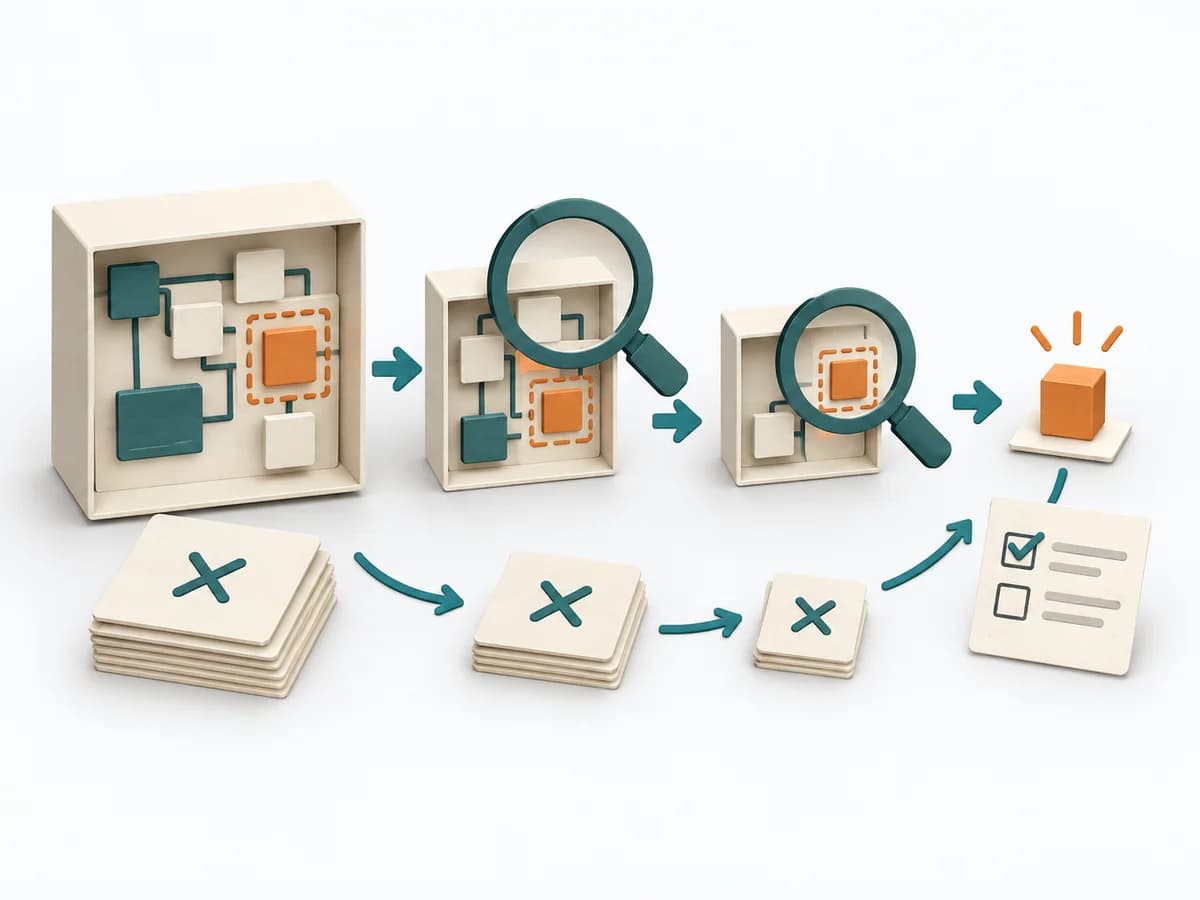 Engineering Fault Isolation |  Engineering Goal Question Metric | 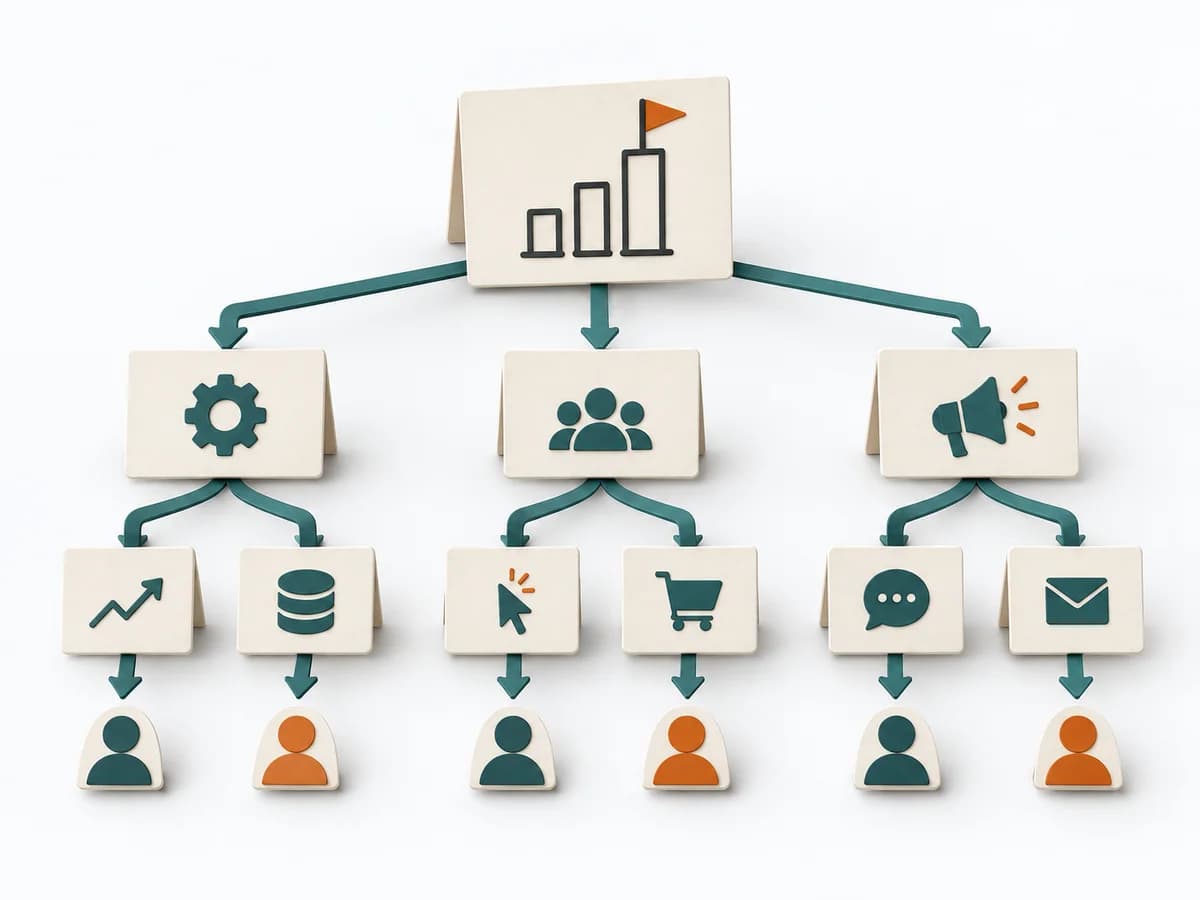 Product Strategy KPI Tree |
|---|---|---|---|---|
Purposedifferent | The PARA Method organizes knowledge into Projects, Areas, Resources, and Archives. It creates order when digital notes, files, and tasks no longer cleanly fit current work. | In technical failures, the visible symptom often gets mixed up with the actual cause. Fault Isolation narrows the fault space and progressively reduces which part of the system is truly affected. | Helps clarify technical problems, hypotheses, and next steps in concrete terms. It breaks a technical problem into testable parts. The result is captured as a GQM table and metric briefs. | When metrics across the organization drift apart, it arranges drivers and effects under one shared logic. It connects customer value, product logic, and decision priorities. The result is captured as a KPI tree and owner list. |
Complexitysame | Medium | Medium | Medium | Medium |
Timedifferent | 1-3 h Setup, laufend | 30-180 min | 90-180 min | 90-180 min initial, dann laufend |
Participantsdifferent | 1 | 1-6 | 3-6 | 3-8 |
Formatdifferent | Async | Workshop + async | Workshop | Workshop + async |
Outputdifferent | PARA Structure, Project Notes, Knowledge Archive | Fault Isolation Map, Test Log, Excluded Hypotheses, Narrowed Fault Area | GQM Table, Metric Profiles | KPI Tree, Owner List |
Tagsno overlap | KnowledgeProductivityOrganization | TroubleshootingDiagnosisEngineering | MetricsMeasurementEngineeringAlignment | MetricsStrategyAlignmentMeasurement |