View methods side by side.
Choose up to four methods. Add them using the search and share the comparison by copying its link.
| Criterion |  Knowledge Modeling PARA Method | 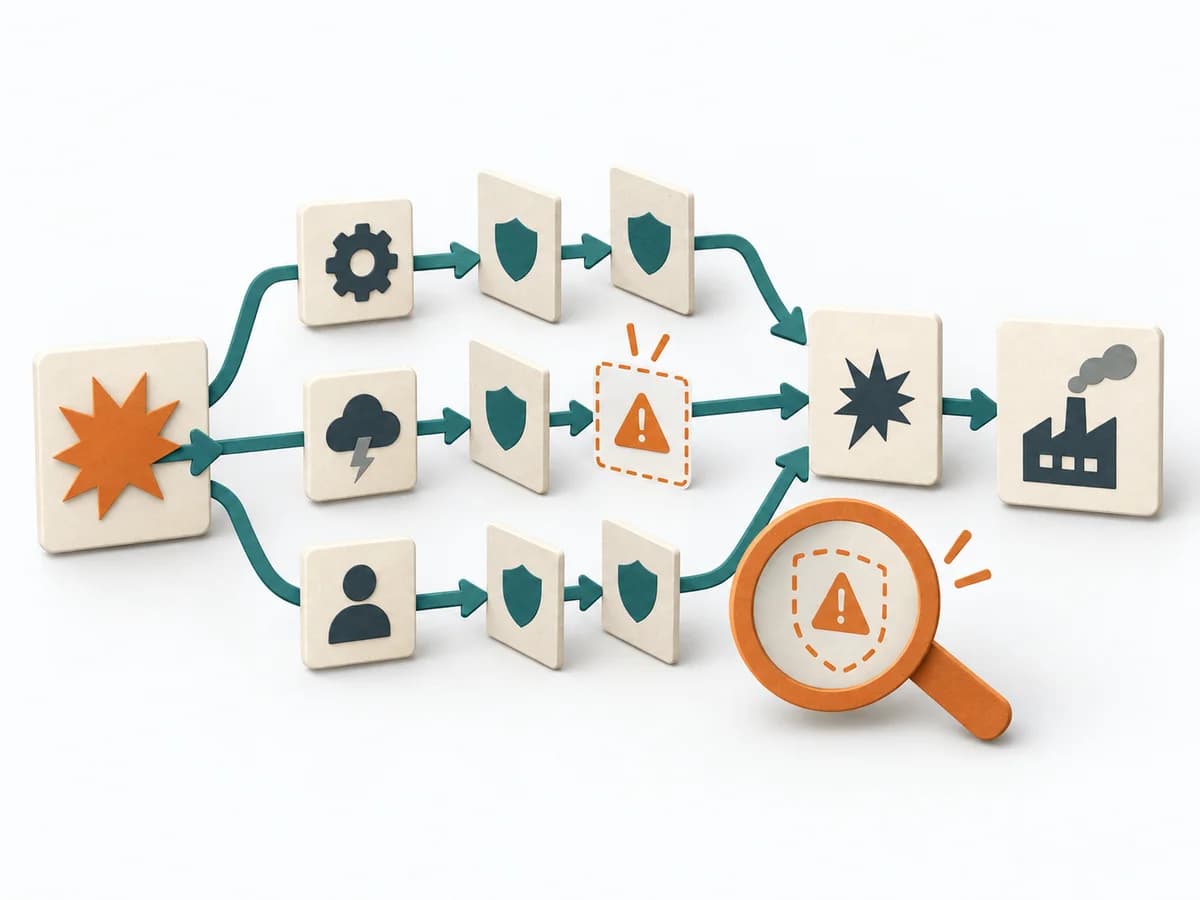 Engineering Failure Scenario Analysis |  Product Discovery Smoke Test |  Product Discovery Experiment Canvas |
|---|---|---|---|---|
Purposedifferent | The PARA Method organizes knowledge into Projects, Areas, Resources, and Archives. It creates order when digital notes, files, and tasks no longer cleanly fit current work. | In critical processes, it is not enough to plan only for the normal case. Failure Scenario Analysis looks at the path into failure and shows which failures, chains, and control gaps cause the most damage. | When demand only needs to be roughly verified, it tests interest with minimal effort. It measures whether people would take a next step at all. | When experiments become unreadable after the fact, it arranges hypothesis, signal, and learning goal on a single canvas. It separates problem, assumption, solution, and evidence. The result is captured as a Completed Experiment Canvas and a Success Metric. |
Complexitydifferent | Medium | Medium | Low | Low |
Timedifferent | 1-3 h Setup, laufend | 1-3 h | 1-5 Tage | 30-60 min |
Participantsdifferent | 1 | 3-8 | Nutzertraffic | 1-5 |
Formatdifferent | Async | Workshop | Async | Workshop + async |
Outputdifferent | PARA Structure, Project Notes, Knowledge Archive | Failure Scenarios, Risk Notes, Control Gaps, Test and Response Actions | Interest Metrics, Conversion Signal, Learning Note | Completed Experiment Canvas, Success Metric |
Tagsno overlap | KnowledgeProductivityOrganization | FailureResilienceRisk | ValidationExperimentsDemandGrowth | ExperimentsValidationDiscoveryHypothesis |