View methods side by side.
Choose up to four methods. Add them using the search and share the comparison by copying its link.
| Criterion |  Knowledge Modeling PARA Method | 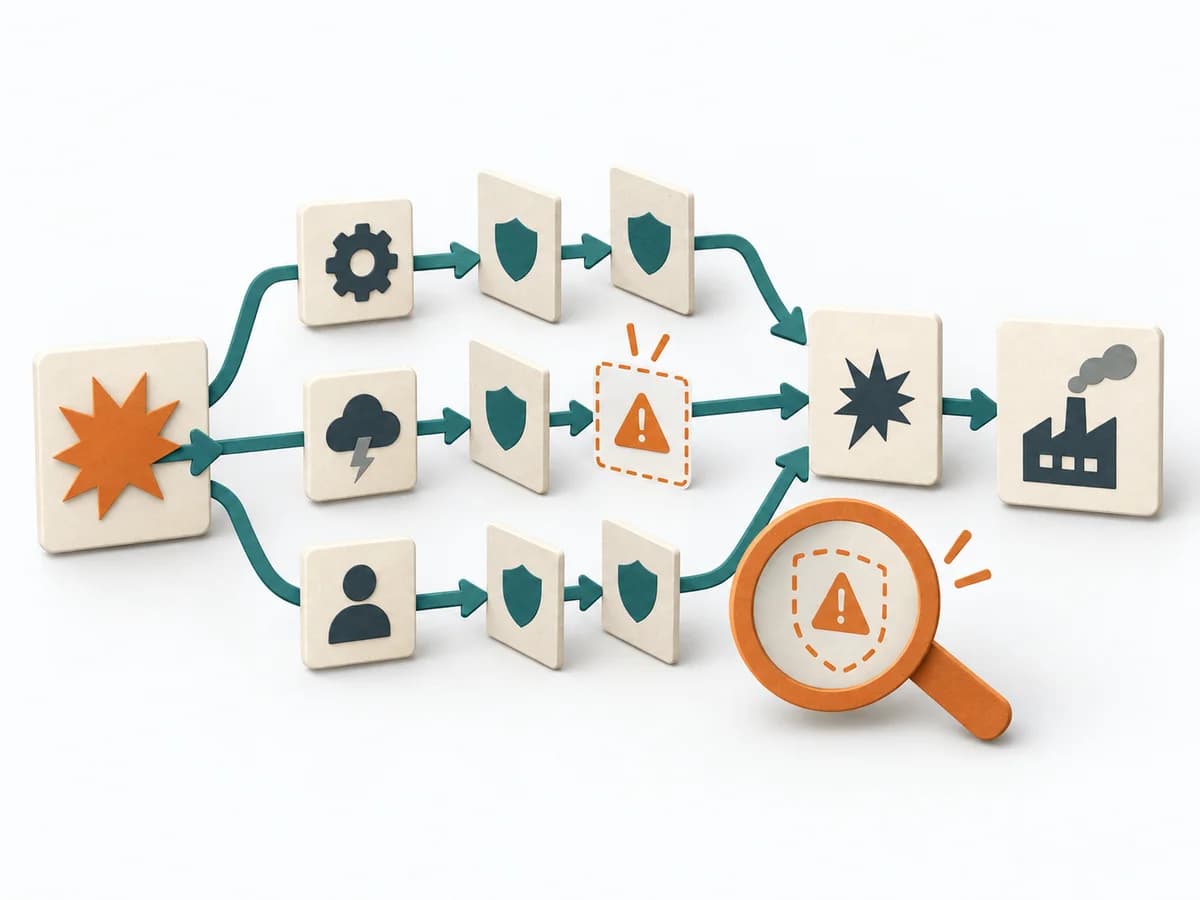 Engineering Failure Scenario Analysis |  DevOps Incident Command |  Operations Failure Mode and Effects Analysis |
|---|---|---|---|---|
Purposedifferent | The PARA Method organizes knowledge into Projects, Areas, Resources, and Archives. It creates order when digital notes, files, and tasks no longer cleanly fit current work. | In critical processes, it is not enough to plan only for the normal case. Failure Scenario Analysis looks at the path into failure and shows which failures, chains, and control gaps cause the most damage. | During an acute incident with several people involved, the method creates a clear leadership and communication structure. It reduces chaos when fast coordination and clean situational awareness are both needed at once. | For a process, product, or service with noticeable failure risks, the method assesses possible failure modes in advance. It directs attention to combinations of occurrence, effect, and detectability. |
Complexitydifferent | Medium | Medium | Medium | High |
Timedifferent | 1-3 h Setup, laufend | 1-3 h | As needed | 2-6 h |
Participantsdifferent | 1 | 3-8 | 4-15 | 3-10 |
Formatdifferent | Async | Workshop | Workshop + async | Workshop |
Outputdifferent | PARA Structure, Project Notes, Knowledge Archive | Failure Scenarios, Risk Notes, Control Gaps, Test and Response Actions | Incident Log, Action Tracker, Stakeholder Updates | FMEA Table, Risk Priority, Mitigation Actions |
Tagsno overlap | KnowledgeProductivityOrganization | FailureResilienceRisk | IncidentOperationsReliability | RiskQualityOperationsRoot cause |