View methods side by side.
Choose up to four methods. Add them using the search and share the comparison by copying its link.
| Criterion |  Knowledge Modeling PARA Method | 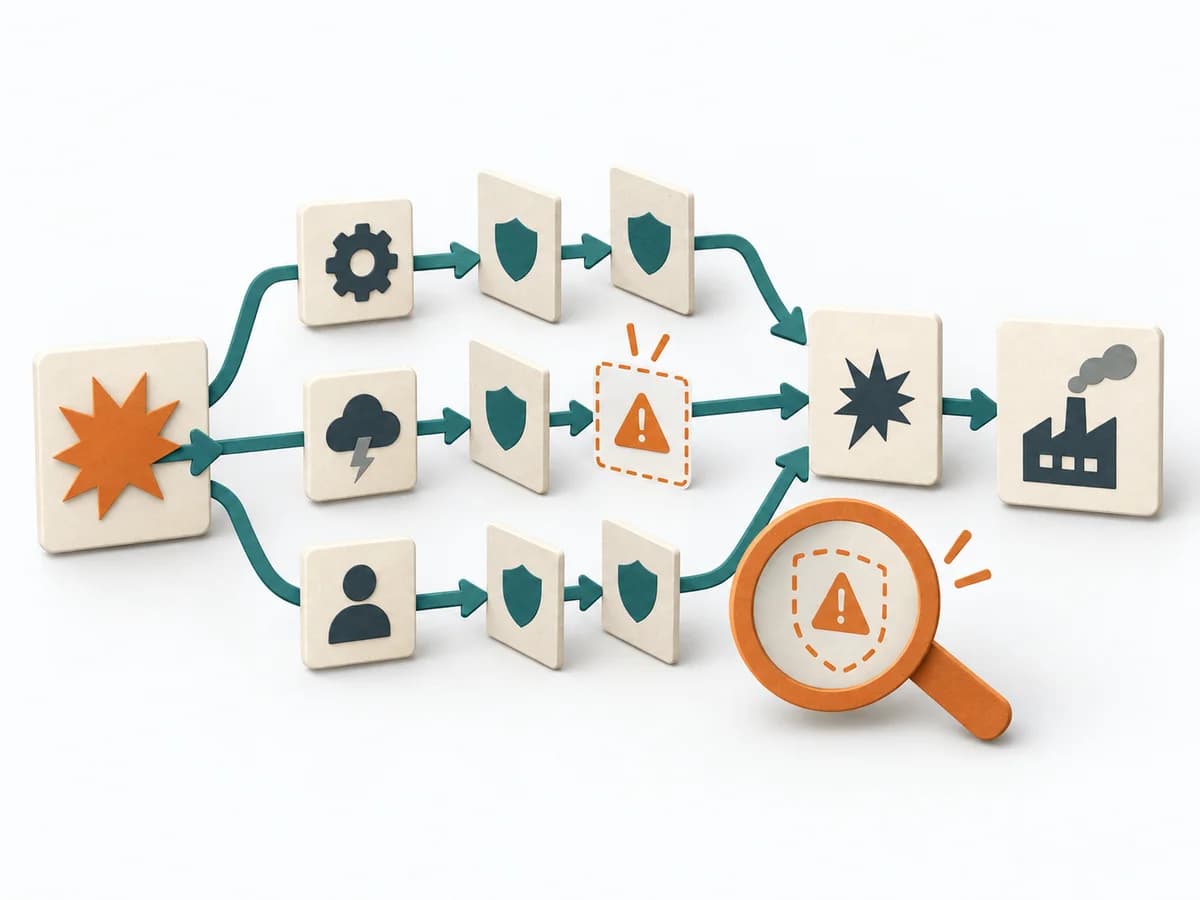 Engineering Failure Scenario Analysis |  Decision Making Argument Mapping |  Knowledge Modeling IBIS |
|---|---|---|---|---|
Purposedifferent | The PARA Method organizes knowledge into Projects, Areas, Resources, and Archives. It creates order when digital notes, files, and tasks no longer cleanly fit current work. | In critical processes, it is not enough to plan only for the normal case. Failure Scenario Analysis looks at the path into failure and shows which failures, chains, and control gaps cause the most damage. | When statements, evidence, and counterarguments get mixed up, a debate quickly loses its structure. Argument Mapping breaks a thesis down into its reasoning and makes visible what it really rests on. | IBIS structures thinking about complex questions as a sequence of issues, ideas, and arguments. The method keeps discussions open without forcing them into premature consensus. |
Complexitysame | Medium | Medium | Medium | Medium |
Timedifferent | 1-3 h Setup, laufend | 1-3 h | 1-3 h | 1-3 h |
Participantsdifferent | 1 | 3-8 | 1-8 | 2-8 |
Formatdifferent | Async | Workshop | Workshop + async | Workshop + async |
Outputdifferent | PARA Structure, Project Notes, Knowledge Archive | Failure Scenarios, Risk Notes, Control Gaps, Test and Response Actions | Argument Map, Evidence Gaps, Decision Rationale | Issue Map, Positions, Argument Notes |
Tagsno overlap | KnowledgeProductivityOrganization | FailureResilienceRisk | SensemakingDecisionRationale | RationaleKnowledgeDecision |