View methods side by side.
Choose up to four methods. Add them using the search and share the comparison by copying its link.
| Criterion |  Knowledge Modeling PARA Method | 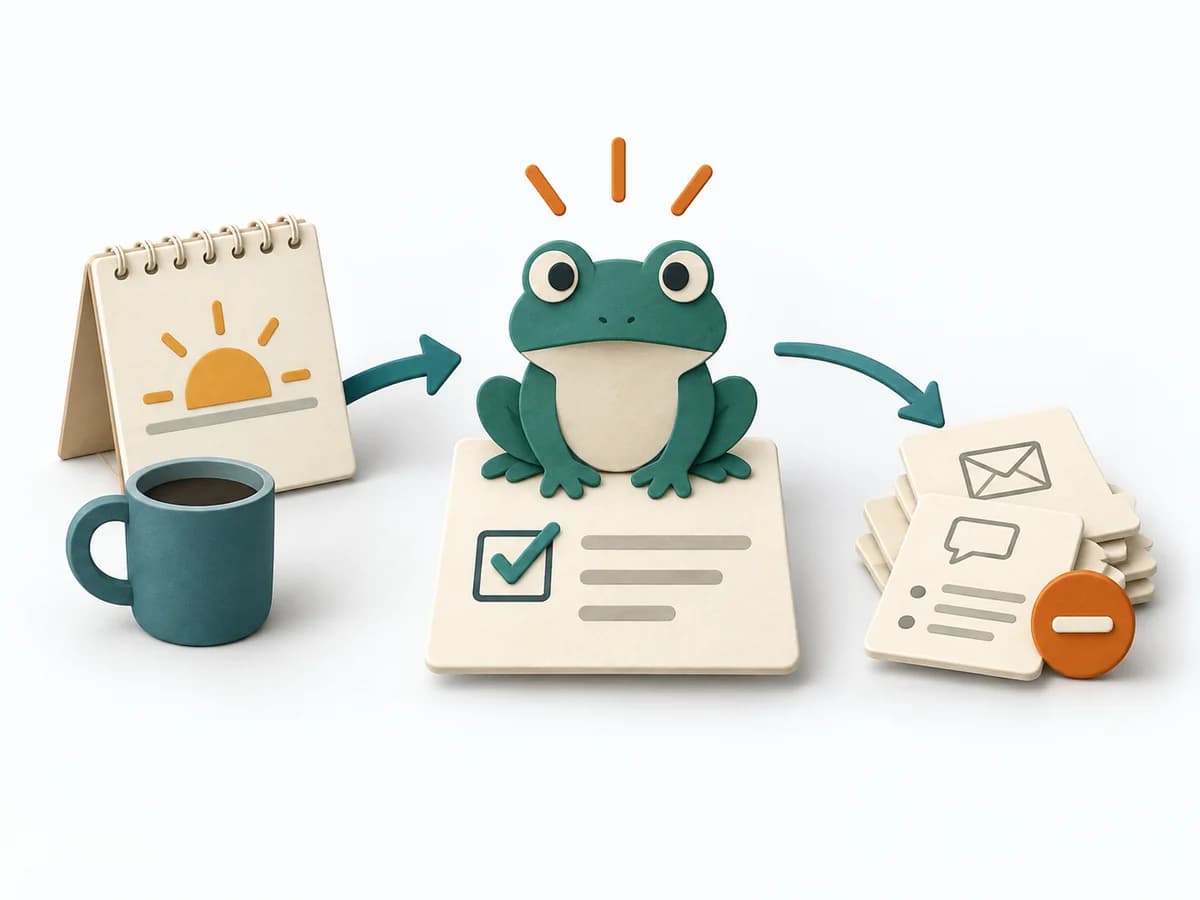 Operations Eat the Frog |  Knowledge Modeling Domain Storytelling |  Operations Pomodoro Technique |
|---|---|---|---|---|
Purposedifferent | The PARA Method organizes knowledge into Projects, Areas, Resources, and Archives. It creates order when digital notes, files, and tasks no longer cleanly fit current work. | The method protects energy and attention for the task that creates the largest progress and is often postponed. | Domain Storytelling translates domain knowledge into a shared narrative of actors, objects, and workflows. It is especially useful when language, rules, and process understanding must be tightly connected. | For easily distracted solo work, the method sets clear time boundaries for concentrated work. It protects attention when large tasks would otherwise fall apart into small avoidance moves. |
Complexitydifferent | Medium | Low | Low | Low |
Timedifferent | 1-3 h Setup, laufend | 15-90 min daily | 1-2 h | 25 min Zyklen |
Participantsdifferent | 1 | 1 | 2-8 | 1 |
Formatdifferent | Async | Async | Workshop | Async |
Outputdifferent | PARA Structure, Project Notes, Knowledge Archive | Priority Task, Completion Note, Daily Focus | Domain Story, Glossary Notes, Process Narrative | Focus Sessions, Task Progress, Interruption Notes |
Tagsno overlap | KnowledgeProductivityOrganization | PrioritizationProductivityFocusExecution | KnowledgeDomain-Driven DesignProcess | FocusTime managementProductivityExecution |