View methods side by side.
Choose up to four methods. Add them using the search and share the comparison by copying its link.
| Criterion |  Knowledge Modeling PARA Method |  Knowledge Modeling Domain Storytelling | 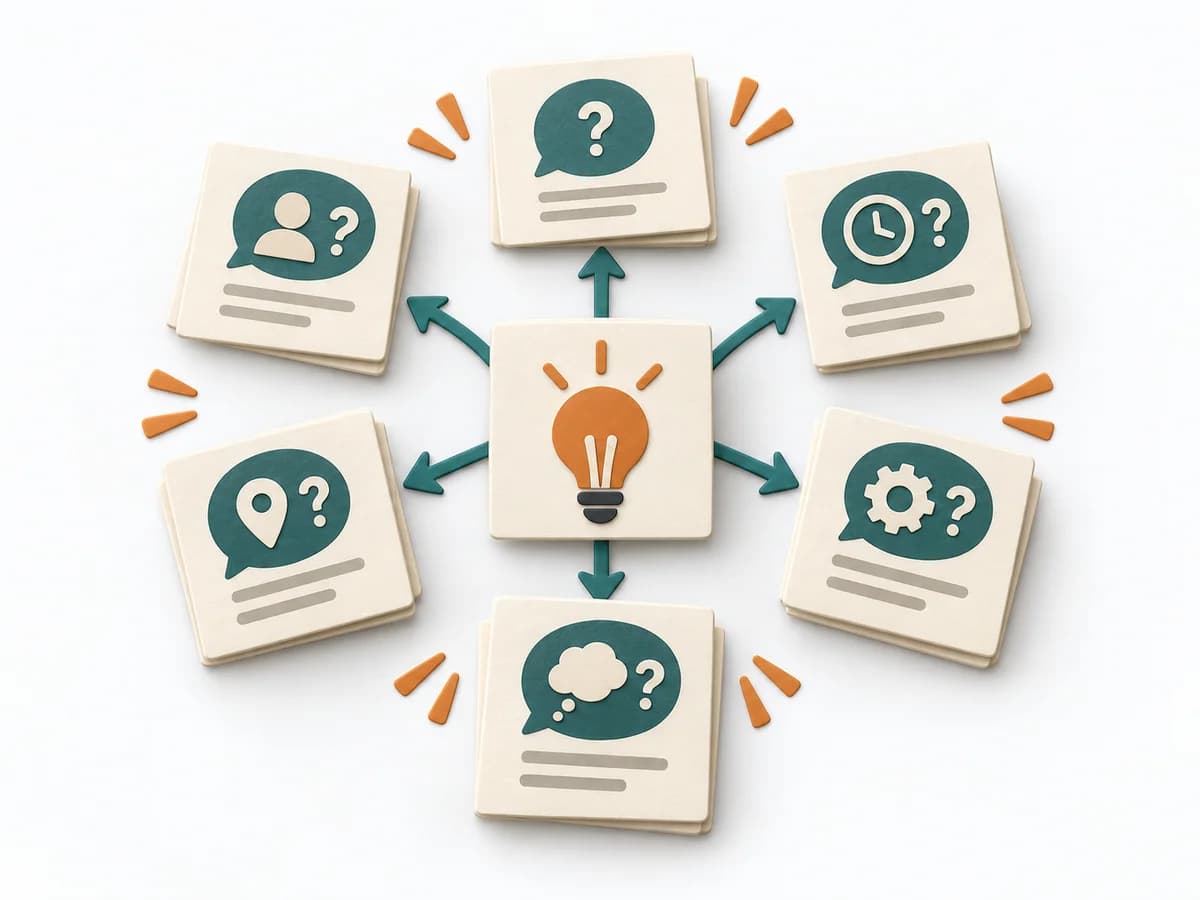 Innovation Starbursting |  Innovation Brainstorming |
|---|---|---|---|---|
Purposedifferent | The PARA Method organizes knowledge into Projects, Areas, Resources, and Archives. It creates order when digital notes, files, and tasks no longer cleanly fit current work. | Domain Storytelling translates domain knowledge into a shared narrative of actors, objects, and workflows. It is especially useful when language, rules, and process understanding must be tightly connected. | Helps clarify ideas, open questions, and testable next steps in concrete terms. It opens the thinking space, collects ideas, and leads to testable options. The result is captured as a star-shaped question map, question list, and assumption list. | When a team faces an open question with many obvious directions, the method first creates breadth instead of premature commitment. It separates idea flow from evaluation and makes lines of thought visible, creating a pool for selection and further development. |
Complexitydifferent | Medium | Low | Low | Low |
Timedifferent | 1-3 h Setup, laufend | 1-2 h | 30-60 min | 30-60 min |
Participantsdifferent | 1 | 2-8 | 3-10 | 4-12 |
Formatdifferent | Async | Workshop | Workshop + async | Workshop |
Outputdifferent | PARA Structure, Project Notes, Knowledge Archive | Domain Story, Glossary Notes, Process Narrative | Star-Shaped Question Map, Question List, Assumption List | Idea pool, Theme clusters, Shortlist |
Tagsno overlap | KnowledgeProductivityOrganization | KnowledgeDomain-Driven DesignProcess | BrainstormingIdeationWorkshopDiscovery | BrainstormingIdeationCreativityWorkshopDivergence |