View methods side by side.
Choose up to four methods. Add them using the search and share the comparison by copying its link.
| Criterion |  Knowledge Modeling PARA Method |  Product Strategy Counter Metrics | 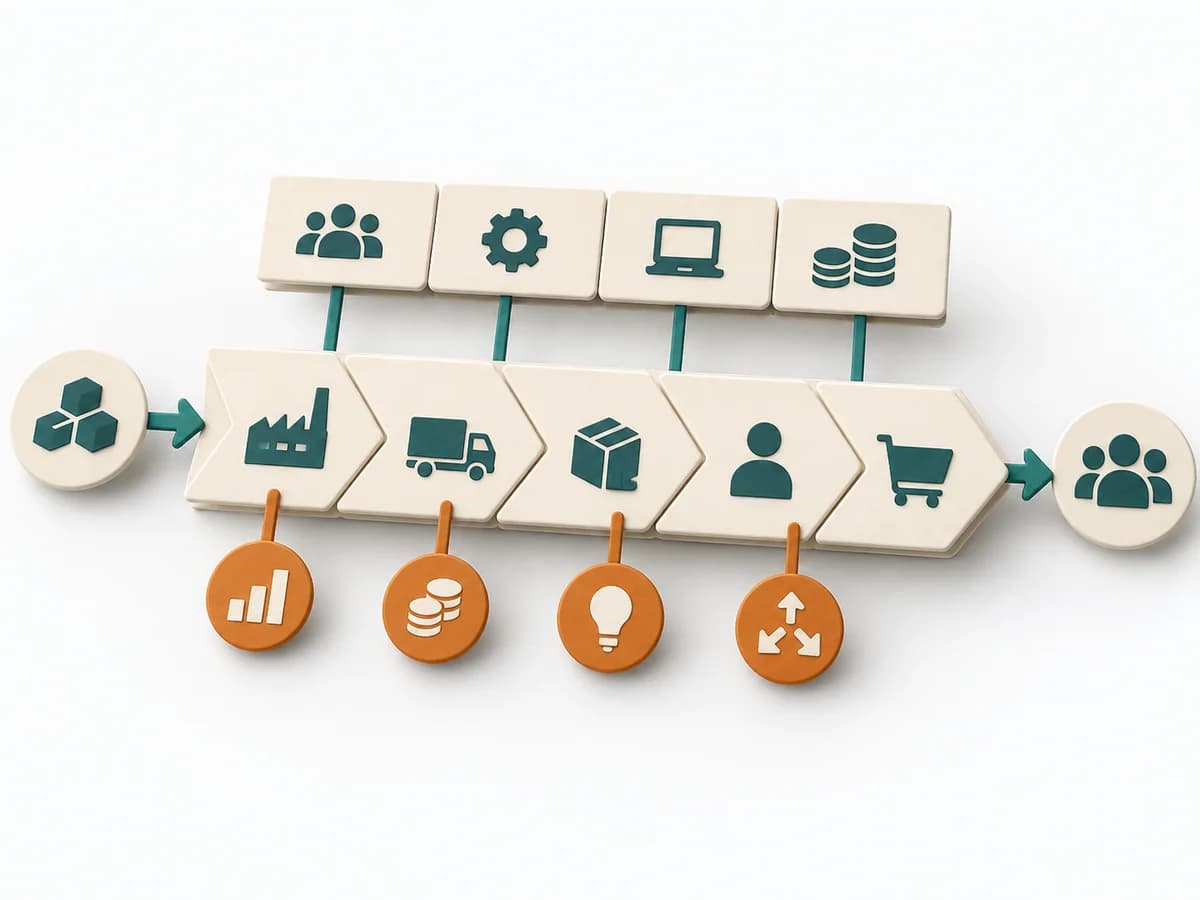 Business Strategy Value Chain Analysis |  Business Strategy Balanced Scorecard |
|---|---|---|---|---|
Purposedifferent | The PARA Method organizes knowledge into Projects, Areas, Resources, and Archives. It creates order when digital notes, files, and tasks no longer cleanly fit current work. | When a headline metric could mask side effects, it adds guardrail signals against unwanted outcomes. It connects customer value, product logic, and decision priorities. The result is captured as a counter-metric list and guardrail definitions. | Value Chain Analysis shows where value is created, costs accrue, and differentiation becomes possible along the process. It compares strengths, risks, market logic, and courses of action. The result is captured as a value-chain map and lever list. | Balanced Scorecard translates strategy into a few interconnected perspectives and metrics. It holds impact, steering, and learning together in daily work instead of narrowing strategy down to financial figures. |
Complexitydifferent | Medium | Low | High | High |
Timedifferent | 1-3 h Setup, laufend | 30-60 min | Half day | Halber Tag bis mehrere Wochen |
Participantsdifferent | 1 | 2-6 | 3-8 | 4-12 |
Formatdifferent | Async | Workshop + async | Workshop | Workshop + async |
Outputdifferent | PARA Structure, Project Notes, Knowledge Archive | Counter Metric List, Guardrail Definitions | Value Chain Map, Lever List | Balanced Scorecard, Strategic Measures, Initiative Map |
Tagsno overlap | KnowledgeProductivityOrganization | MetricsMeasurementStrategyExperiments | StrategyBusiness modelDiagnosisAnalysis | StrategyMetricsExecution |