View methods side by side.
Choose up to four methods. Add them using the search and share the comparison by copying its link.
| Criterion |  Knowledge Modeling PARA Method |  Decision Making Constraint Analysis |  Systems Thinking System Dynamics Simulation | 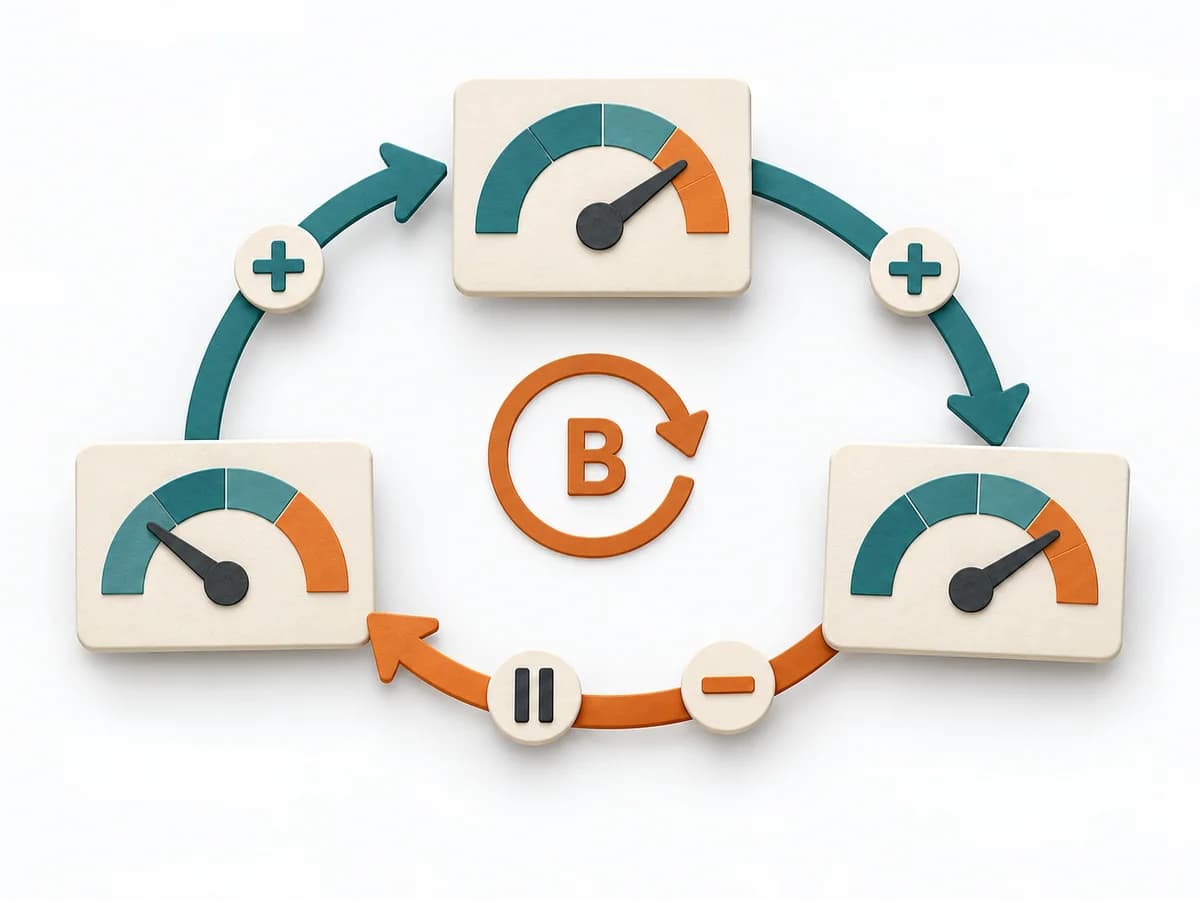 Systems Thinking Causal Loop Diagram |
|---|---|---|---|---|
Purposedifferent | The PARA Method organizes knowledge into Projects, Areas, Resources, and Archives. It creates order when digital notes, files, and tasks no longer cleanly fit current work. | When an initiative stalls, the limit often lies not in the idea but in hard or soft boundary conditions. Constraint Analysis separates these limits and shows which of them can actually be shaped. | System Dynamics Simulation makes assumptions about time, delay, and feedback testable through experiments. It draws relationships, patterns, and feedback loops. The result is captured as a simulation model and scenario reports. | A Causal Loop Diagram makes feedback, reinforcement, and balance in a system legible. It uncovers side effects and self-reinforcement that stay hidden in linear explanations. |
Complexitydifferent | Medium | Low | High | Medium |
Timedifferent | 1-3 h Setup, laufend | 30-90 min | Mehrere Tage bis Wochen | 1-3 h |
Participantsdifferent | 1 | 2-8 | 1-5 Modellierende, Stakeholder asynchron | 2-8 |
Formatdifferent | Async | Workshop + async | Async | Workshop |
Outputdifferent | PARA Structure, Project Notes, Knowledge Archive | Constraint List, Hard/Soft Classification, Option Impact Notes, Decision Boundaries | Simulation Model, Scenario Reports | Causal Loop Diagram, Feedback Notes, Leverage Points |
Tagsno overlap | KnowledgeProductivityOrganization | ConstraintsDecisionPlanningOptions | Systems thinkingDynamicsSimulationAnalysis | FeedbackSystems thinkingCausalityDynamics |