View methods side by side.
Choose up to four methods. Add them using the search and share the comparison by copying its link.
| Criterion |  Knowledge Modeling PARA Method |  Decision Making Constraint Analysis | 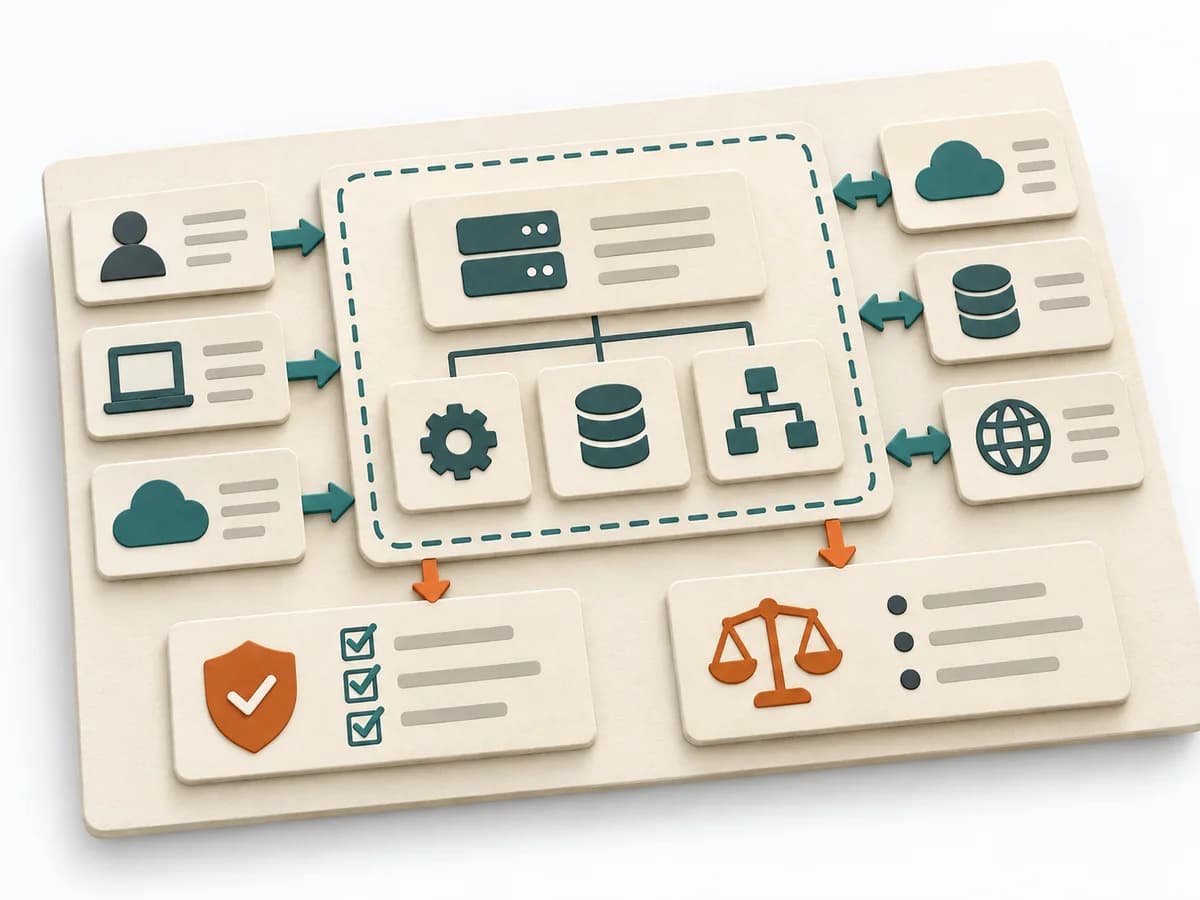 Architecture Software Architecture Canvas |  Facilitation Consensus Workshop |
|---|---|---|---|---|
Purposedifferent | The PARA Method organizes knowledge into Projects, Areas, Resources, and Archives. It creates order when digital notes, files, and tasks no longer cleanly fit current work. | When an initiative stalls, the limit often lies not in the idea but in hard or soft boundary conditions. Constraint Analysis separates these limits and shows which of them can actually be shaped. | The Software Architecture Canvas reduces a system to the most important architecture decisions, constraints, and interfaces. It is useful when teams need a resilient overall picture quickly. | When a group needs a solid decision without outvoting individual factions, a Consensus Workshop creates a negotiable common ground. It makes agreement, reservations, and open tensions discussable at the same time. |
Complexitydifferent | Medium | Low | Low | Medium |
Timedifferent | 1-3 h Setup, laufend | 30-90 min | 1-2 h | 1-3 h |
Participantsdifferent | 1 | 2-8 | 3-10 | 5-30 |
Formatdifferent | Async | Workshop + async | Workshop | Workshop |
Outputdifferent | PARA Structure, Project Notes, Knowledge Archive | Constraint List, Hard/Soft Classification, Option Impact Notes, Decision Boundaries | Architecture Canvas, Goals, Constraints, Quality Attributes | Consensus Clusters, Theme Titles, Priority Areas |
Tagsno overlap | KnowledgeProductivityOrganization | ConstraintsDecisionPlanningOptions | CanvasArchitectureAlignmentWorkshop | FacilitationConsensusWorkshopAlignment |