View methods side by side.
Choose up to four methods. Add them using the search and share the comparison by copying its link.
| Criterion |  Knowledge Modeling PARA Method | 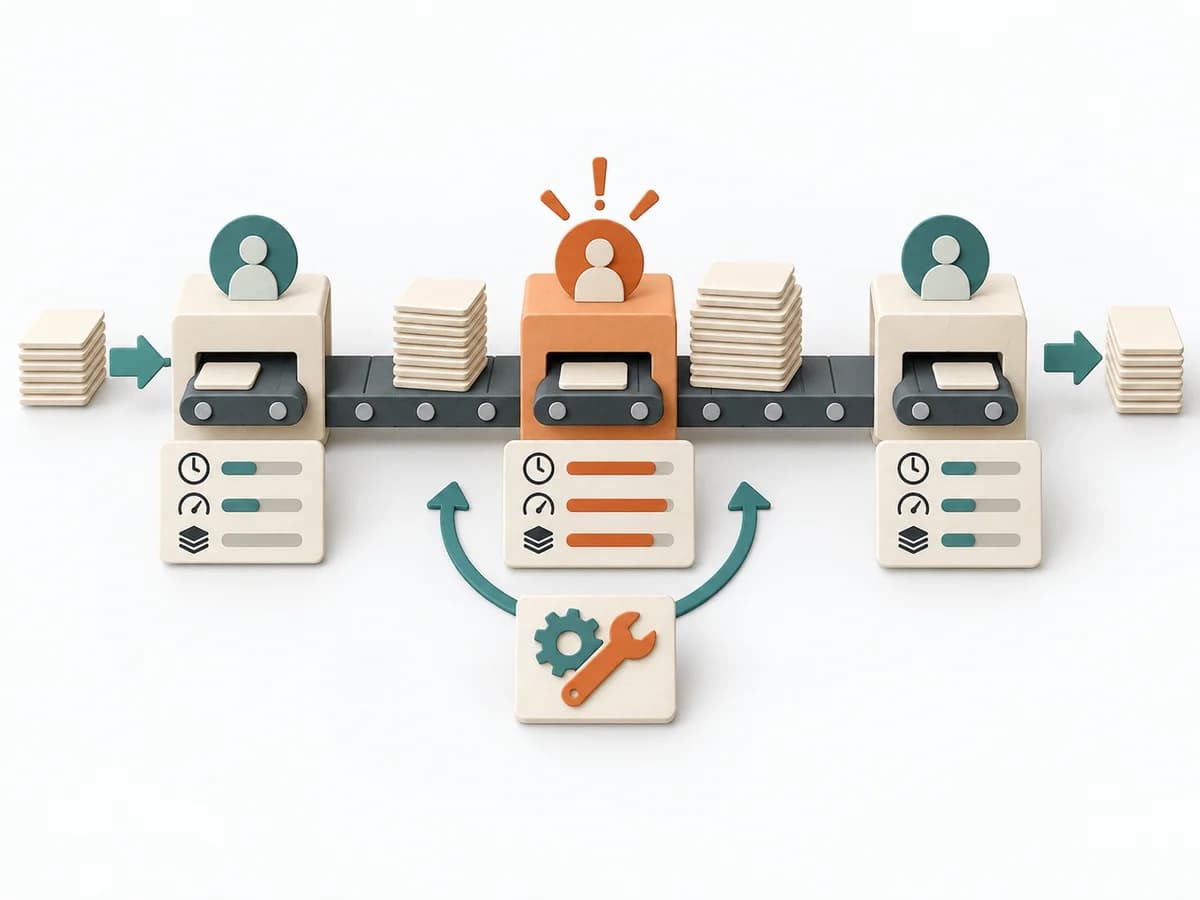 Operations Bottleneck Analysis | 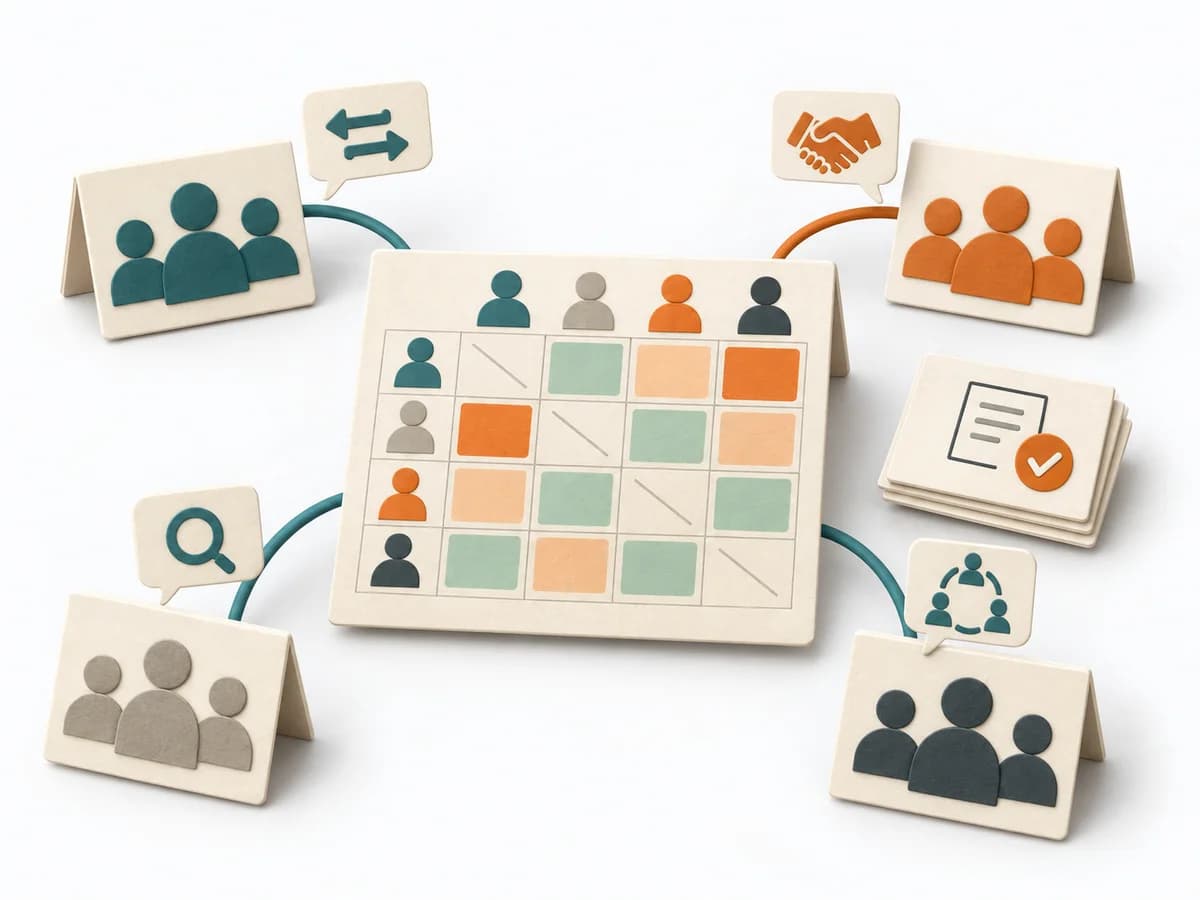 Team Design Team Topologies Interaction Modes | 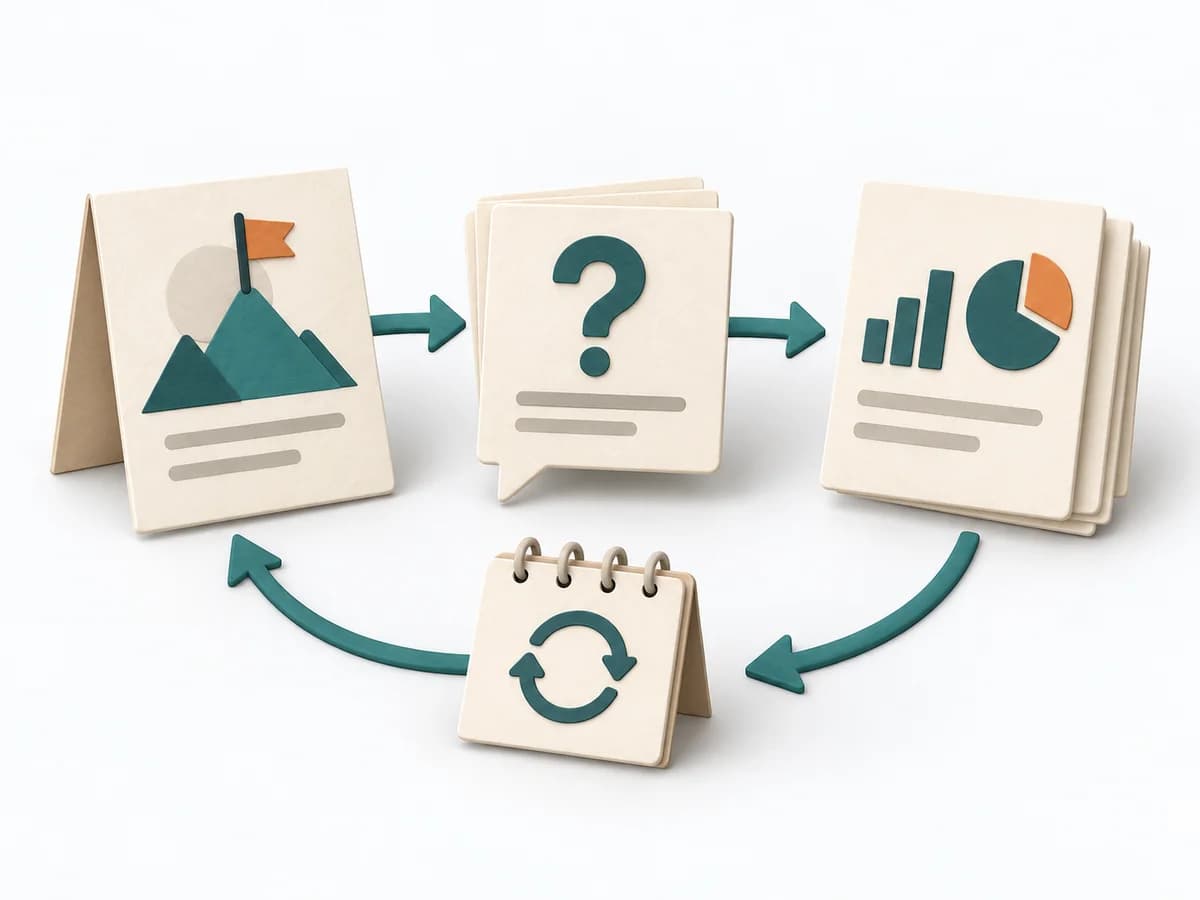 Engineering Goal Question Metric |
|---|---|---|---|---|
Purposedifferent | The PARA Method organizes knowledge into Projects, Areas, Resources, and Archives. It creates order when digital notes, files, and tasks no longer cleanly fit current work. | For a flow that backs up at one point, the method looks for the capacity limit with the greatest leverage. It explains why extra effort elsewhere barely improves throughput. | When several teams collaborate repeatedly, it describes the right interaction mode for each interface between them. It clarifies responsibility, interaction, and load between teams. The result is captured as an interaction heat map and pairwise agreements. | Helps clarify technical problems, hypotheses, and next steps in concrete terms. It breaks a technical problem into testable parts. The result is captured as a GQM table and metric briefs. |
Complexitysame | Medium | Medium | Medium | Medium |
Timedifferent | 1-3 h Setup, laufend | 1-3 h | Half day | 90-180 min |
Participantsdifferent | 1 | 3-8 | Team-Leads plus Architecture | 3-6 |
Formatdifferent | Async | Workshop + async | Workshop | Workshop |
Outputdifferent | PARA Structure, Project Notes, Knowledge Archive | Bottleneck Map, Flow Metrics, Improvement Options, Follow-up Measures | Interaction Heat Map, Agreements per Pair | GQM Table, Metric Profiles |
Tagsno overlap | KnowledgeProductivityOrganization | FlowMeasurementConstraints | TeamAlignmentCollaborationOrganization | MetricsMeasurementEngineeringAlignment |