View methods side by side.
Choose up to four methods. Add them using the search and share the comparison by copying its link.
| Criterion |  Knowledge Modeling PARA Method |  Operations Bottleneck Analysis |  Facilitation Dot Voting | 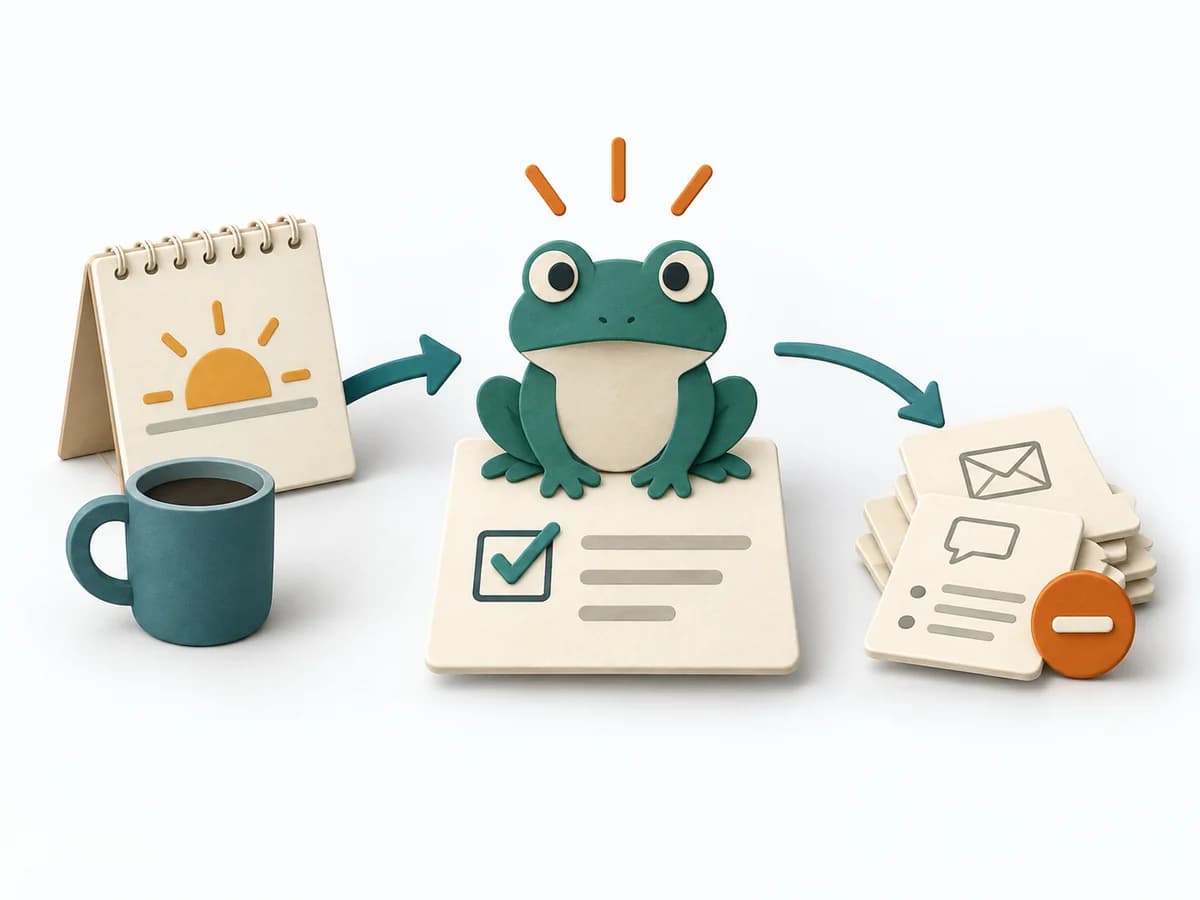 Operations Eat the Frog |
|---|---|---|---|---|
Purposedifferent | The PARA Method organizes knowledge into Projects, Areas, Resources, and Archives. It creates order when digital notes, files, and tasks no longer cleanly fit current work. | For a flow that backs up at one point, the method looks for the capacity limit with the greatest leverage. It explains why extra effort elsewhere barely improves throughput. | When a workshop has produced too many options and the group needs to condense quickly, dot voting makes preferences visible in a short time. It bundles individual votes into a solid signal for the next selection. | The method protects energy and attention for the task that creates the largest progress and is often postponed. |
Complexitydifferent | Medium | Medium | Low | Low |
Timedifferent | 1-3 h Setup, laufend | 1-3 h | 5-15 min | 15-90 min daily |
Participantsdifferent | 1 | 3-8 | 3-20 | 1 |
Formatdifferent | Async | Workshop + async | Workshop | Async |
Outputdifferent | PARA Structure, Project Notes, Knowledge Archive | Bottleneck Map, Flow Metrics, Improvement Options, Follow-up Measures | Ranked list, Consensus signal, Shortlist | Priority Task, Completion Note, Daily Focus |
Tagsno overlap | KnowledgeProductivityOrganization | FlowMeasurementConstraints | FacilitationVotingConsensusPrioritization | PrioritizationProductivityFocusExecution |