View methods side by side.
Choose up to four methods. Add them using the search and share the comparison by copying its link.
| Criterion |  Knowledge Modeling PARA Method |  DevOps Blameless Postmortem |  Operations Pomodoro Technique | 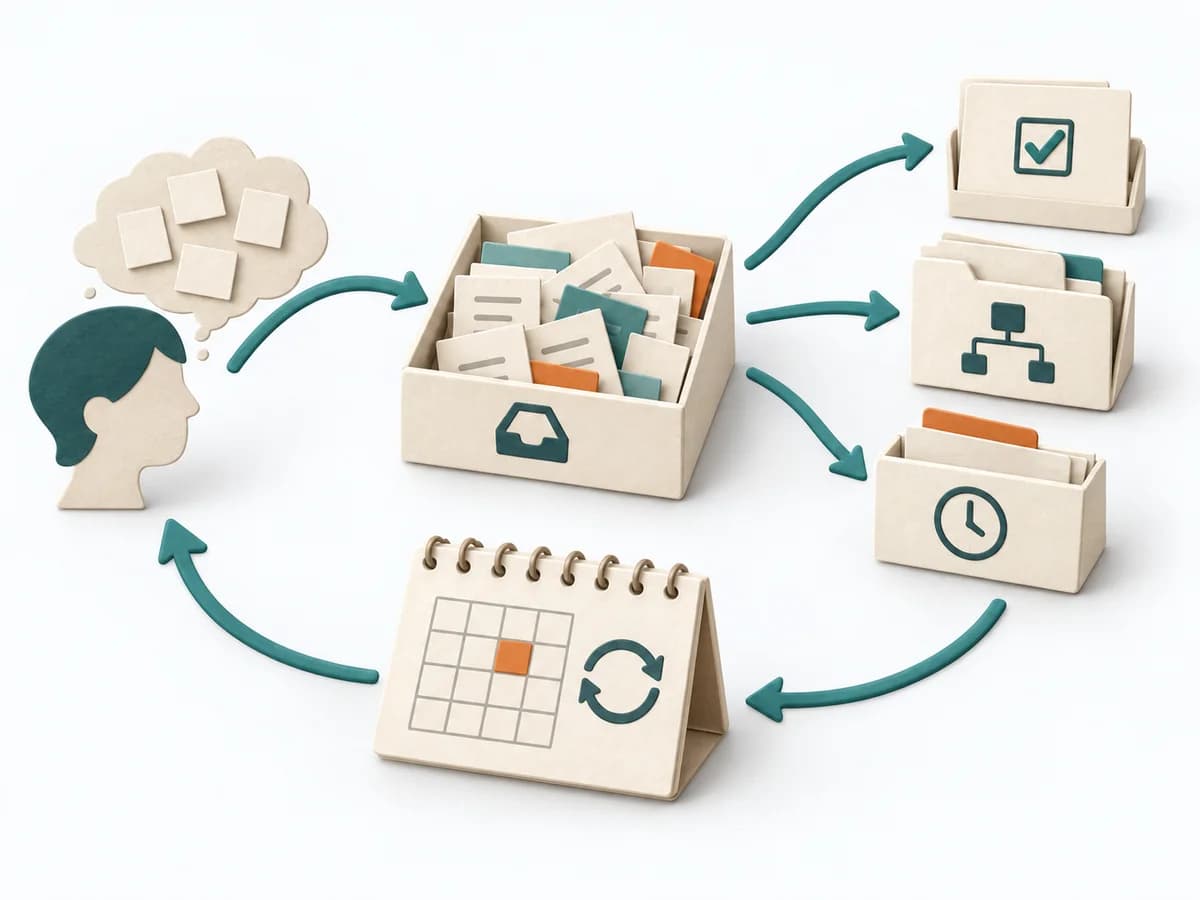 Operations Getting Things Done |
|---|---|---|---|---|
Purposedifferent | The PARA Method organizes knowledge into Projects, Areas, Resources, and Archives. It creates order when digital notes, files, and tasks no longer cleanly fit current work. | After an incident with damage or a near miss, the method creates a sober field for learning without assigning blame. It directs attention to the course of events, conditions, and effective countermeasures. | For easily distracted solo work, the method sets clear time boundaries for concentrated work. It protects attention when large tasks would otherwise fall apart into small avoidance moves. | With many open commitments and ideas in daily life, a reliable external storage system emerges. The method relieves the mind so priority and context don't have to compete in memory. |
Complexitydifferent | Medium | Medium | Low | Medium |
Timedifferent | 1-3 h Setup, laufend | 30-90 min | 25 min Zyklen | 1-2 h Setup, laufend |
Participantsdifferent | 1 | 3-12 | 1 | 1 |
Formatdifferent | Async | Workshop + async | Async | Async |
Outputdifferent | PARA Structure, Project Notes, Knowledge Archive | Postmortem Doc, Action Items, Timeline | Focus Sessions, Task Progress, Interruption Notes | Action Lists, Project List, Review Routine |
Tagsno overlap | KnowledgeProductivityOrganization | Site Reliability EngineeringIncidentLearningReliability | FocusTime managementProductivityExecution | ProductivityPlanningTasksExecution |