View methods side by side.
Choose up to four methods. Add them using the search and share the comparison by copying its link.
| Criterion |  Knowledge Modeling PARA Method |  Decision Making Argument Mapping | 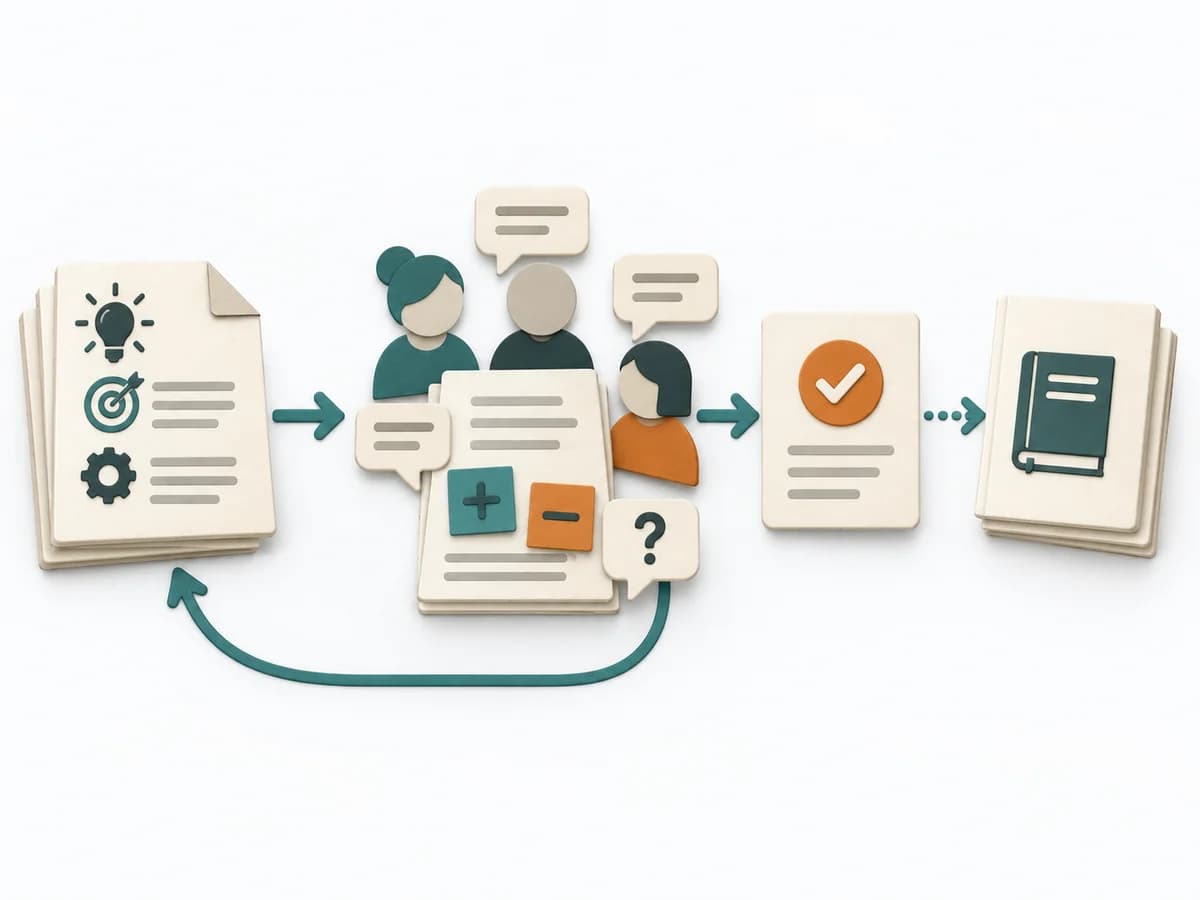 Architecture Request for Comments | 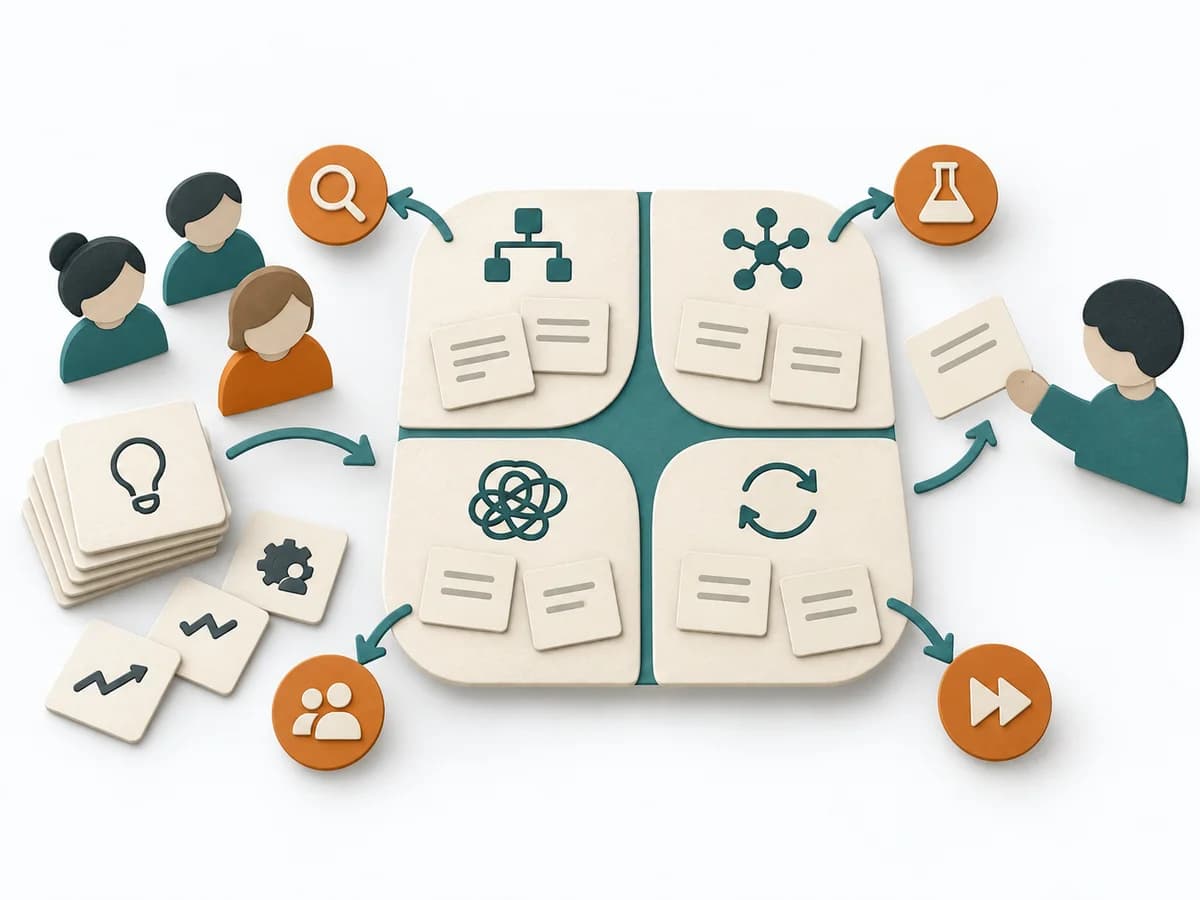 Decision Making Cynefin Workshop |
|---|---|---|---|---|
Purposedifferent | The PARA Method organizes knowledge into Projects, Areas, Resources, and Archives. It creates order when digital notes, files, and tasks no longer cleanly fit current work. | When statements, evidence, and counterarguments get mixed up, a debate quickly loses its structure. Argument Mapping breaks a thesis down into its reasoning and makes visible what it really rests on. | An RFC clarifies architecture context, options, and consequences. It structures technical context, alternatives, tradeoffs, open questions, and review feedback, and captures the result as an RFC document, reviewer comments, and a decision rationale. | When problems are unclear, chaotic, or only seemingly familiar, standard recipes fall short. A Cynefin Workshop sorts situations by the nature of their problem and connects them with matching action logic. |
Complexitysame | Medium | Medium | Medium | Medium |
Timedifferent | 1-3 h Setup, laufend | 1-3 h | 1-3 Wochen vom Draft bis zur Entscheidung | 60-180 min |
Participantsdifferent | 1 | 1-8 | 3-20 Reviewer | 4-20 |
Formatdifferent | Async | Workshop + async | Async | Workshop |
Outputdifferent | PARA Structure, Project Notes, Knowledge Archive | Argument Map, Evidence Gaps, Decision Rationale | RFC document, Reviewer comments, Decision rationale, Follow-up ADR or tickets | Cynefin Map, Domain-specific Actions, Sensemaking Notes |
Tagsno overlap | KnowledgeProductivityOrganization | SensemakingDecisionRationale | ArchitectureDecisionAsyncGovernance | ComplexitySensemakingDecision |