View methods side by side.
Choose up to four methods. Add them using the search and share the comparison by copying its link.
| Criterion |  Knowledge Modeling PARA Method |  Architecture Architecture Inception Canvas | 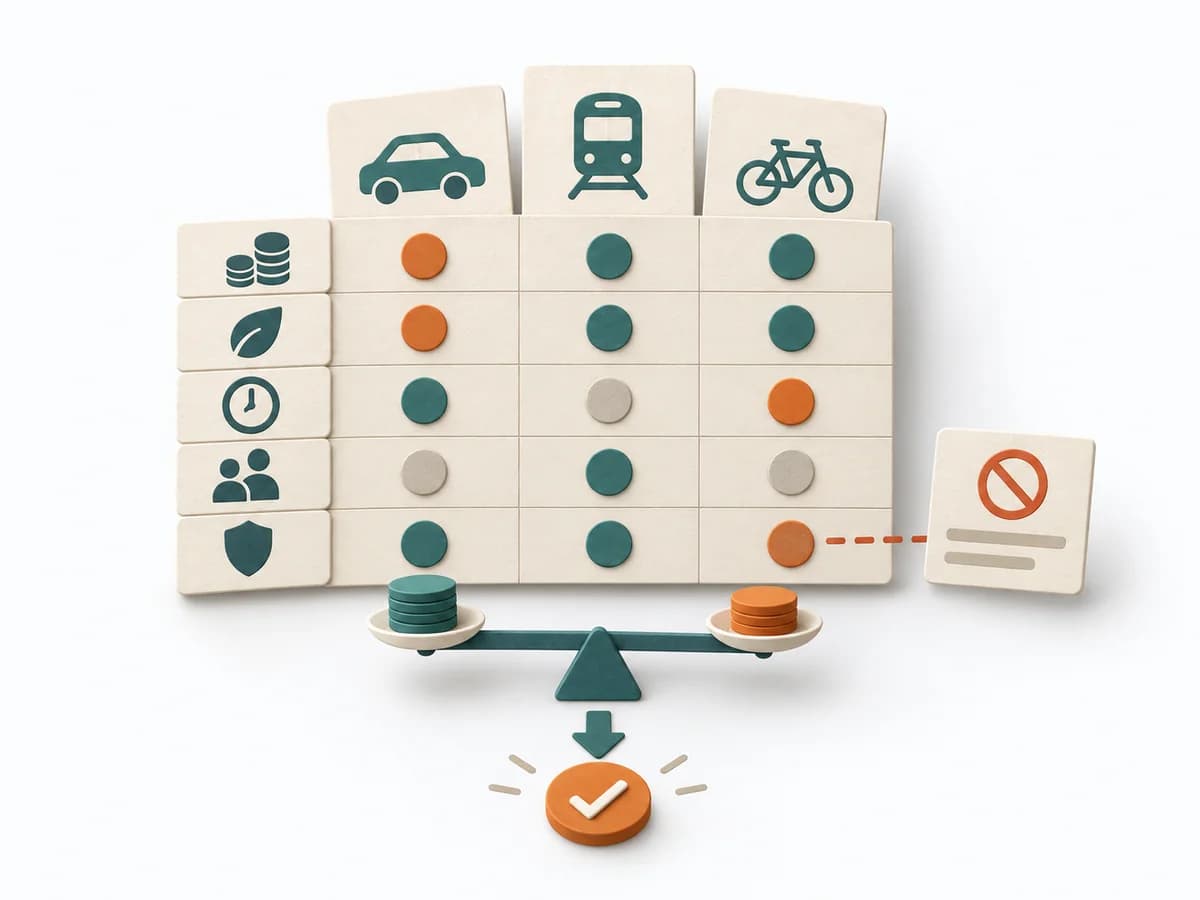 Decision Making Trade-off Analysis |  Architecture Software Architecture Canvas |
|---|---|---|---|---|
Purposedifferent | The PARA Method organizes knowledge into Projects, Areas, Resources, and Archives. It creates order when digital notes, files, and tasks no longer cleanly fit current work. | The Architecture Inception Canvas bundles the first architecture questions into a compact decision picture. It fits when an initiative is still in motion but still needs clear guardrails. | With limited resources, quality, speed, cost, and risk almost always compete with each other. Trade-off Analysis makes these tensions explicit and prevents decisions from producing hidden side effects. | The Software Architecture Canvas reduces a system to the most important architecture decisions, constraints, and interfaces. It is useful when teams need a resilient overall picture quickly. |
Complexitydifferent | Medium | Low | Medium | Low |
Timedifferent | 1-3 h Setup, laufend | 1-2 h | 45-120 min | 1-2 h |
Participantsdifferent | 1 | 3-8 | 2-8 | 3-10 |
Formatdifferent | Async | Workshop | Workshop + async | Workshop |
Outputdifferent | PARA Structure, Project Notes, Knowledge Archive | Inception Canvas, Risks, Goal List, Open Questions | Trade-off Matrix, Criteria List, Decision Rationale, Accepted Downsides | Architecture Canvas, Goals, Constraints, Quality Attributes |
Tagsno overlap | KnowledgeProductivityOrganization | AlignmentArchitectureCanvas | TradeoffsDecisionCriteriaOptions | CanvasArchitectureAlignmentWorkshop |