View methods side by side.
Choose up to four methods. Add them using the search and share the comparison by copying its link.
| Criterion |  Knowledge Modeling PARA Method | 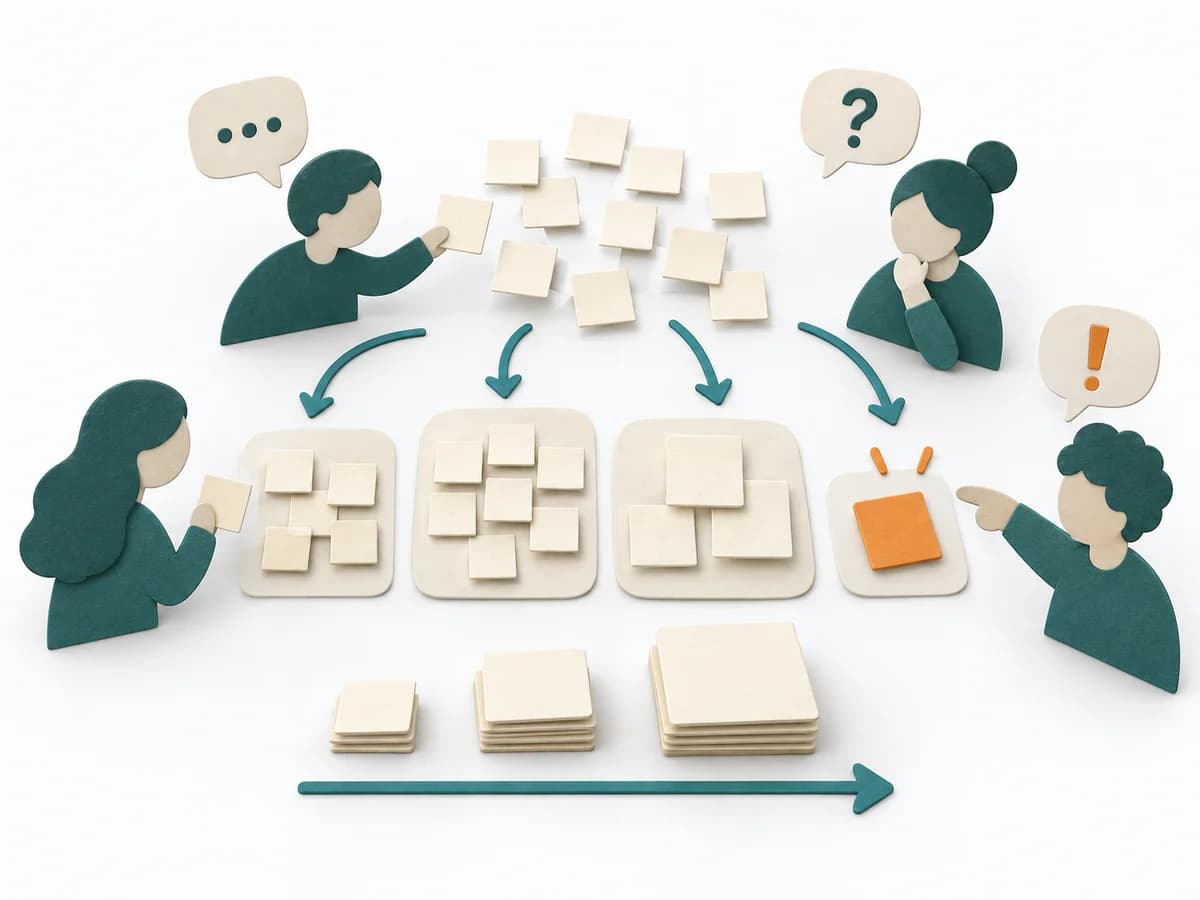 Agile Affinity Estimation | 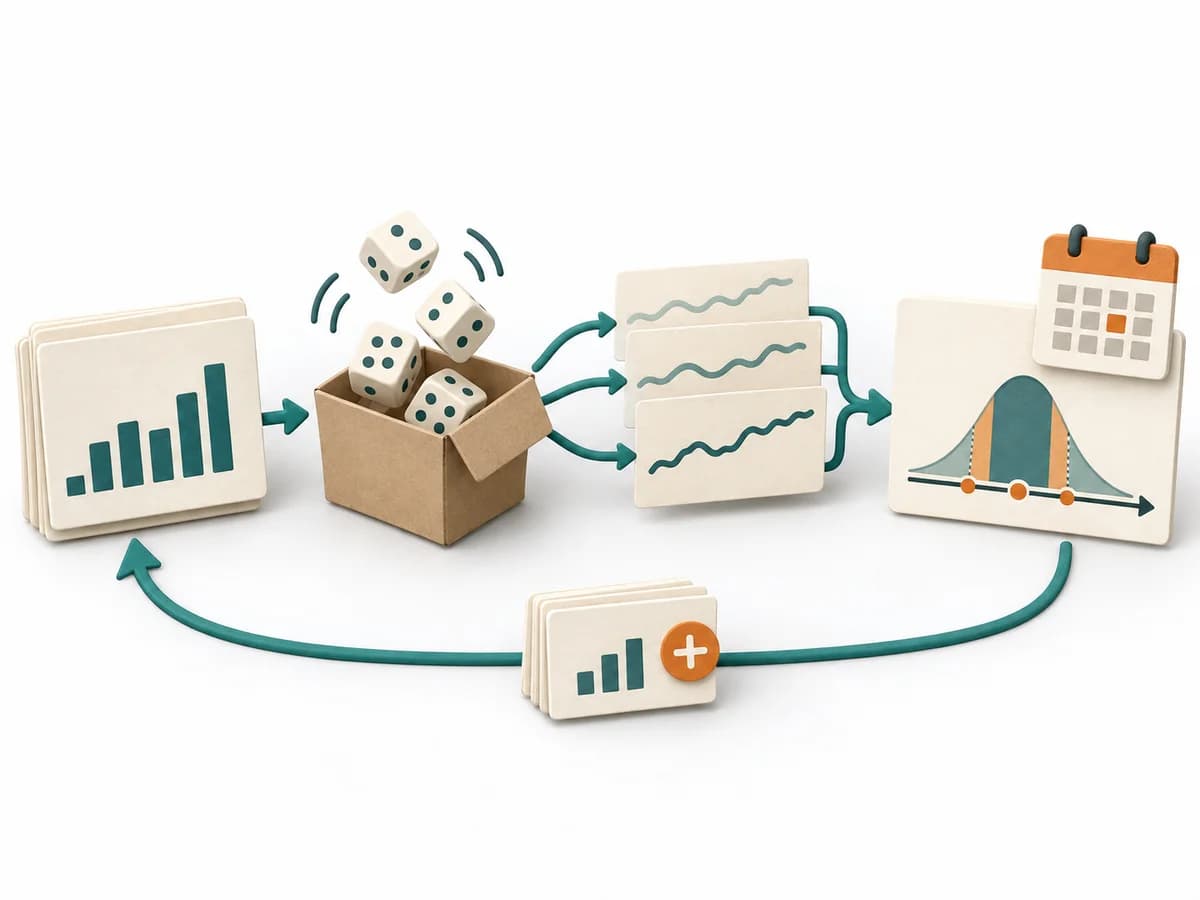 Delivery Monte Carlo Forecasting | 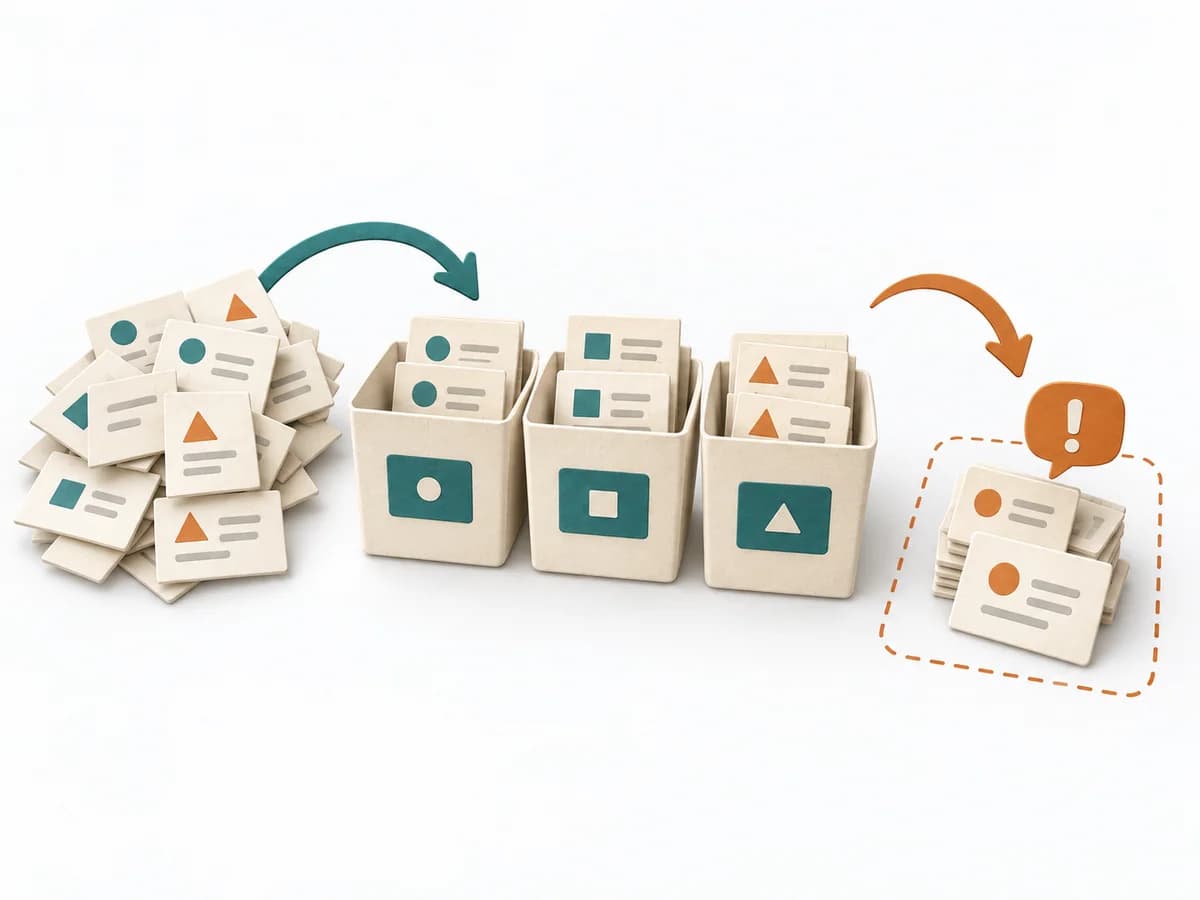 Agile Bucket System |
|---|---|---|---|---|
Purposedifferent | The PARA Method organizes knowledge into Projects, Areas, Resources, and Archives. It creates order when digital notes, files, and tasks no longer cleanly fit current work. | When many tasks need to be classified quickly, it sorts them by perceived effort and similarity. It reduces the effort of fine-grained estimation for large volumes. | Helps clarify scope, sequence, and delivery flow in concrete terms. It makes work, boundaries, and order steerable. The result is captured as Forecast Percentiles, Throughput Dataset, and Risk Communication. | When a large batch of work needs a fast, rough estimate, it sorts items into predefined size buckets. It sorts work by value, risk, and delivery ability. The result is captured as a Bucketed Backlog, Relative Estimates, and Split Candidates. |
Complexitydifferent | Medium | Medium | High | Medium |
Timedifferent | 1-3 h Setup, laufend | 30-90 min | 30-90 min Setup, danach laufend | 30-90 min |
Participantsdifferent | 1 | 3-12 | 1-8 | 3-12 |
Formatdifferent | Async | Workshop | Workshop + async | Workshop |
Outputdifferent | PARA Structure, Project Notes, Knowledge Archive | Affinity Size Map, Grouped Estimates, Unclear Items | Forecast Percentiles, Throughput Dataset, Risk Communication | Bucketed Backlog, Relative Estimates, Split Candidates |
Tagsno overlap | KnowledgeProductivityOrganization | EstimationBacklogRelative sizing | ForecastingFlowDelivery | EstimationBacklogRelative sizing |