View methods side by side.
Choose up to four methods. Add them using the search and share the comparison by copying its link.
| Criterion |  Decision Making Option Framing | 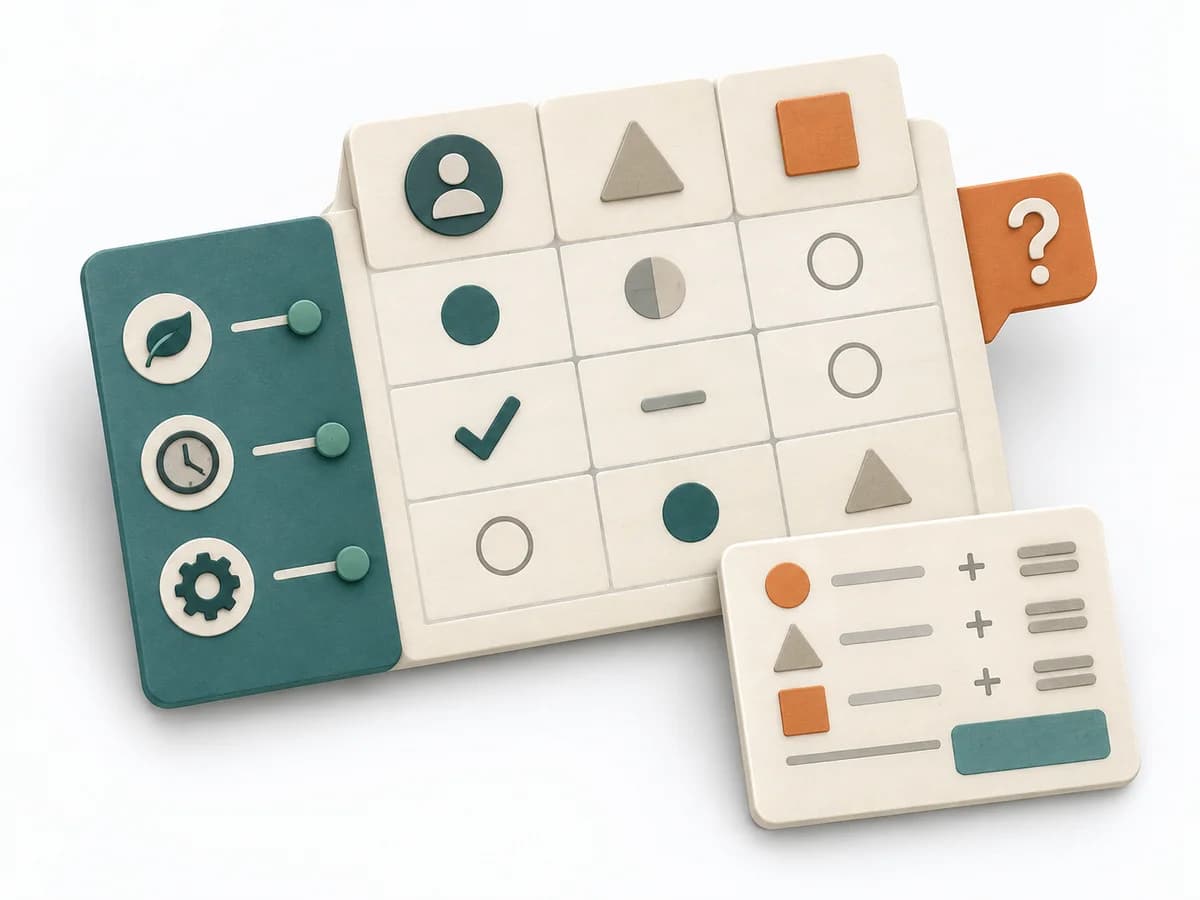 Decision Making Decision Matrix |  Facilitation Alignment Mapping | 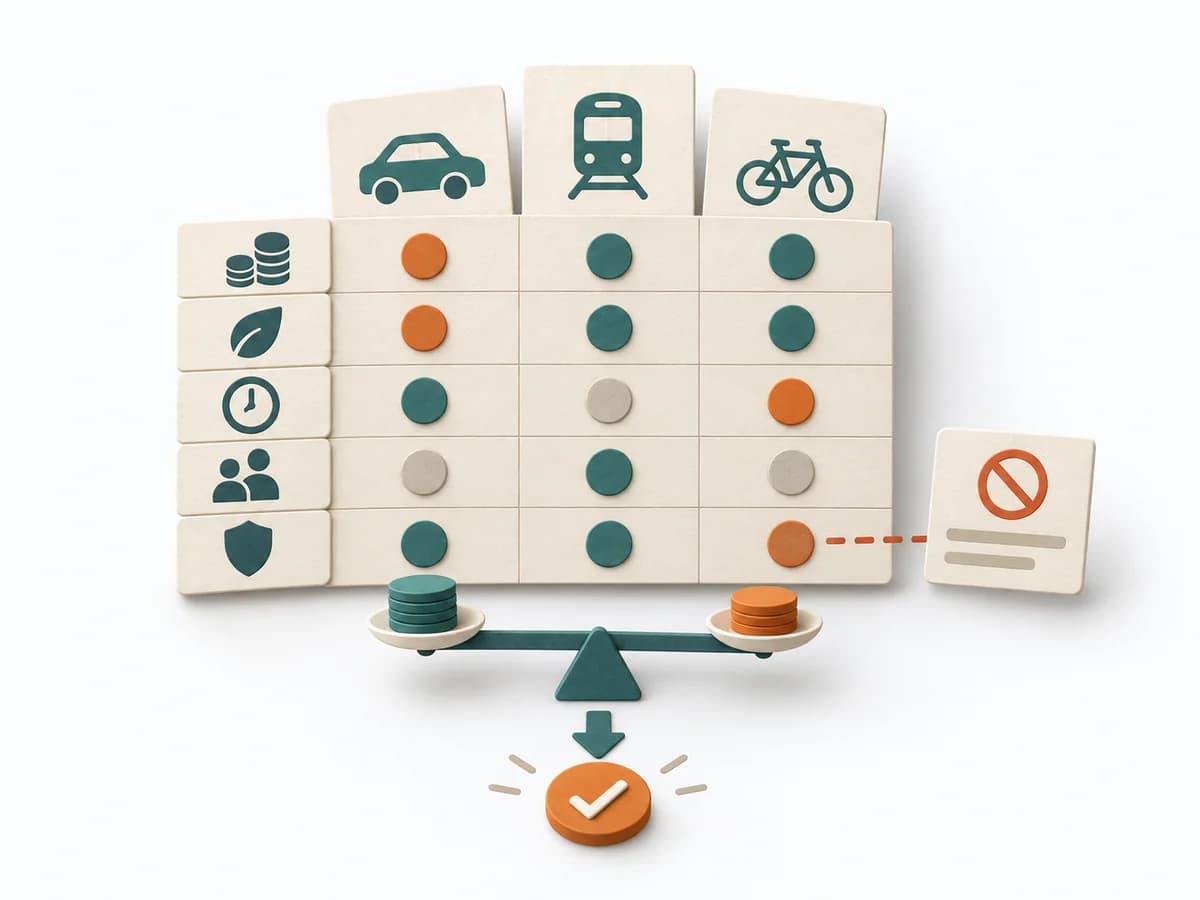 Decision Making Trade-off Analysis |
|---|---|---|---|---|
Purposedifferent | In early decisions, alternatives are often still vague, incomplete, or blended together. Option Framing brings every possibility into a comparable form and makes visible which variant actually fits the question. | When several options collide with several criteria, comparison quickly becomes subjective. A Decision Matrix makes the trade-off visible and brings weighting, criteria, and options into a shared logic. | When several people work toward one goal but hold different mental maps, Alignment Mapping makes the discrepancies visible. It arranges goals, assumptions, and priorities so shared direction becomes verifiable. | With limited resources, quality, speed, cost, and risk almost always compete with each other. Trade-off Analysis makes these tensions explicit and prevents decisions from producing hidden side effects. |
Complexitysame | Medium | Medium | Medium | Medium |
Timedifferent | 45-120 min | 45-90 min | 1-2 h | 45-120 min |
Participantsdifferent | 3-8 | 2-8 | 4-12 | 2-8 |
Formatdifferent | Workshop + async | Workshop + async | Workshop | Workshop + async |
Outputdifferent | Option Frames, Assumption Notes, Comparable Shortlist, Decision Inputs | Decision Matrix, Scoring Rationale, Selected Option | Alignment Map, Open Issues, Decision Questions | Trade-off Matrix, Criteria List, Decision Rationale, Accepted Downsides |
Tagsno overlap | OptionsDecision framingStrategyComparison | DecisionCriteriaScoringTradeoffs | AlignmentStakeholdersStrategyFacilitation | TradeoffsDecisionCriteriaOptions |