View methods side by side.
Choose up to four methods. Add them using the search and share the comparison by copying its link.
| Criterion | 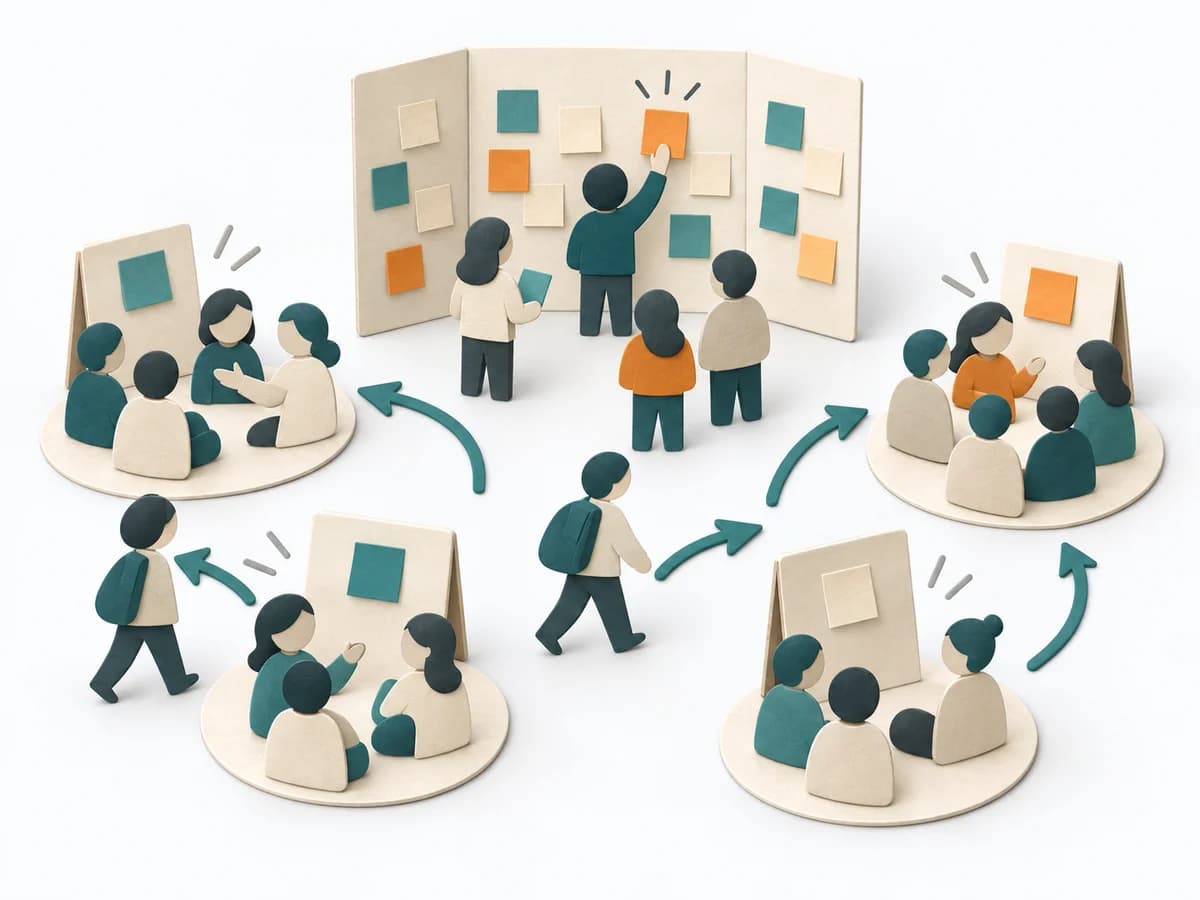 Facilitation Open Space Technology |  Facilitation Barcamp |  Innovation Rolestorming |  Innovation Brainstorming |
|---|---|---|---|---|
Purposedifferent | When a complex topic does not yet have a fitting agenda, Open Space Technology hands topic ownership back to the participants. The format suits questions that only move forward when real interest determines the order. | When many people can contribute knowledge and the flow should stay open, Barcamp provides a framework for self-organized sessions. The format channels energy without defining the content too narrowly in advance. | When a search for ideas stalls, switching roles helps people step outside their own perspective and activate new logics of action. The method reduces habit because contributions arise from a different stance. This brings unfamiliar, often fitting solution approaches into play. | When a team faces an open question with many obvious directions, the method first creates breadth instead of premature commitment. It separates idea flow from evaluation and makes lines of thought visible, creating a pool for selection and further development. |
Complexitydifferent | High | Medium | Low | Low |
Timedifferent | 0.5-2 Tage | Halber Tag bis 2 Tage | 30-60 min | 30-60 min |
Participantsdifferent | 20-500+ | 15-200 | 3-12 | 4-12 |
Formatsame | Workshop | Workshop | Workshop | Workshop |
Outputdifferent | Session Marketplace, Proceedings, Action Topics | Session Board, Session Notes, Community Learnings | Rollenkarten, Ideenpool pro Rolle, Konsolidierte Shortlist | Idea pool, Theme clusters, Shortlist |
Tagsno overlap | FacilitationLarge groupAutonomy | FacilitationLarge groupLearning | BrainstormingIdeationCreativity | BrainstormingIdeationCreativityWorkshopDivergence |