View methods side by side.
Choose up to four methods. Add them using the search and share the comparison by copying its link.
| Criterion | 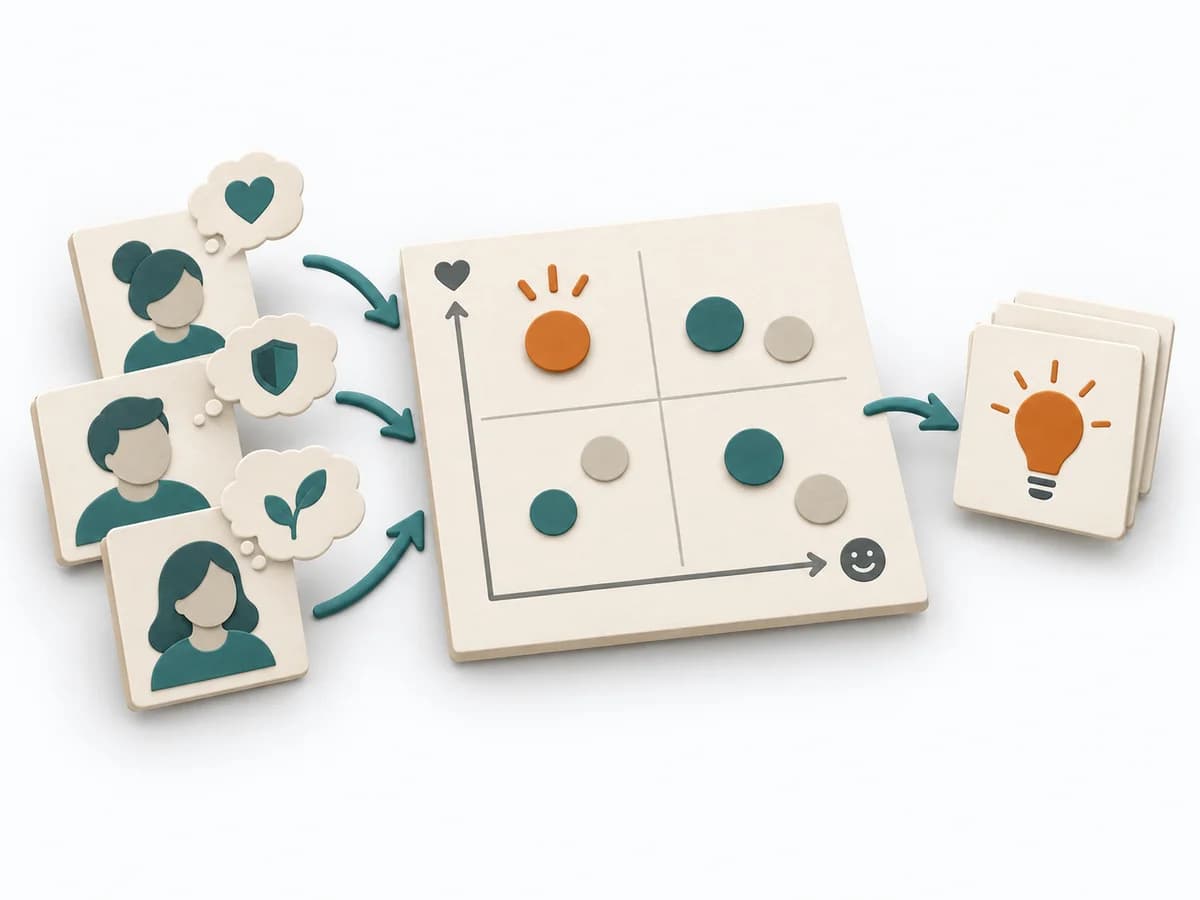 Product Discovery Outcome-Driven Innovation | 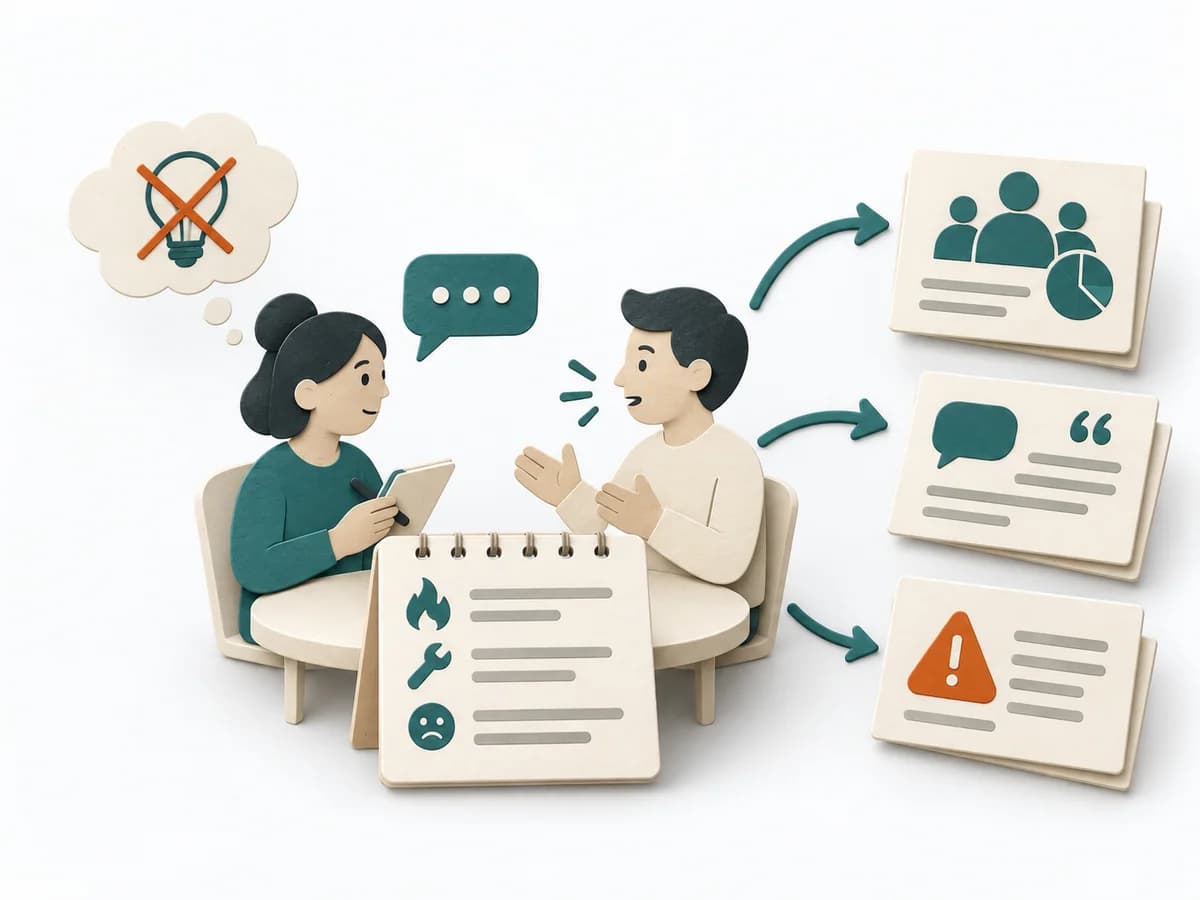 Product Discovery Problem Interview | 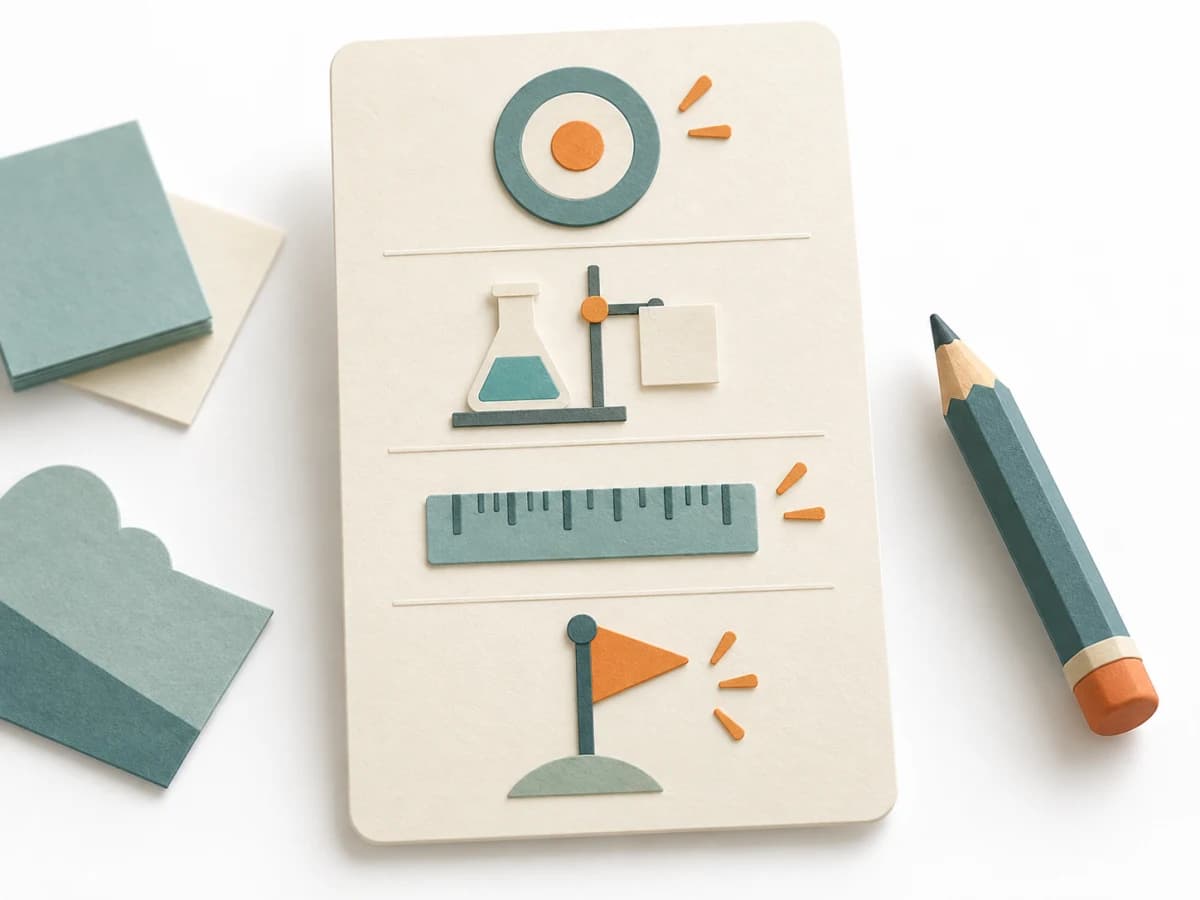 Product Discovery Test Card | 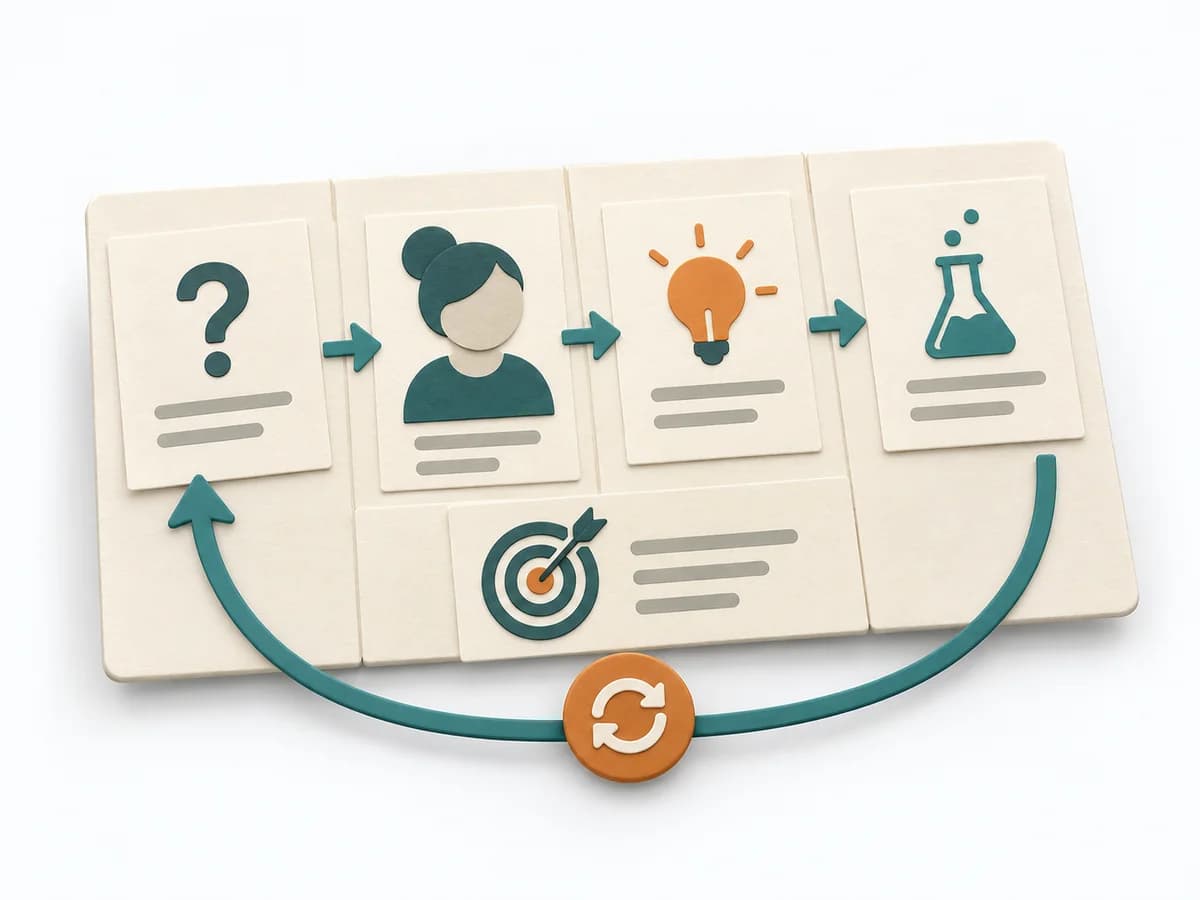 UX Design Lean UX Canvas |
|---|---|---|---|---|
Purposedifferent | Outcome-Driven Innovation clarifies customer problems, solution opportunities, and evidence. It separates jobs, desired outcomes, importance, satisfaction, and opportunity, and captures results as desired outcome statements, an opportunity landscape, and segments by underserved needs. | When the picture of the problem still needs to become solid, it asks about real situations and consequences. It separates genuine suffering from mere interest in a solution. | The Test Card turns a critical assumption into a testable claim and specifies in advance which result counts as success. | The Lean UX Canvas helps clarify user behavior, touchpoints, and concept decisions. It makes assumptions and desired outcomes visible and captures the result as a completed canvas, hypothesis list, and first experiment. |
Complexitydifferent | High | Medium | Low | Medium |
Timedifferent | Mehrere Wochen | 30-60 min je Interview | 20-35 min | 2-3 h |
Participantsdifferent | 2-6 researchers plus sample | 5-12 Interviews | 1-5 | 3-8 |
Formatsame | Workshop + async | Workshop + async | Workshop + async | Workshop + async |
Outputdifferent | Desired outcome statements, Opportunity landscape, Segmentation by underserved needs, Innovation hypotheses | Problem Evidence, Risk Notes, Customer Segments | Test Card with a pre-set threshold | Completed Lean UX Canvas, Hypothesis list, First experiment |
Tagsno overlap | OutcomesInnovationResearchQuantitative | DiscoveryInterviewsValidation | ExperimentsValidationDiscoveryHypothesis | CanvasHypothesisOutcomesDiscovery |