View methods side by side.
Choose up to four methods. Add them using the search and share the comparison by copying its link.
| Criterion |  Product Discovery Outcome-Driven Innovation | 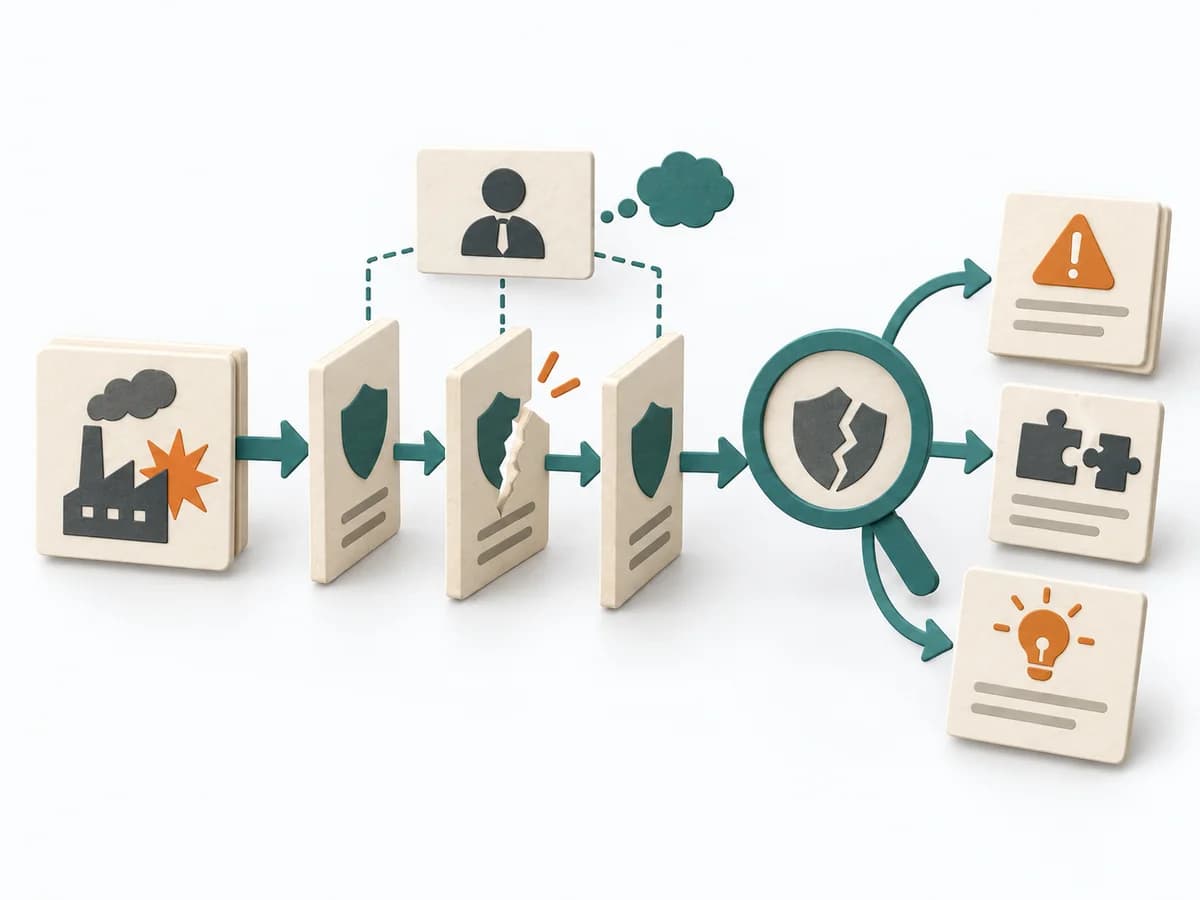 Operations MORT Analysis |  Product Discovery Smoke Test |  Product Discovery Fake Door Test |
|---|---|---|---|---|
Purposedifferent | Outcome-Driven Innovation clarifies customer problems, solution opportunities, and evidence. It separates jobs, desired outcomes, importance, satisfaction, and opportunity, and captures results as desired outcome statements, an opportunity landscape, and segments by underserved needs. | For a safety-relevant event or a system with high protection requirements, the method examines where controls failed. It exposes both technical and organizational gaps. | When demand only needs to be roughly verified, it tests interest with minimal effort. It measures whether people would take a next step at all. | When demand is still unclear, it measures interest in a feature before it is built. It separates real behavior from polite agreement and deliberately keeps build effort small. |
Complexitydifferent | High | High | Low | Medium |
Timedifferent | Mehrere Wochen | Mehrere Tage bis Wochen | 1-5 Tage | 1-5 Tage |
Participantsdifferent | 2-6 researchers plus sample | 2-6 | Nutzertraffic | Nutzertraffic |
Formatdifferent | Workshop + async | Workshop + async | Async | Async |
Outputdifferent | Desired outcome statements, Opportunity landscape, Segmentation by underserved needs, Innovation hypotheses | MORT Worksheets, Findings per Branch, Corrective Actions, Systemic Recommendations | Interest Metrics, Conversion Signal, Learning Note | Click Data, Interest Signal, Learning Decision |
Tagsno overlap | OutcomesInnovationResearchQuantitative | Root causeSafetySystemicIncident | ValidationExperimentsDemandGrowth | ValidationExperimentsDemandDiscovery |