View methods side by side.
Choose up to four methods. Add them using the search and share the comparison by copying its link.
| Criterion | 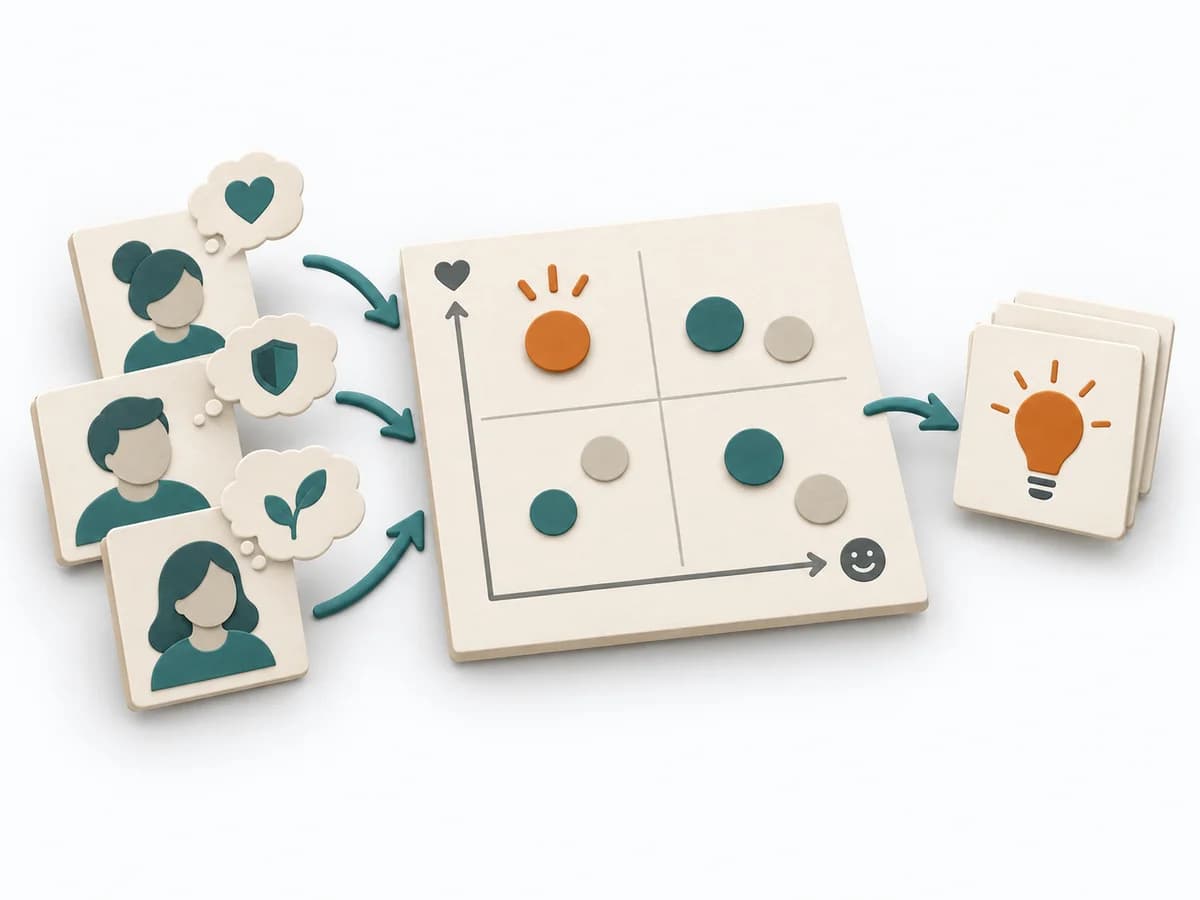 Product Discovery Outcome-Driven Innovation | 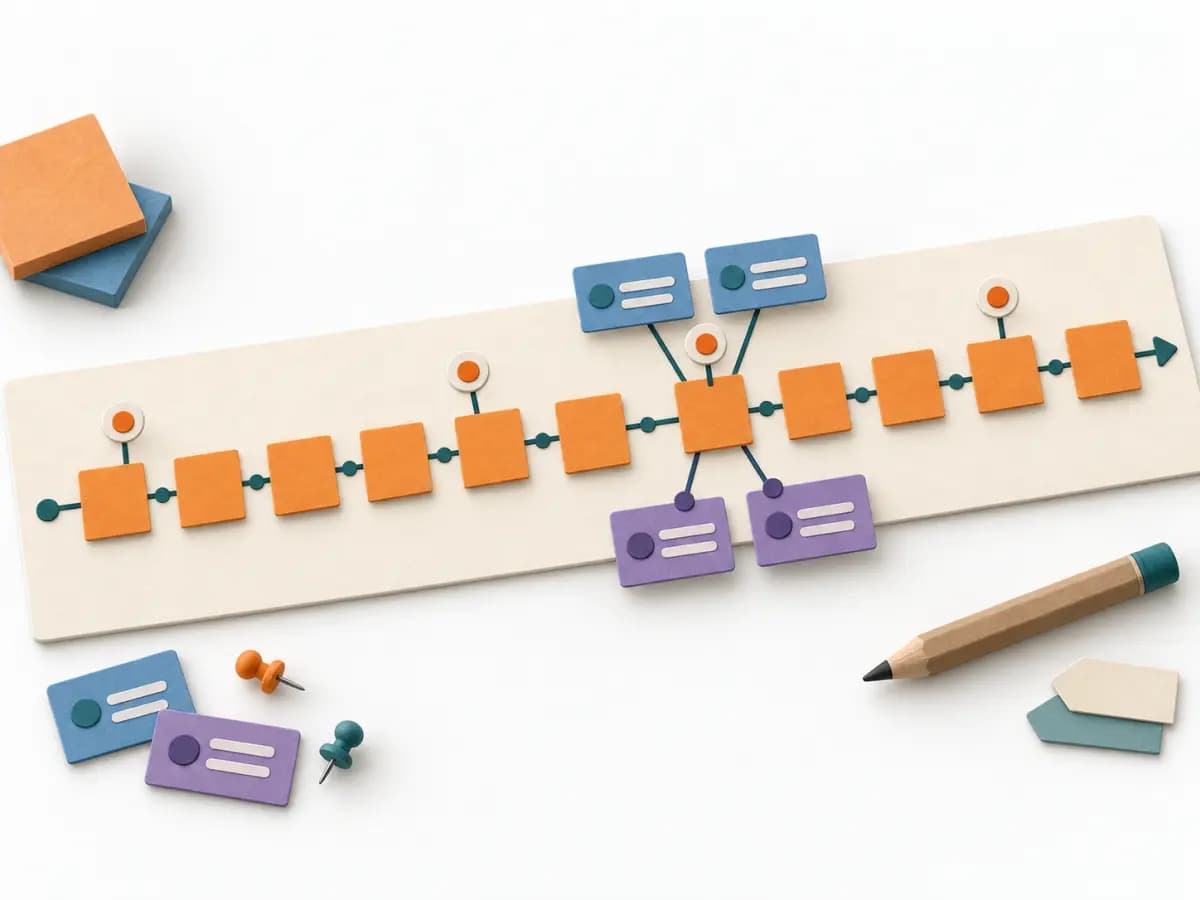 Domain Modeling EventStorming | 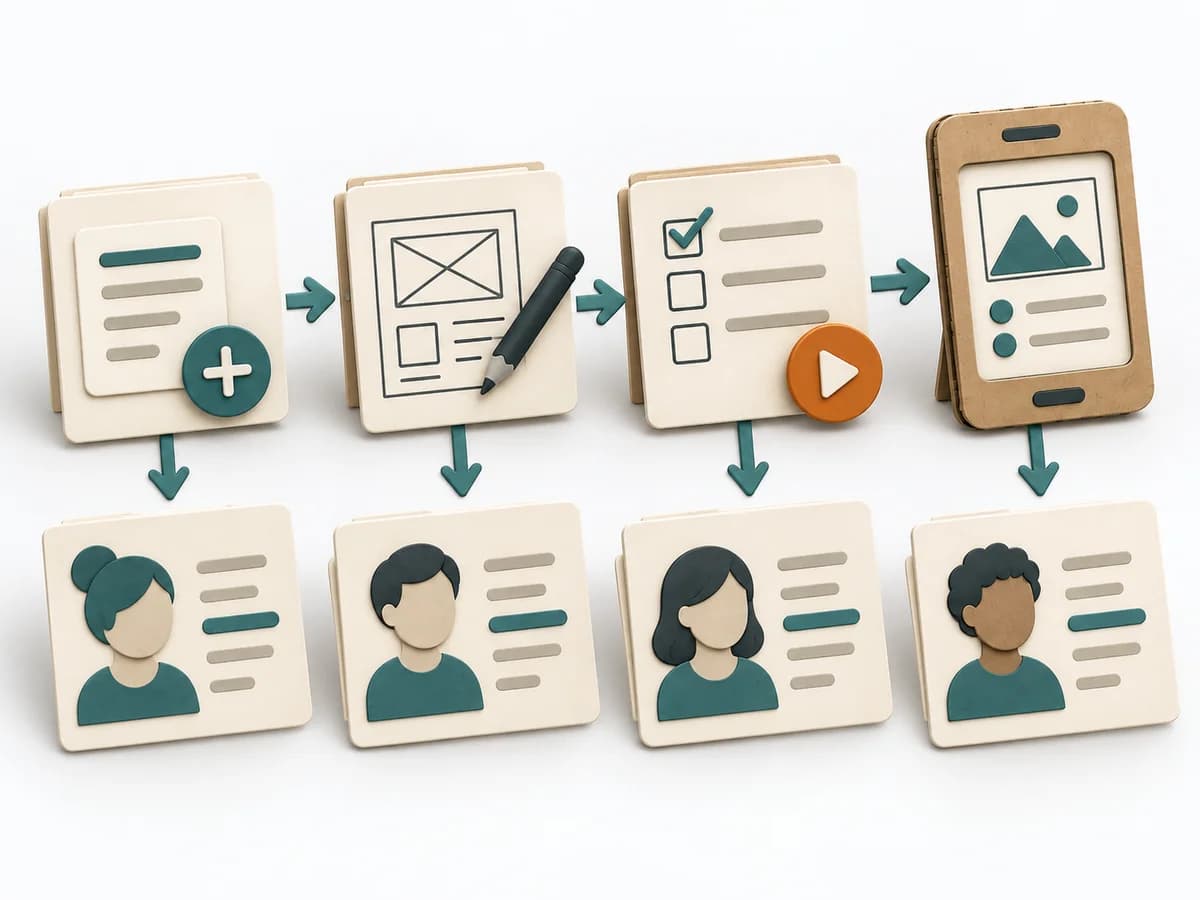 Knowledge Modeling Event Modeling | 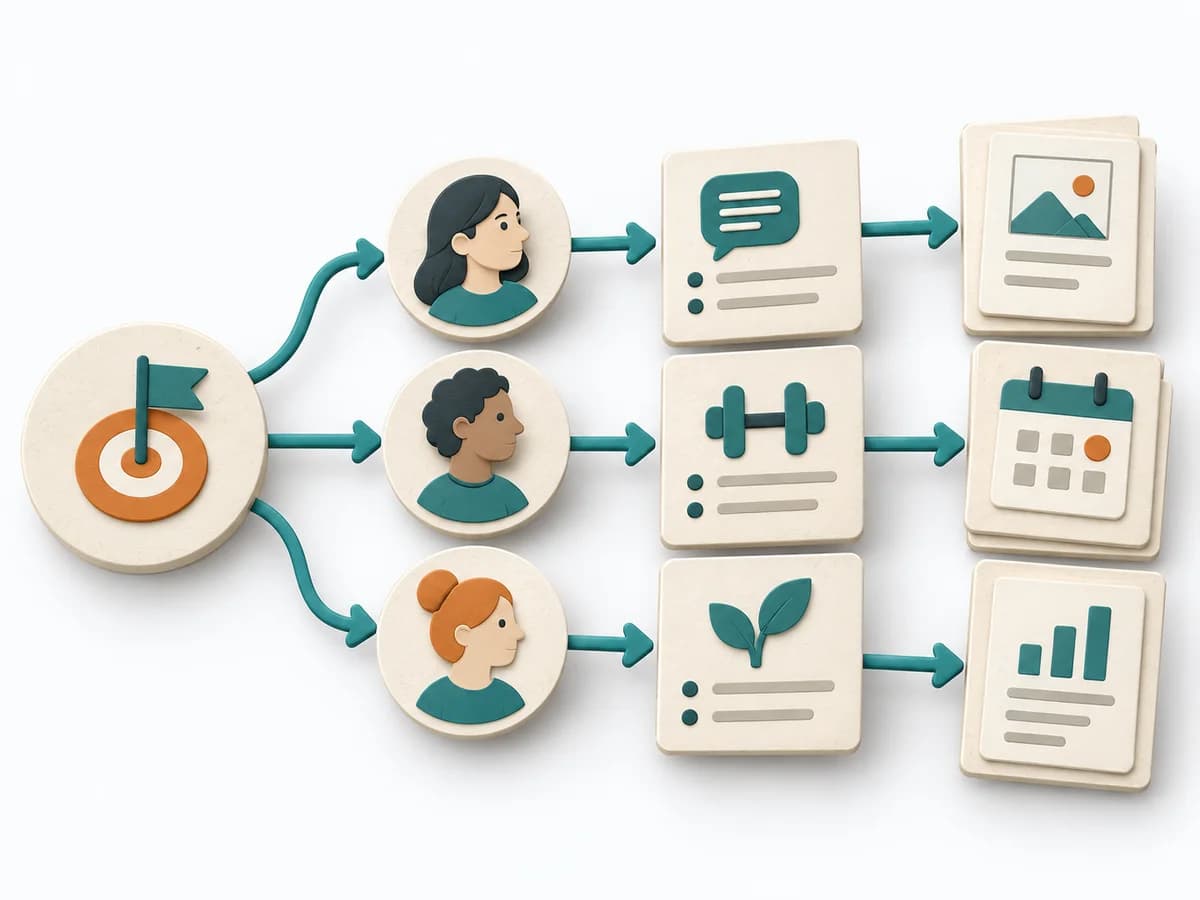 Product Strategy Impact Mapping |
|---|---|---|---|---|
Purposedifferent | Outcome-Driven Innovation clarifies customer problems, solution opportunities, and evidence. It separates jobs, desired outcomes, importance, satisfaction, and opportunity, and captures results as desired outcome statements, an opportunity landscape, and segments by underserved needs. | When a domain consists of many events, rules, and states, it creates a shared modeling space for the team. It bundles language, flows, and boundaries before domain knowledge fragments into siloed views. | Event Modeling connects business workflows with commands, events, and views into one coherent mental model. It helps design behavior, UI, and technical slices from the same underlying logic. | When a goal needs to be connected to several possible paths, it shows chains of impact instead of feature lists. It connects business goal, behavior change, and measures. |
Complexitydifferent | High | Medium | Medium | Medium |
Timedifferent | Mehrere Wochen | 2-8 h | 2-6 h | 45-90 min |
Participantsdifferent | 2-6 researchers plus sample | 5-12 | 2-8 | 3-8 |
Formatdifferent | Workshop + async | Workshop | Workshop + async | Workshop |
Outputdifferent | Desired outcome statements, Opportunity landscape, Segmentation by underserved needs, Innovation hypotheses | Event Timeline, Ubiquitous Language, Boundaries, Open Questions | Event Model, UI Flow, Commands, Read Models | Impact Map, Outcome Hypotheses, Delivery Options |
Tagsno overlap | OutcomesInnovationResearchQuantitative | Domain-Driven DesignEventsDiscoveryWorkshop | EventsBlueprintDomain-Driven DesignBehavior | OutcomesStrategyBehaviorPlanning |