View methods side by side.
Choose up to four methods. Add them using the search and share the comparison by copying its link.
| Criterion | 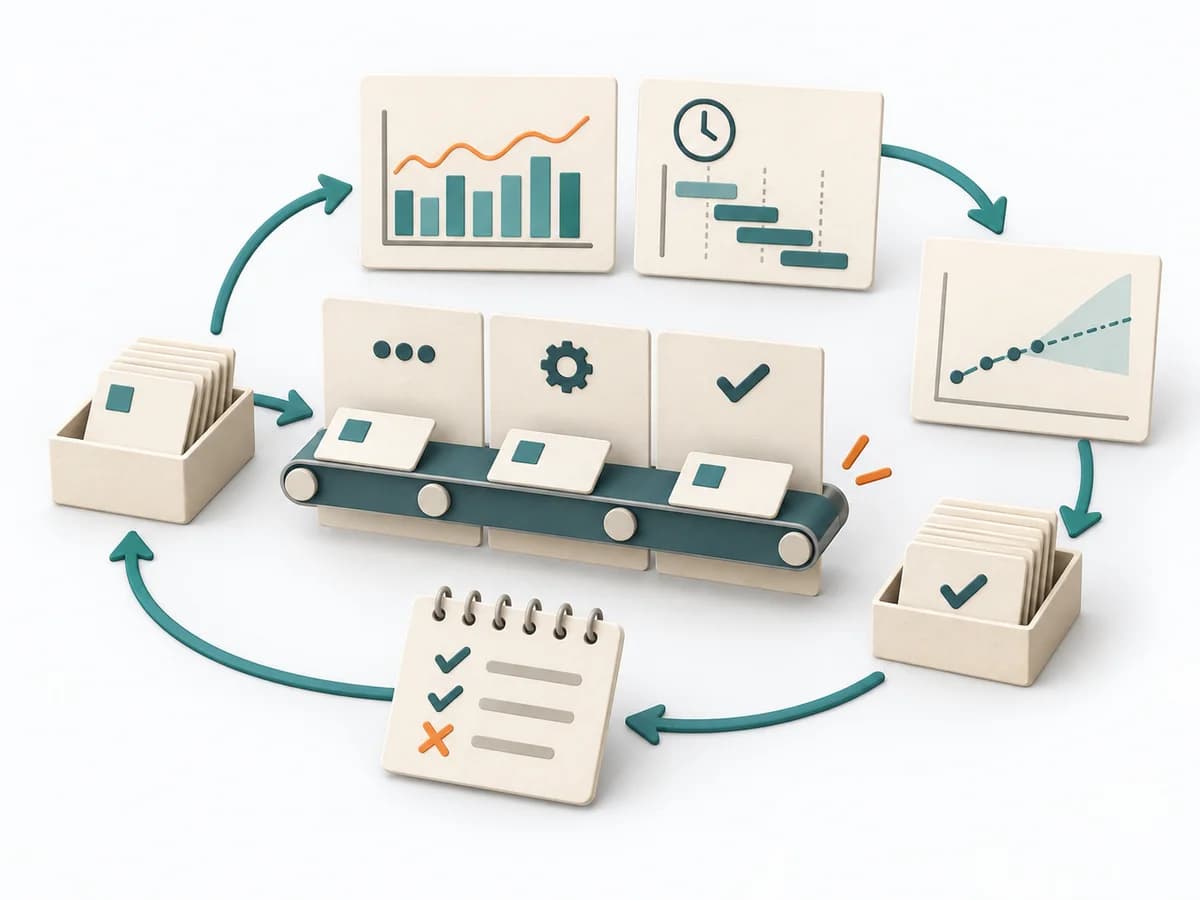 Agile NoEstimates | 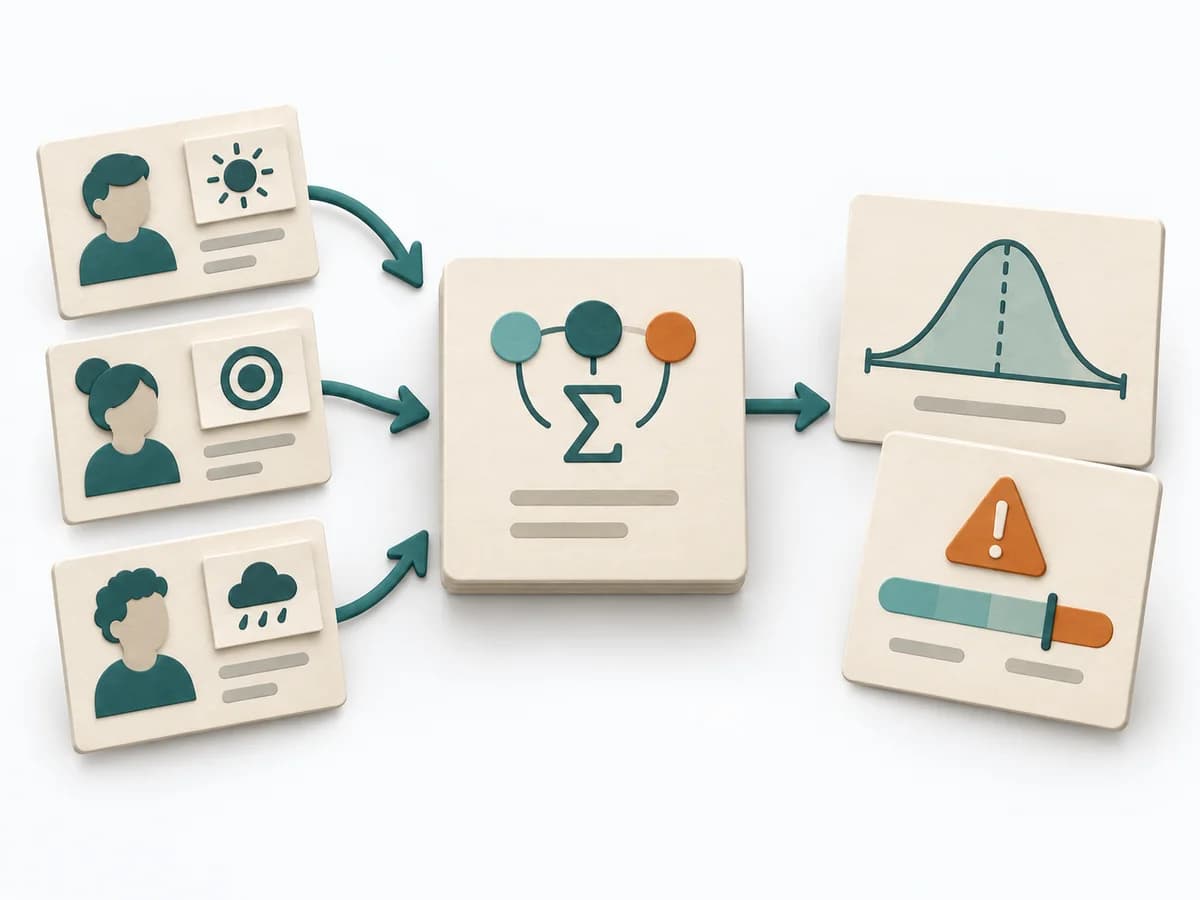 Decision Making PERT Estimation |  Agile Planning Poker | 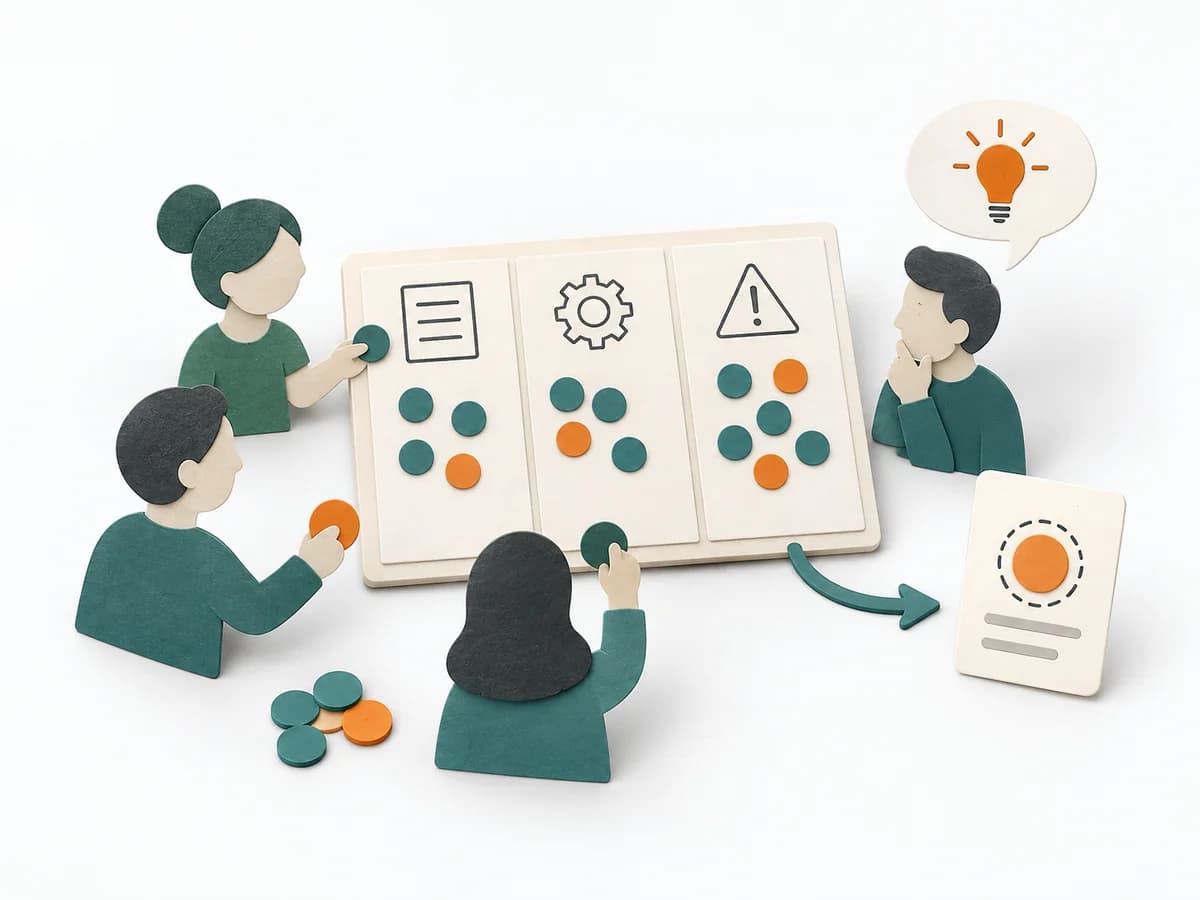 Facilitation Dot Estimation |
|---|---|---|---|---|
Purposedifferent | When estimating slows a team down more than it helps, it shifts the focus to flow, small slices, and real lead time. It sorts work by value, risk, and delivery ability. The result is captured as Throughput Data, Flow Forecast, and Slicing Rules. | On complex initiatives, a plain average tends to understate just how uncertain the outcome really is. It separates options, evaluation criteria, and open risks. The result is captured as a PERT Estimate, Expected Value, and Risk Notes. | When estimates within the team diverge too much, it puts differing expectations on a common test bench. It separates rough complexity from unspoken assumptions. | When size or effort can only be estimated roughly, Dot Estimation condenses the group's experience into a quick range. It turns individual contributions into a visible selection. The result is captured as an Effort Heatmap, Risk Signals, and Discussion Targets. |
Complexitydifferent | Medium | Medium | Low | Low |
Timedifferent | laufend | 15-45 min | 2-5 min je Item | 5-20 min |
Participantsdifferent | 2-12 | 1-8 | 3-9 | 3-20 |
Formatdifferent | Workshop + async | Workshop + async | Workshop + async | Workshop |
Outputdifferent | Throughput Data, Flow Forecast, Slicing Rules | PERT Estimate, Expected Value, Risk Notes | Relative Estimates, Assumption Notes, Split Candidates | Effort Heatmap, Risk Signals, Discussion Targets |
Tags1 shared | EstimationForecastingFlow | EstimationUncertaintyRisk | EstimationAgileRelative sizingTeam | EstimationEffortRisk |