View methods side by side.
Choose up to four methods. Add them using the search and share the comparison by copying its link.
| Criterion |  Delivery MoSCoW |  Agile WSJF |  Decision Making Decision Framing Workshop | 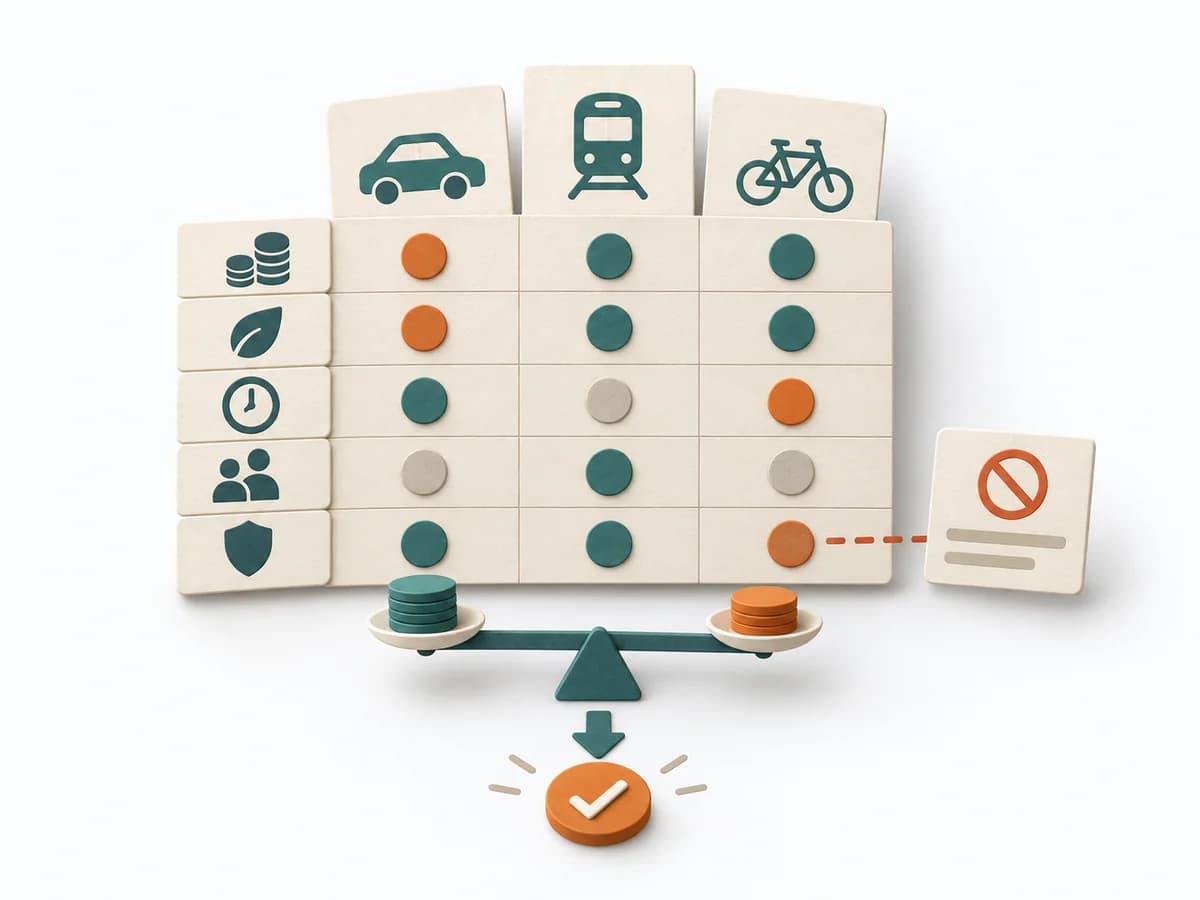 Decision Making Trade-off Analysis |
|---|---|---|---|---|
Purposedifferent | When a release carries too many demands and priorities are only ever negotiated, MoSCoW creates clear boundaries for the next cut. Must, Should, Could, and Won't make commitment, room for maneuver, and trade-off logic visible to everyone involved. | When many tasks compete for the same capacity, it orders work by economic impact. It makes time lost, benefit, and effort comparable together. | When a decision is poorly framed, even good answers deliver little value. A Decision Framing Workshop sharpens the problem, goal, and boundaries before the actual weighing begins. | With limited resources, quality, speed, cost, and risk almost always compete with each other. Trade-off Analysis makes these tensions explicit and prevents decisions from producing hidden side effects. |
Complexitydifferent | Low | High | Medium | Medium |
Timedifferent | 30-90 min | 45-90 min | 60-120 min | 45-120 min |
Participantsdifferent | 3-12 | 3-10 | 4-10 | 2-8 |
Formatdifferent | Workshop + async | Workshop | Workshop | Workshop + async |
Outputdifferent | Prioritized Backlog, Release Scope, Tradeoff Notes | Ranked Backlog, Cost-of-Delay Assumptions | Decision Frame, Decision Question, Criteria List, Evidence Plan | Trade-off Matrix, Criteria List, Decision Rationale, Accepted Downsides |
Tagsno overlap | PrioritizationScopeDecision | LeanEconomicsSequencePrioritization | Decision framingAlignmentCriteriaOptions | TradeoffsDecisionCriteriaOptions |