View methods side by side.
Choose up to four methods. Add them using the search and share the comparison by copying its link.
| Criterion |  Delivery MoSCoW | 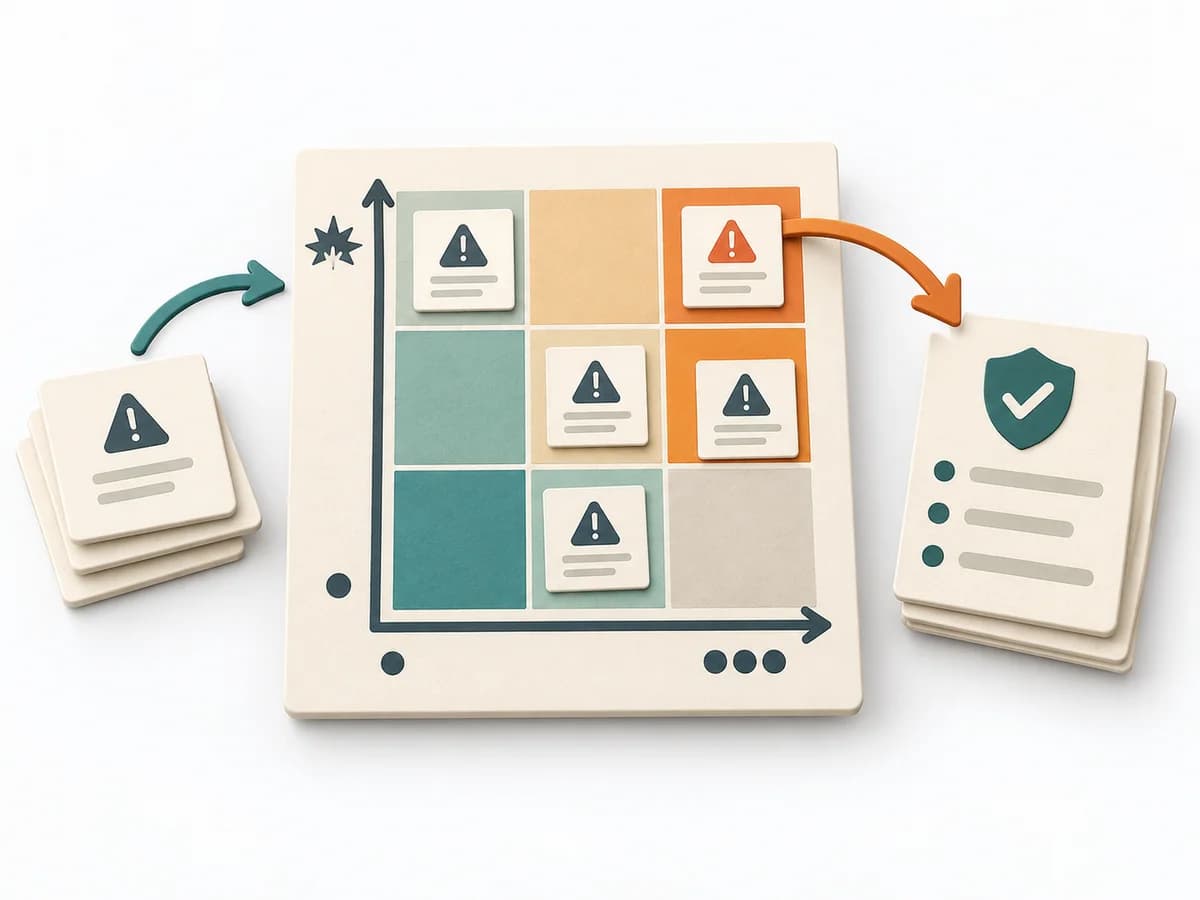 Decision Making Risk Matrix | 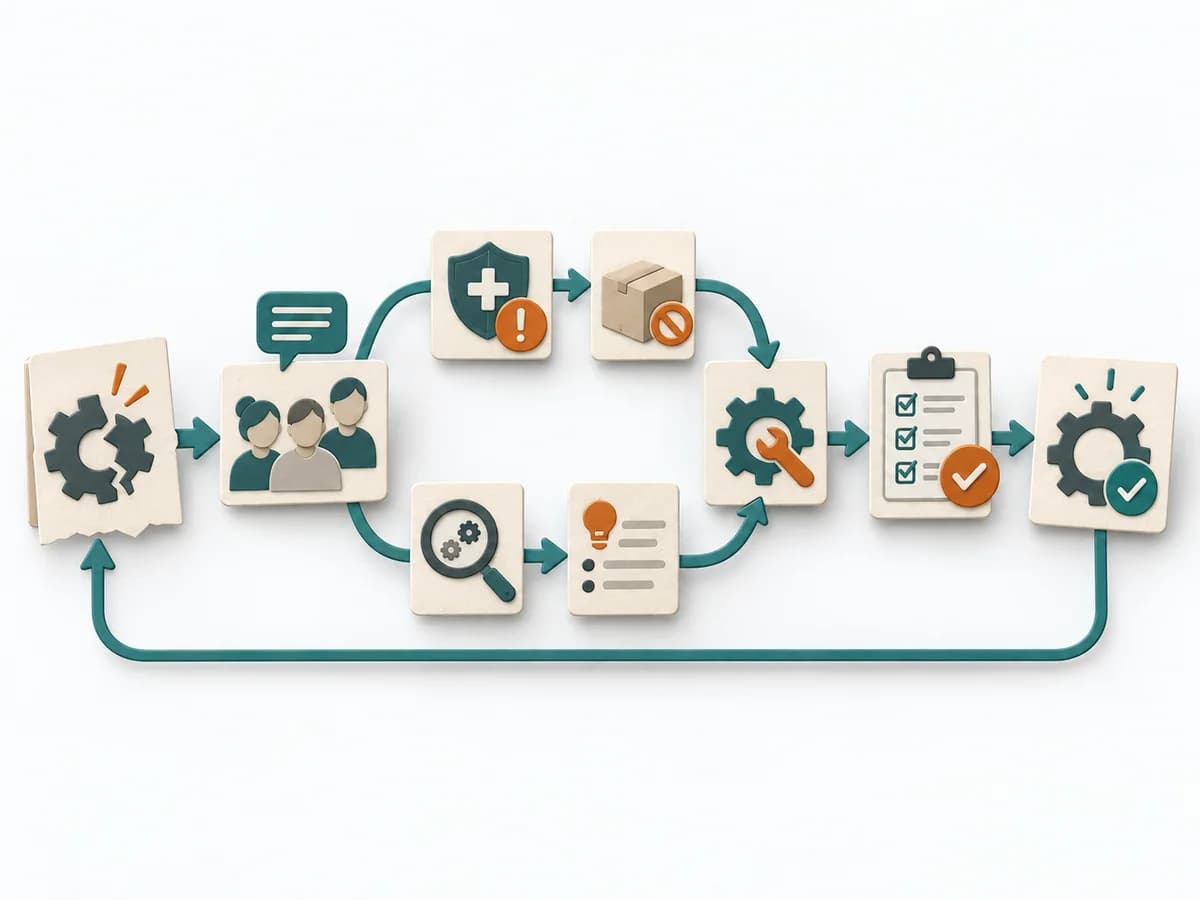 Operations 8D Problem Solving |  Operations Root Cause Analysis |
|---|---|---|---|---|
Purposedifferent | When a release carries too many demands and priorities are only ever negotiated, MoSCoW creates clear boundaries for the next cut. Must, Should, Could, and Won't make commitment, room for maneuver, and trade-off logic visible to everyone involved. | When a project faces many possible disruptions, it quickly becomes unclear which risks deserve attention first. It separates options, evaluation criteria, and open risks. The result is captured as a Risk Matrix and a Top Risk List. | For an acute quality or delivery problem, the method structures immediate protection and root cause work together. It keeps the situation stable while the actual cause is investigated cleanly. | When a problem keeps recurring and the cause stays unclear, the method exposes the underlying mechanism. It separates symptom, guess, and robust explanation from one another. |
Complexitydifferent | Low | Low | High | Medium |
Timedifferent | 30-90 min | 30-60 min | 1-6 Wochen | 1-4 h |
Participantsdifferent | 3-12 | 3-10 | 4-10 | 3-8 |
Formatsame | Workshop + async | Workshop + async | Workshop + async | Workshop + async |
Outputdifferent | Prioritized Backlog, Release Scope, Tradeoff Notes | Risk Matrix, Top Risk List | 8D Report, Containment Plan, Root Cause Evidence, Corrective Action Plan | Problem Statement, Cause Hypotheses, Confirmed Causes, Action Plan |
Tagsno overlap | PrioritizationScopeDecision | RiskDecisionPrioritizationAssessment | QualityProblem solvingRoot cause | Root causeProblem solvingQualityIncident |