View methods side by side.
Choose up to four methods. Add them using the search and share the comparison by copying its link.
| Criterion | 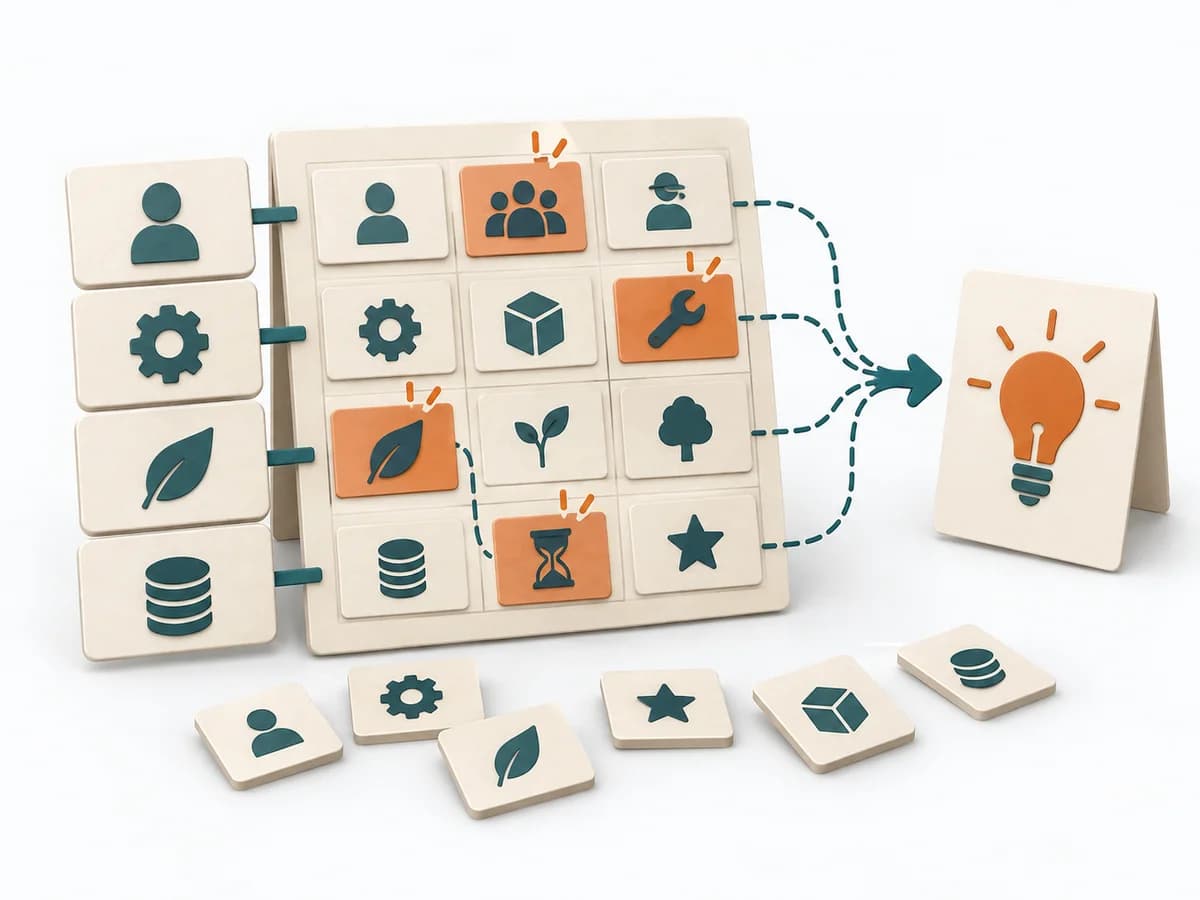 Innovation Morphological Analysis | 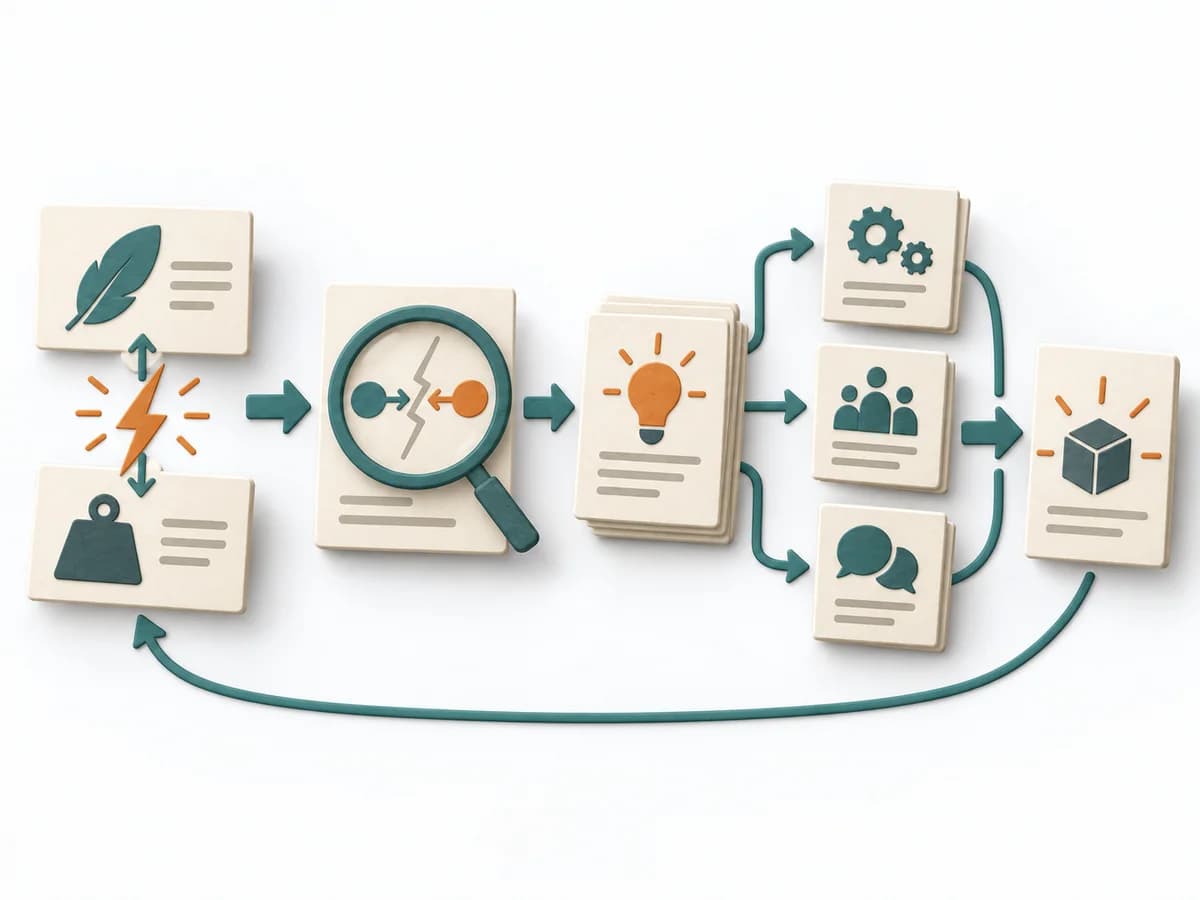 Innovation Contradiction Analysis |  Engineering Hypothesis-Driven Troubleshooting |  Innovation Brainstorming |
|---|---|---|---|---|
Purposedifferent | For a search for solutions with many degrees of freedom, a grid emerges for systematic combinations. The method separates features, variants, and exclusion criteria, so the space gets explored deliberately. | When a system should improve while another measure suffers as a result, the method makes the underlying conflict precisely formulable. It separates the desired effect from its side effect. This makes solutions possible that address the contradiction deliberately instead of half-heartedly. | When systems fail unexpectedly, spontaneous attempts often produce more noise than insight. Hypothesis-driven Troubleshooting translates symptoms into testable assumptions and makes troubleshooting learnable. | When a team faces an open question with many obvious directions, the method first creates breadth instead of premature commitment. It separates idea flow from evaluation and makes lines of thought visible, creating a pool for selection and further development. |
Complexitydifferent | Medium | Medium | Medium | Low |
Timedifferent | 1-3 h | 60-120 min | 30-240 min | 30-60 min |
Participantsdifferent | 2-8 | 2-8 | 1-6 | 4-12 |
Formatdifferent | Workshop + async | Workshop | Workshop + async | Workshop |
Outputdifferent | Morphological Box, Concept Combinations, Idea Shortlist | Contradiction Statement, Abstraction Notes, Solution Principles, Concept Ideas | Hypothesis Log, Test Plan, Evidence Notes, Diagnosis Summary | Idea pool, Theme clusters, Shortlist |
Tagsno overlap | IdeationInnovationCreativity | ContradictionsInnovationProblem solving | TroubleshootingProblem solvingDiagnosis | BrainstormingIdeationCreativityWorkshopDivergence |