View methods side by side.
Choose up to four methods. Add them using the search and share the comparison by copying its link.
| Criterion |  Innovation Morphological Analysis |  Operations Barrier Analysis | 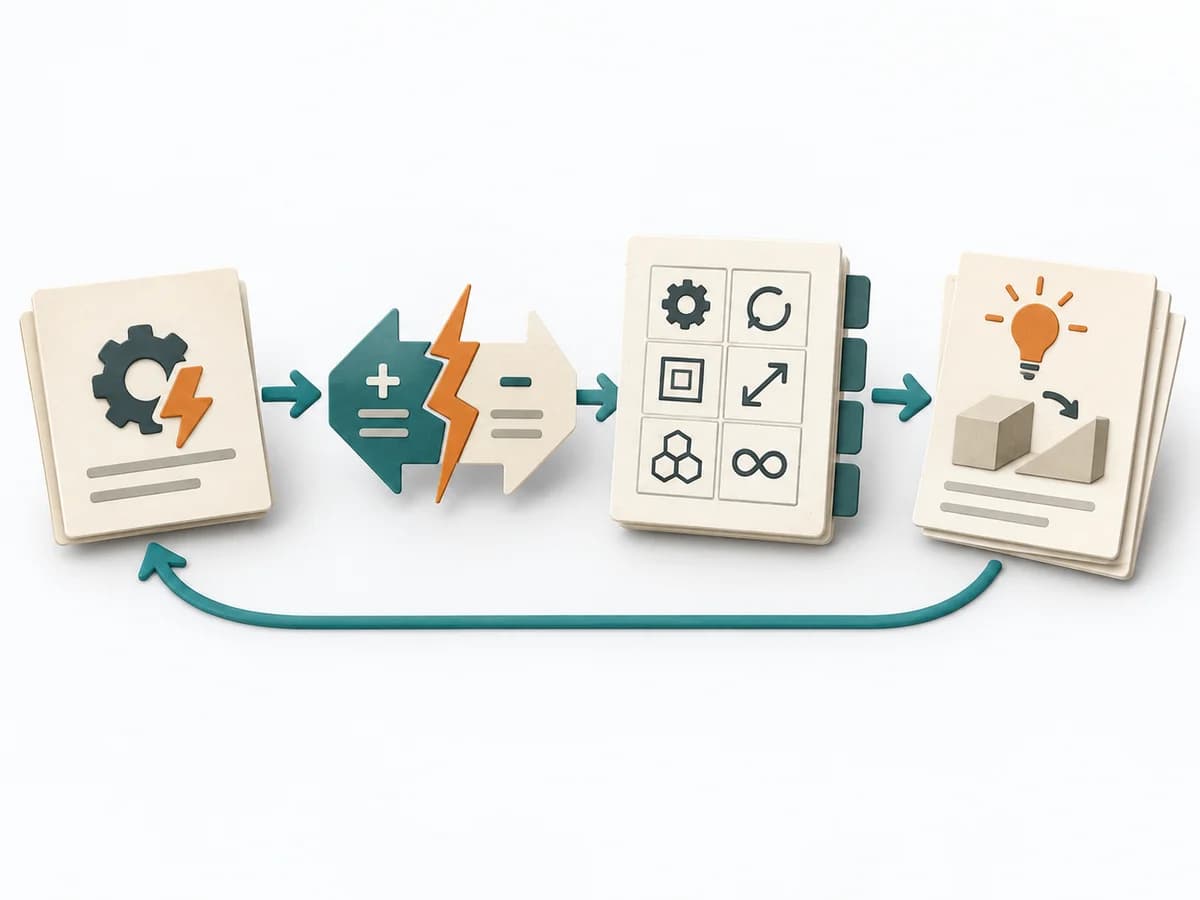 Innovation TRIZ |  Operations Root Cause Analysis |
|---|---|---|---|---|
Purposedifferent | For a search for solutions with many degrees of freedom, a grid emerges for systematic combinations. The method separates features, variants, and exclusion criteria, so the space gets explored deliberately. | For a risk that can only be managed through multiple layers of protection, the method examines the effectiveness of each barrier. It shows where safeguards are missing, too weak, or fail under real conditions. | For technical contradictions or trade-offs, the method looks for solutions that resolve opposing requirements at the same time. It translates limits into an explicit picture of conflict that becomes workable. This produces not just compromises but more elegant principles. | When a problem keeps recurring and the cause stays unclear, the method exposes the underlying mechanism. It separates symptom, guess, and robust explanation from one another. |
Complexitydifferent | Medium | Medium | High | Medium |
Timedifferent | 1-3 h | 2-4 h | 1-4 h | 1-4 h |
Participantsdifferent | 2-8 | 2-6 | 2-8 | 3-8 |
Formatsame | Workshop + async | Workshop + async | Workshop + async | Workshop + async |
Outputdifferent | Morphological Box, Concept Combinations, Idea Shortlist | Barrier Inventory, Failure Analysis per Barrier, Action Backlog | Contradiction Statement, Inventive Principles, Solution Concepts | Problem Statement, Cause Hypotheses, Confirmed Causes, Action Plan |
Tagsno overlap | IdeationInnovationCreativity | Root causeSafetyIncident | InnovationProblem solvingContradictionsCreativity | Root causeProblem solvingQualityIncident |