View methods side by side.
Choose up to four methods. Add them using the search and share the comparison by copying its link.
| Criterion | 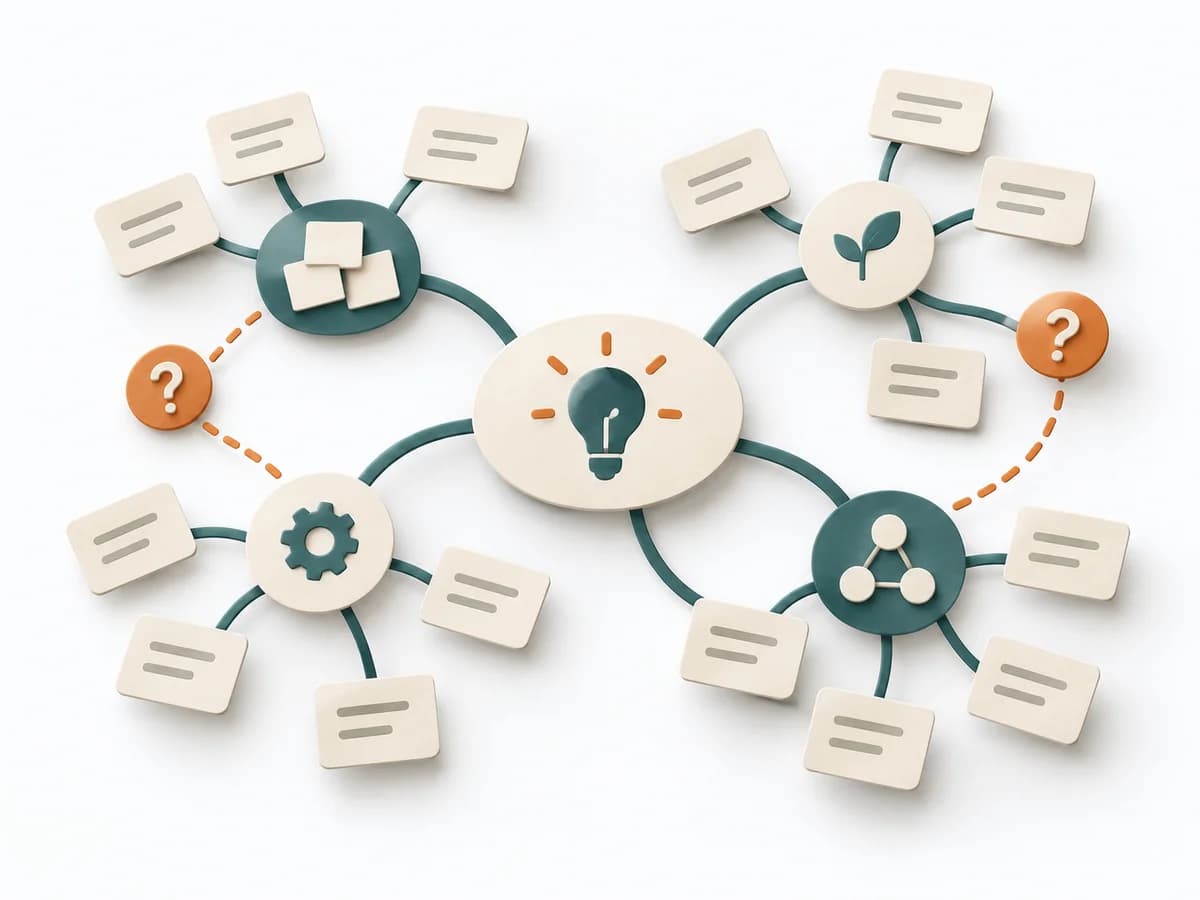 Facilitation Mind Mapping | 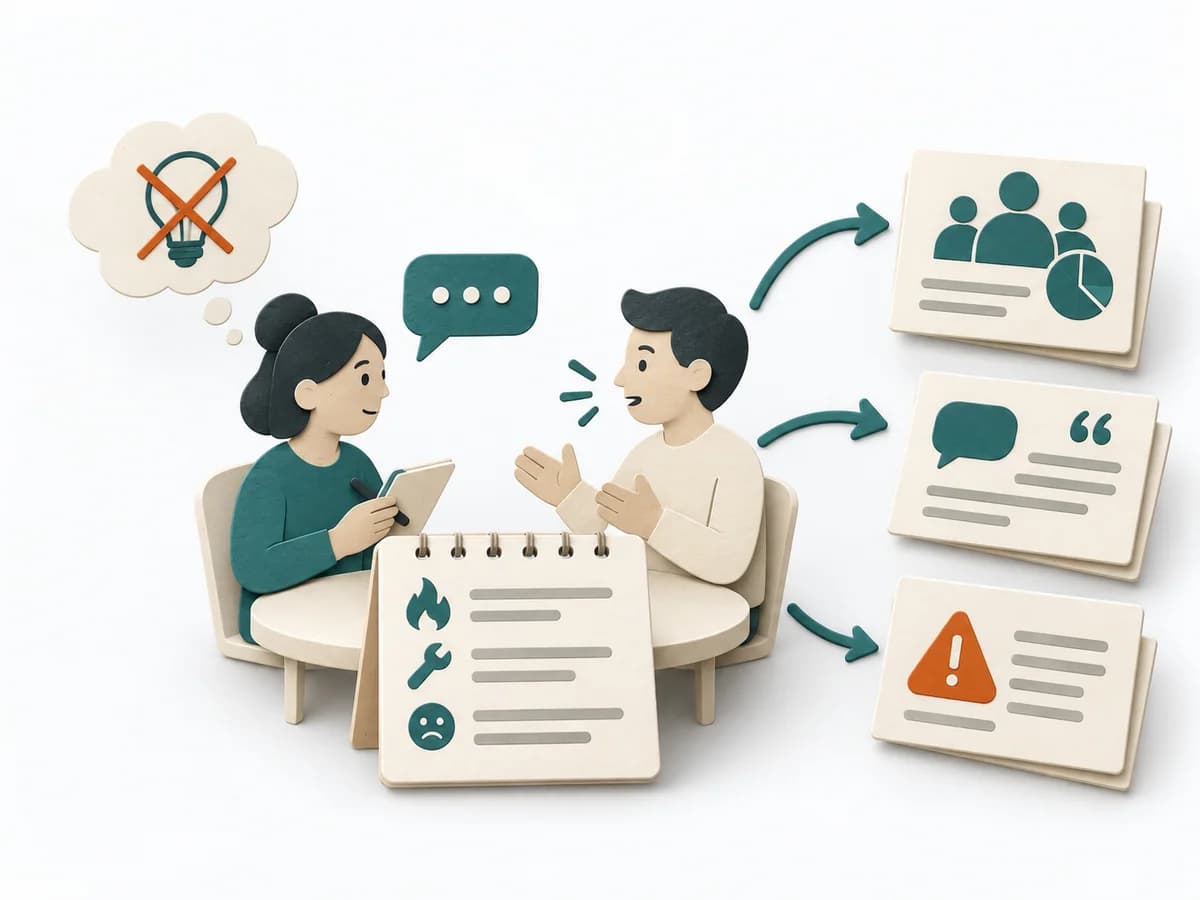 Product Discovery Problem Interview | 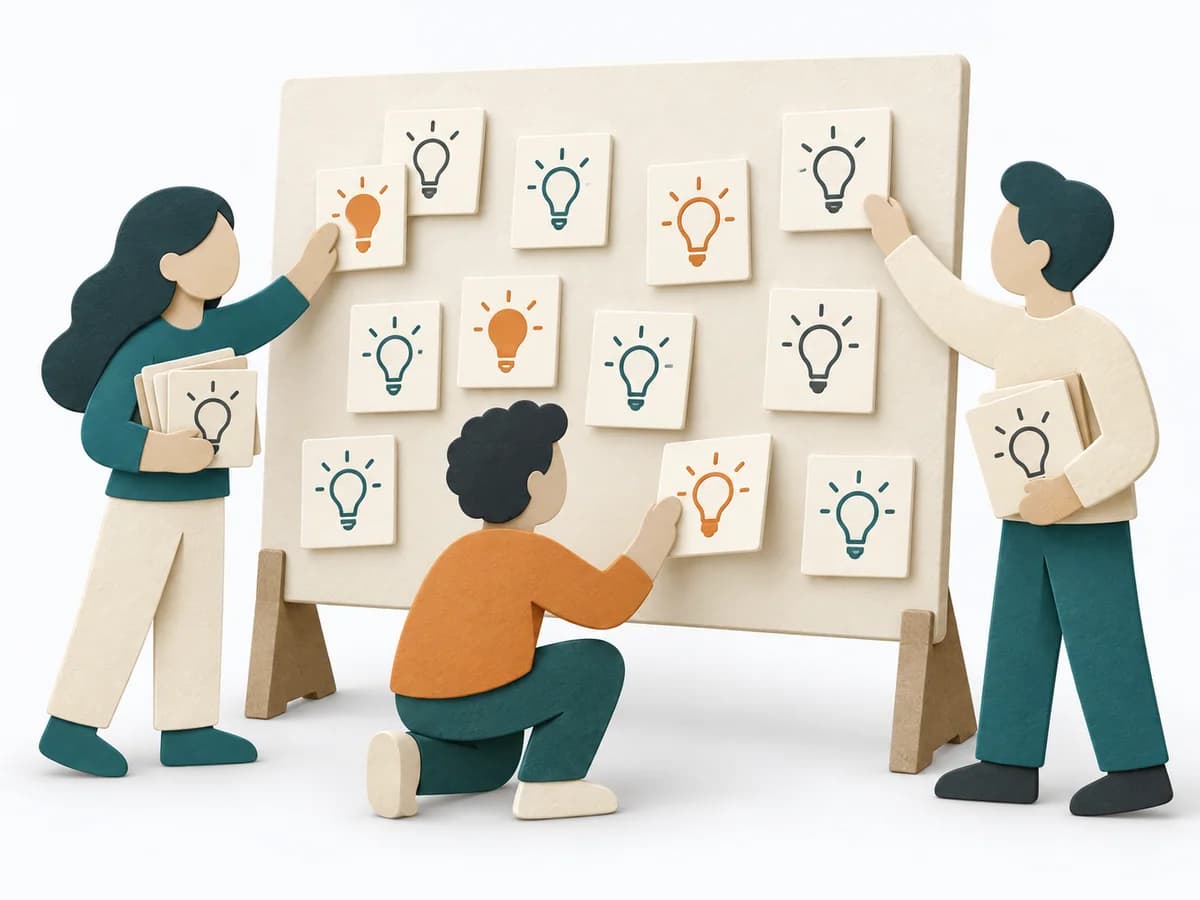 Innovation Brainstorming | 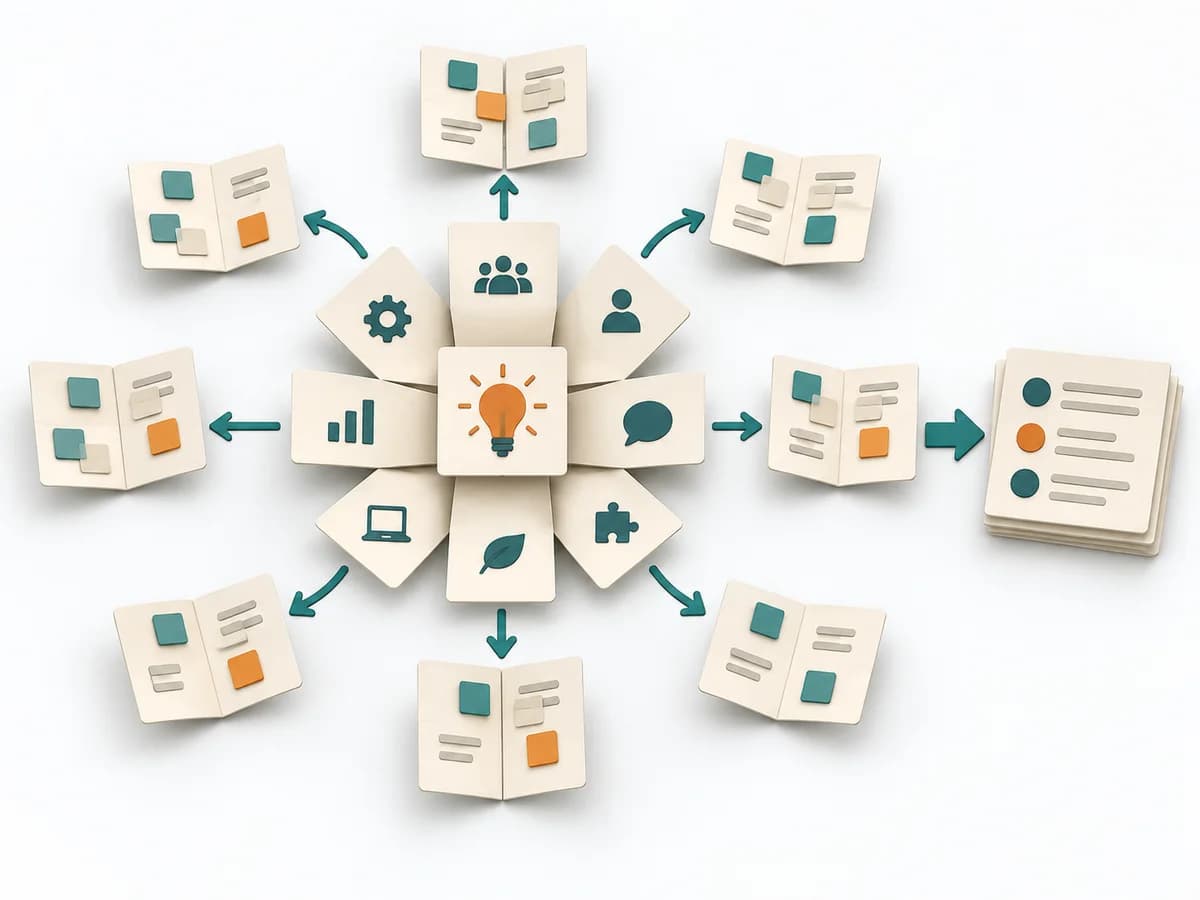 Innovation Lotus Blossom |
|---|---|---|---|---|
Purposedifferent | When a topic is still unclear and too many thoughts surface at once, Mind Mapping creates an open surface for ordering them. It makes connections, subtopics, and starting points visible without fixing them too early. | When the picture of the problem still needs to become solid, it asks about real situations and consequences. It separates genuine suffering from mere interest in a solution. | When a team faces an open question with many obvious directions, the method first creates breadth instead of premature commitment. It separates idea flow from evaluation and makes lines of thought visible, creating a pool for selection and further development. | When a central question feels too large, the method breaks it into neighboring topic fields with their own depth of ideation. It holds structure and openness at the same time, so adjacent perspectives don't get lost. This grows an idea space out of a core problem. |
Complexitydifferent | Low | Medium | Low | Low |
Timedifferent | 15-45 min | 30-60 min je Interview | 30-60 min | 45-90 min |
Participantsdifferent | 1-10 | 5-12 Interviews | 4-12 | 3-10 |
Formatdifferent | Workshop + async | Workshop + async | Workshop | Workshop |
Outputdifferent | Mind Map, Topic Clusters, Open Questions | Problem Evidence, Risk Notes, Customer Segments | Idea pool, Theme clusters, Shortlist | Lotus Diagram, Idea Themes, Shortlist |
Tagsno overlap | BrainstormingIdeasMappingStructureFacilitation | DiscoveryInterviewsValidation | BrainstormingIdeationCreativityWorkshopDivergence | BrainstormingIdeationCreativityDivergenceWorkshop |