View methods side by side.
Choose up to four methods. Add them using the search and share the comparison by copying its link.
| Criterion |  Facilitation Mind Mapping |  Domain Modeling Context Map | 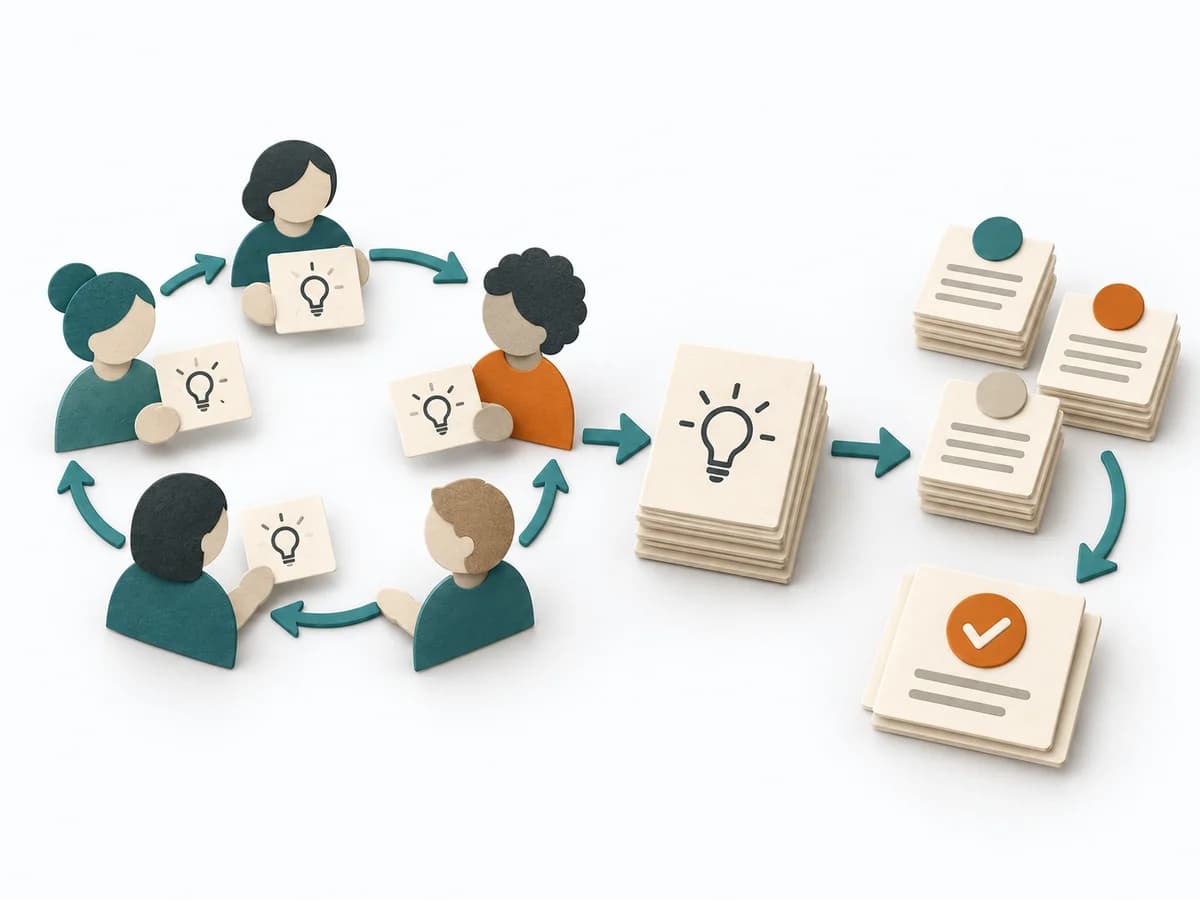 Innovation Round Robin Brainstorming |  Facilitation 1-2-4-All |
|---|---|---|---|---|
Purposedifferent | When a topic is still unclear and too many thoughts surface at once, Mind Mapping creates an open surface for ordering them. It makes connections, subtopics, and starting points visible without fixing them too early. | When several contexts need to talk to each other, it makes their relationships and dependencies legible. It helps sort integration pressure and responsibilities across system boundaries. | With unevenly distributed speaking time, the method brings every person into the contribution one after another. It prevents early voices from setting the direction while still producing a shared idea space. This makes participation plannable and the team's diversity visible. | When many people in a group too rarely get to speak, 1-2-4-All distributes thinking time more fairly. The format builds participation step by step and makes quiet or still-unformed thoughts usable faster. |
Complexitydifferent | Low | Medium | Low | Low |
Timedifferent | 15-45 min | 1-3 h | 20-45 min | 10-20 min |
Participantsdifferent | 1-10 | 2-8 | 4-10 | 4-100+ |
Formatdifferent | Workshop + async | Workshop + async | Workshop | Workshop |
Outputdifferent | Mind Map, Topic Clusters, Open Questions | Context Map, Integration Patterns, Boundary Notes | Idea List, Cluster, Shortlist | Idea List, Shared Insights, Emergent Themes |
Tagsno overlap | BrainstormingIdeasMappingStructureFacilitation | Domain-Driven DesignBoundariesStrategy | BrainstormingIdeationFacilitationInclusionCreativity | FacilitationInclusionIdeation |