View methods side by side.
Choose up to four methods. Add them using the search and share the comparison by copying its link.
| Criterion | 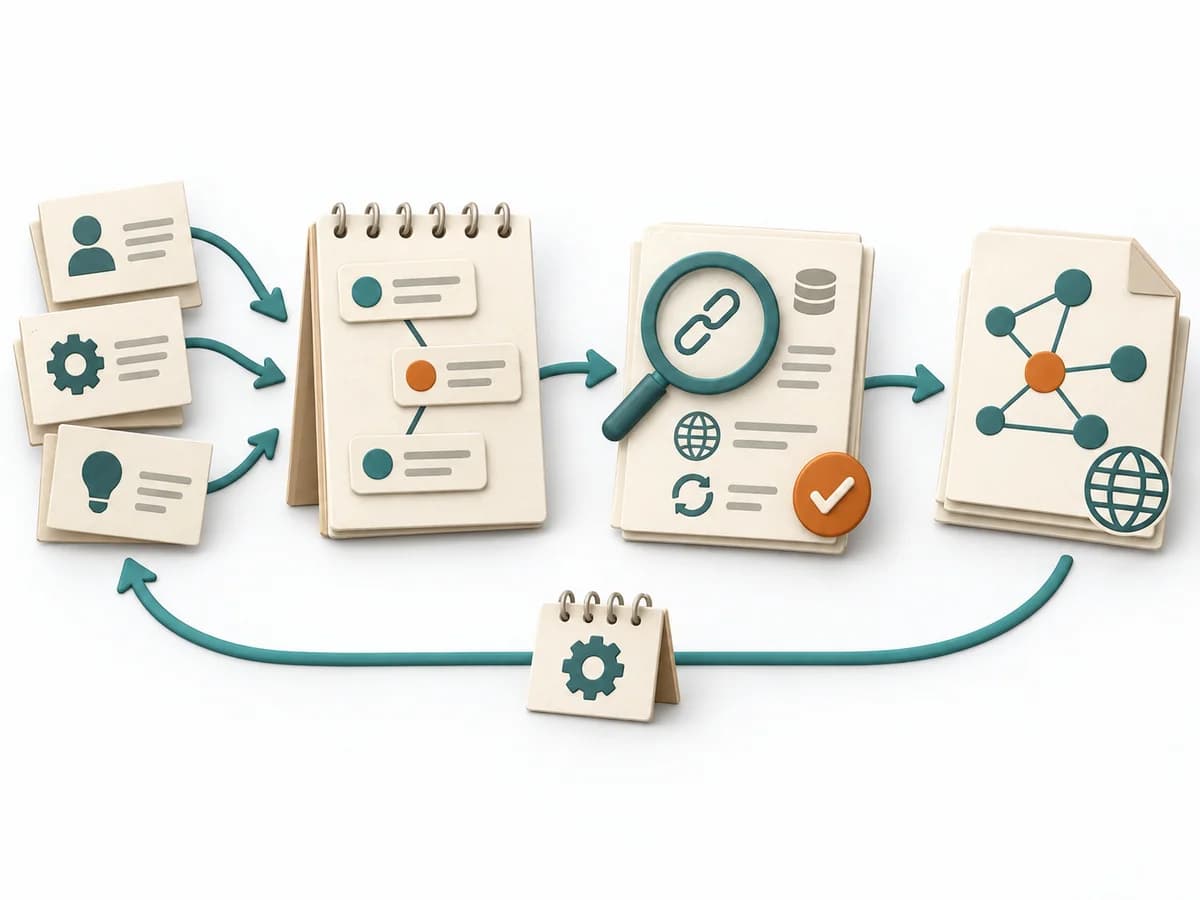 Knowledge Modeling Linked Open Terms |  Architecture Software Architecture Canvas |  Agile ROAM Board | 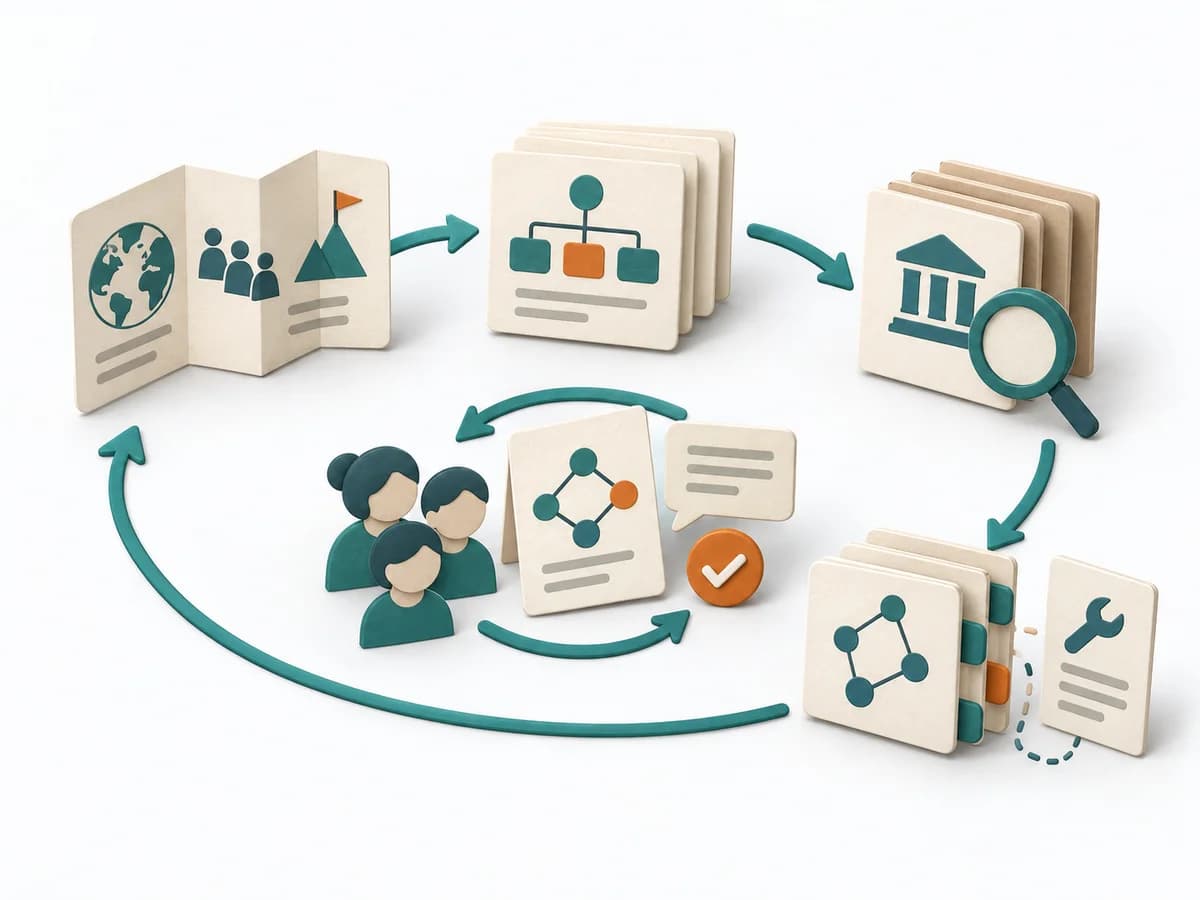 Knowledge Modeling NeOn Methodology |
|---|---|---|---|---|
Purposedifferent | Linked Open Terms connects terminology work with linked-data thinking and makes terminology technically connectable. Vocabulary, meanings, and references can thereby be maintained consistently. | The Software Architecture Canvas reduces a system to the most important architecture decisions, constraints, and interfaces. It is useful when teams need a resilient overall picture quickly. | When work needs to move between different states or columns, it makes that movement and its handoffs legible. It sorts work by value, risk, and delivery ability. The result is captured as a ROAM Board and an Owner List. | The NeOn Methodology structures ontology work as a controlled process with reuse, scenarios, and reviews. It is useful when ontologies should not emerge ad hoc but modularly and reusably. |
Complexitydifferent | Medium | Low | Low | High |
Timedifferent | Wochen bis Monate | 1-2 h | 20-40 min initial, dann laufend | Mehrere Wochen bis Monate |
Participantsdifferent | 2-8 | 3-10 | 3-15 | 2-10 |
Formatdifferent | Workshop + async | Workshop | Workshop + async | Workshop + async |
Outputdifferent | Ontology Requirements, Conceptual Model, Published Ontology, Documentation, Maintenance Plan | Architecture Canvas, Goals, Constraints, Quality Attributes | ROAM Board, Owner List | Ontology Requirements Specification, Reuse Plan, Ontology Modules, Evaluation Report |
Tagsno overlap | OntologyMethodologyAgileSemantic | CanvasArchitectureAlignmentWorkshop | RiskAgileTrackingAlignment | OntologyMethodologyReuseSemanticEngineering |