View methods side by side.
Choose up to four methods. Add them using the search and share the comparison by copying its link.
| Criterion | 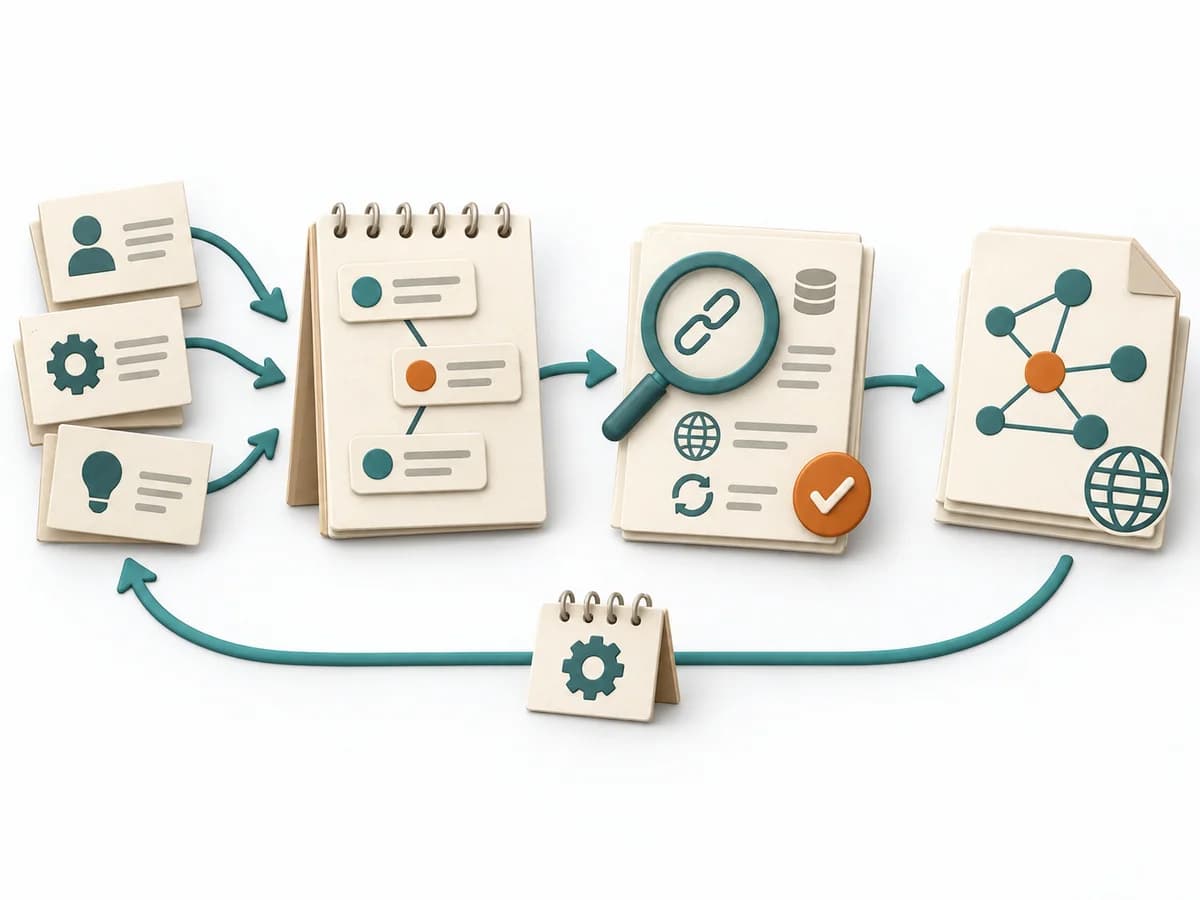 Knowledge Modeling Linked Open Terms |  Operations Fishbone Diagram |  Agile Specification by Example | 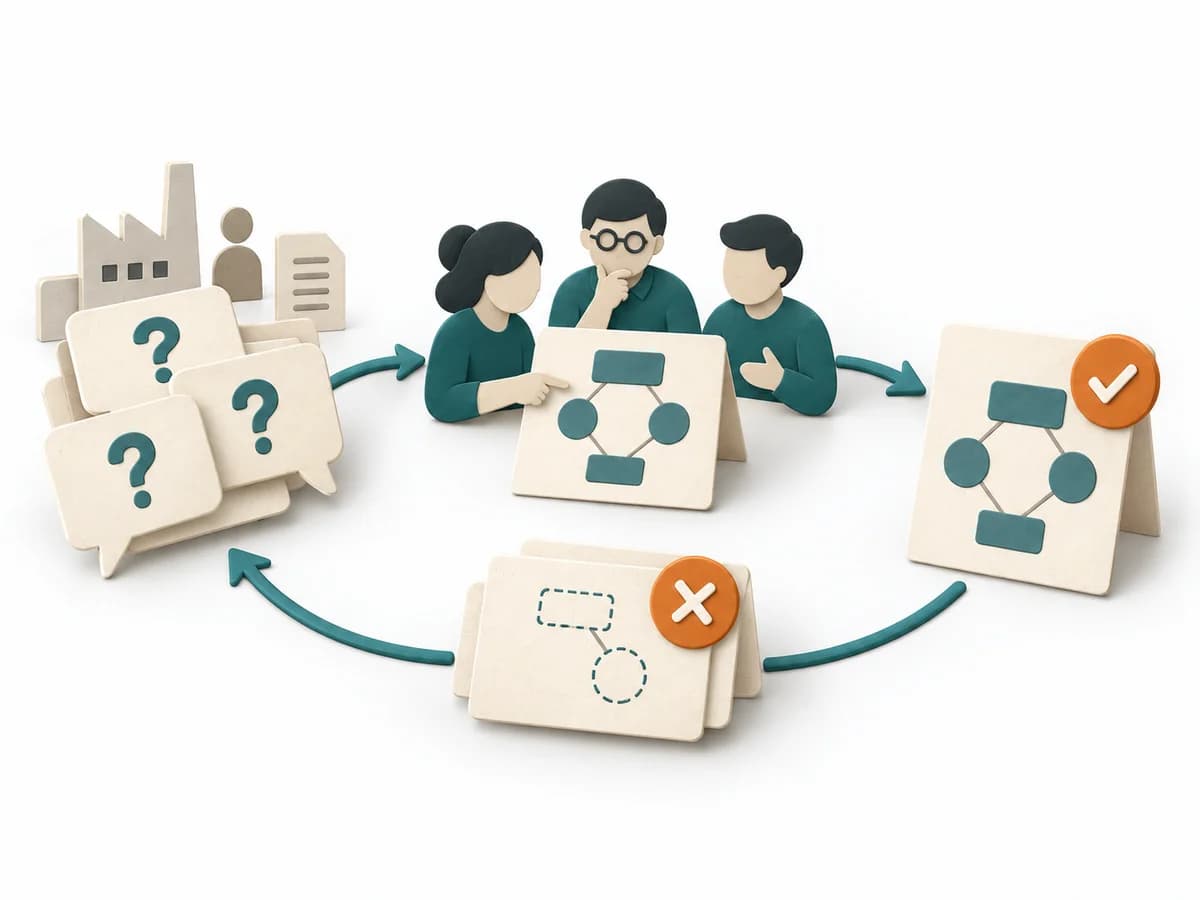 Knowledge Modeling Competency Questions |
|---|---|---|---|---|
Purposedifferent | Linked Open Terms connects terminology work with linked-data thinking and makes terminology technically connectable. Vocabulary, meanings, and references can thereby be maintained consistently. | When a problem has several possible contributing factors, the method sorts causes by cause areas. It prevents an initial hunch from blocking the view of other plausible drivers. | When business rules need to become precise, it ties language, example, and test together. It sorts work by value, risk, and delivery ability. The result is captured as an Example Table and Acceptance Tests. | Competency Questions translate a domain model into concrete questions that it must be able to answer. The method keeps the model's scope clean and prevents pretty but useless structures. |
Complexitydifferent | Medium | Low | Medium | Medium |
Timedifferent | Wochen bis Monate | 30-60 min | 60-90 min pro Feature | 2-4 h |
Participantsdifferent | 2-8 | 2-8 | 3-6 | 2-8 |
Formatdifferent | Workshop + async | Workshop | Workshop | Workshop + async |
Outputdifferent | Ontology Requirements, Conceptual Model, Published Ontology, Documentation, Maintenance Plan | Fishbone Diagram, Cause Categories, Investigation Backlog | Example Table, Acceptance Tests | Competency Question Set, Required Concepts, Test Queries, Coverage Matrix |
Tagsno overlap | OntologyMethodologyAgileSemantic | Root causeQualityOperations | AgileRequirementsExamplesBehavior-Driven Development | OntologyKnowledge graphScopeRequirementsSemantic |