View methods side by side.
Choose up to four methods. Add them using the search and share the comparison by copying its link.
| Criterion |  Systems Thinking Leverage Points |  Operations Fishbone Diagram |  Systems Thinking Current Reality Tree | 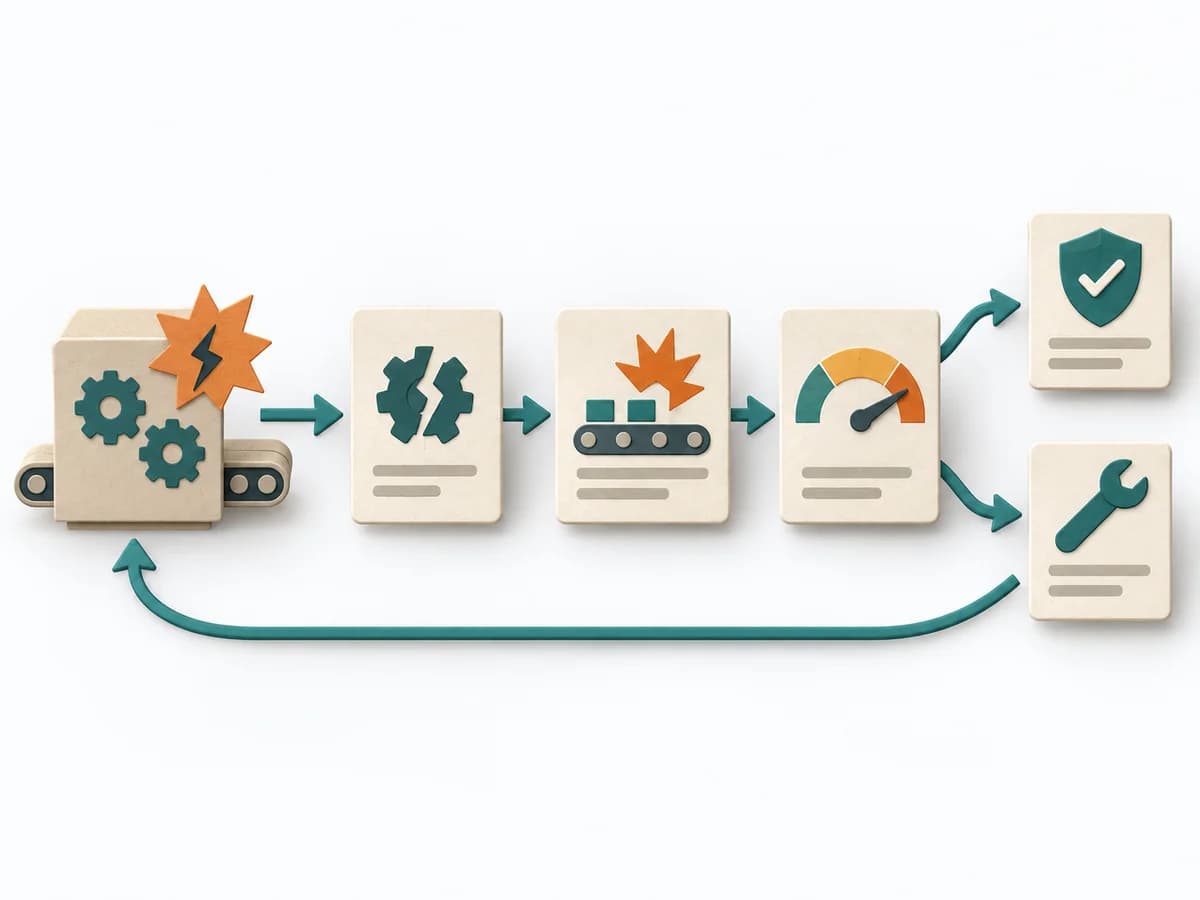 Operations Failure Mode and Effects Analysis |
|---|---|---|---|---|
Purposedifferent | Leverage Points show exactly where interventions in a system produce a disproportionate effect. It draws relationships, patterns, and feedback loops. The result is captured as a leverage map and action strategy. | When a problem has several possible contributing factors, the method sorts causes by cause areas. It prevents an initial hunch from blocking the view of other plausible drivers. | A Current Reality Tree condenses many symptoms into a few causal chains. The method makes visible which core problems drive several negative effects at once. | For a process, product, or service with noticeable failure risks, the method assesses possible failure modes in advance. It directs attention to combinations of occurrence, effect, and detectability. |
Complexitydifferent | High | Low | High | High |
Timedifferent | Half day | 30-60 min | 2-6 h | 2-6 h |
Participantsdifferent | 3-12 | 2-8 | 3-8 | 3-10 |
Formatsame | Workshop | Workshop | Workshop | Workshop |
Outputdifferent | Leverage Map, Action Strategy | Fishbone Diagram, Cause Categories, Investigation Backlog | Current Reality Tree, Core Problems, Intervention Ideas | FMEA Table, Risk Priority, Mitigation Actions |
Tagsno overlap | Systems thinkingChangeStrategy | Root causeQualityOperations | Systems thinkingRoot causeConstraintsCausality | RiskQualityOperationsRoot cause |