View methods side by side.
Choose up to four methods. Add them using the search and share the comparison by copying its link.
| Criterion |  Operations Learning Review |  Operations Root Cause Analysis | 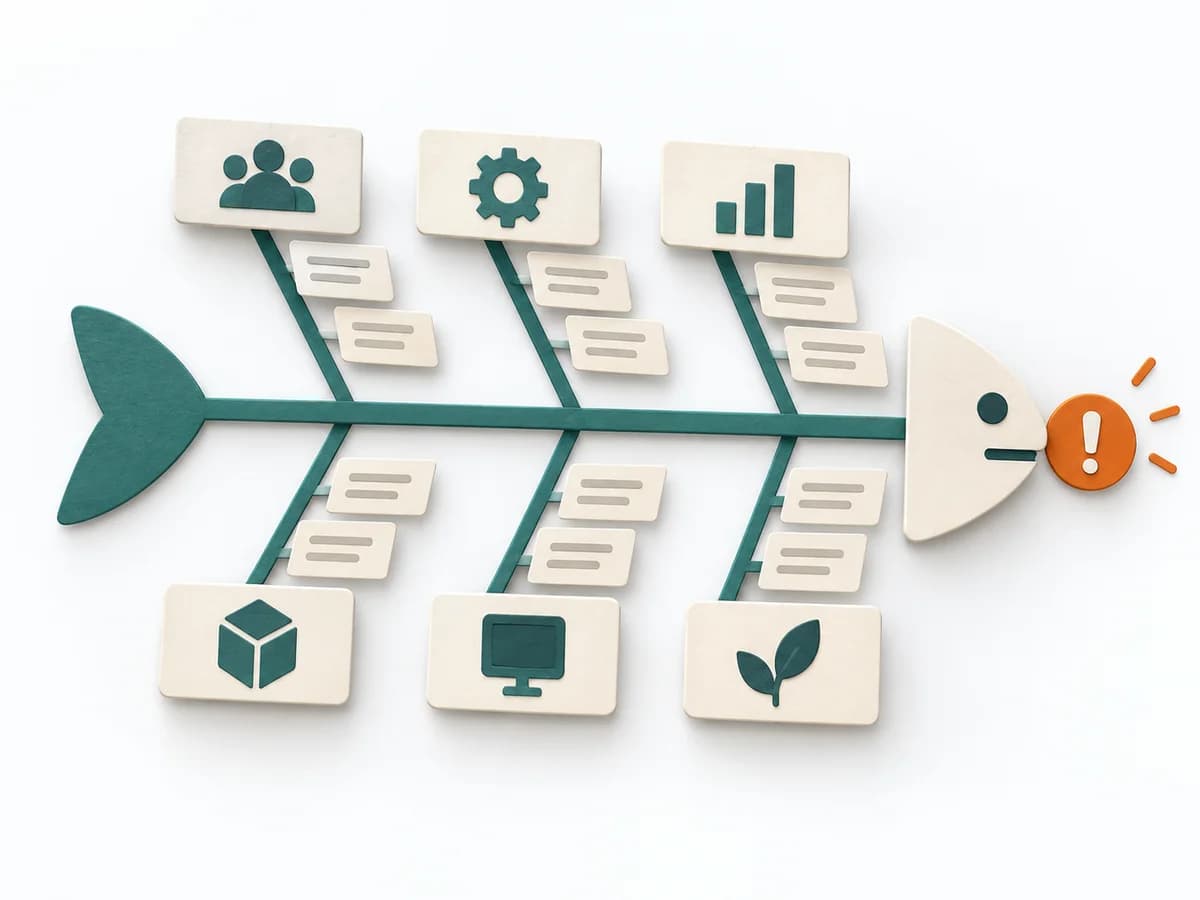 Operations Fishbone Diagram |  Operations Kepner-Tregoe |
|---|---|---|---|---|
Purposedifferent | After a project phase with mixed results, the method makes learning from the individual case reusable. It connects events, decisions, and systemic conditions into robust insights. | When a problem keeps recurring and the cause stays unclear, the method exposes the underlying mechanism. It separates symptom, guess, and robust explanation from one another. | When a problem has several possible contributing factors, the method sorts causes by cause areas. It prevents an initial hunch from blocking the view of other plausible drivers. | For a disturbance that's hard to pin down, the method cleanly separates problem, cause, and decision. It reduces mixing when symptoms allow several interpretations. |
Complexitydifferent | Medium | Medium | Low | High |
Timedifferent | 1-3 h | 1-4 h | 30-60 min | 2-8 h |
Participantsdifferent | 3-10 | 3-8 | 2-8 | 2-8 |
Formatdifferent | Workshop | Workshop + async | Workshop | Workshop + async |
Outputdifferent | Learning Review Notes, System Factors, Improvement Actions | Problem Statement, Cause Hypotheses, Confirmed Causes, Action Plan | Fishbone Diagram, Cause Categories, Investigation Backlog | Problem Analysis, Decision Analysis, Risk Plan |
Tagsno overlap | LearningRetrospectiveIncidentOperations | Root causeProblem solvingQualityIncident | Root causeQualityOperations | Problem solvingRoot causeDecisionOperations |