View methods side by side.
Choose up to four methods. Add them using the search and share the comparison by copying its link.
| Criterion |  UX Design Lean UX Canvas | 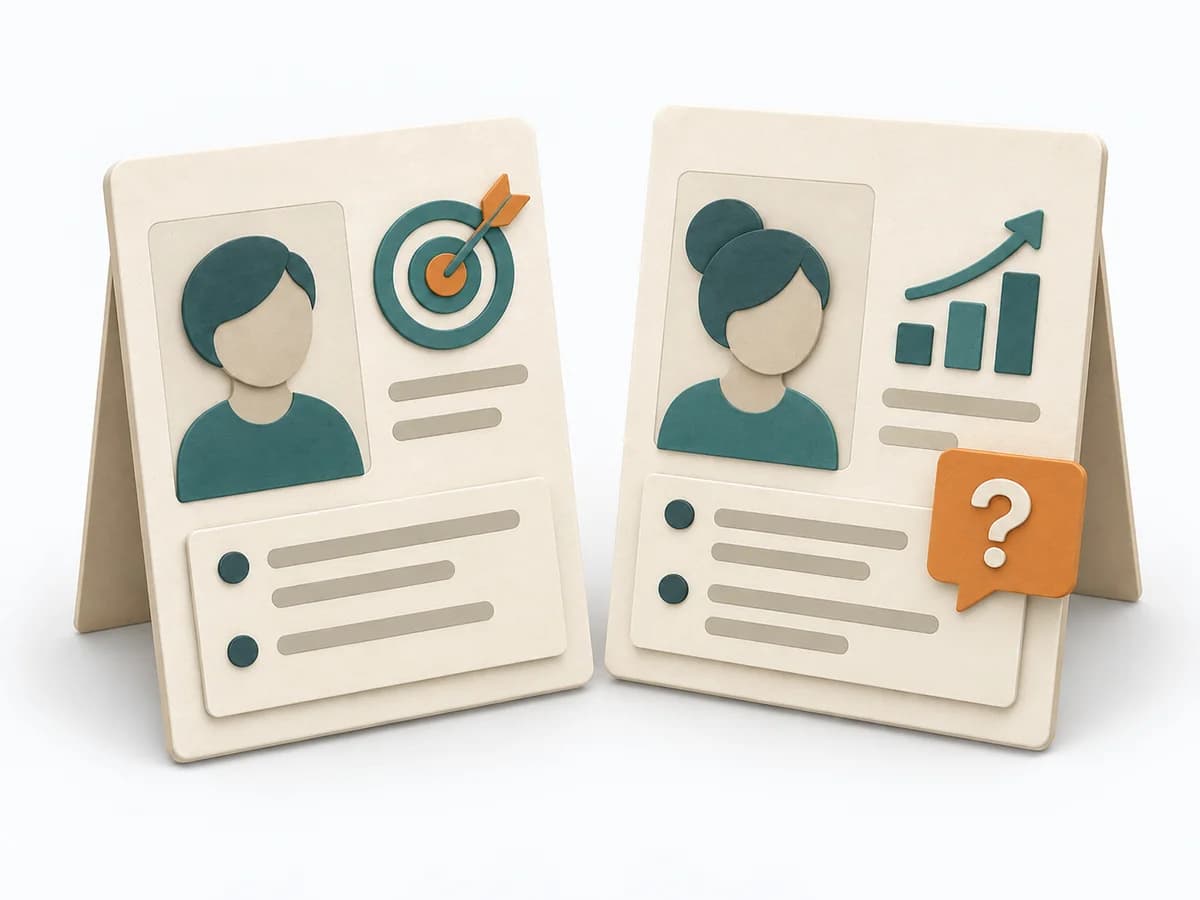 UX Research Personas |  UX Research Affinity Diagramming | 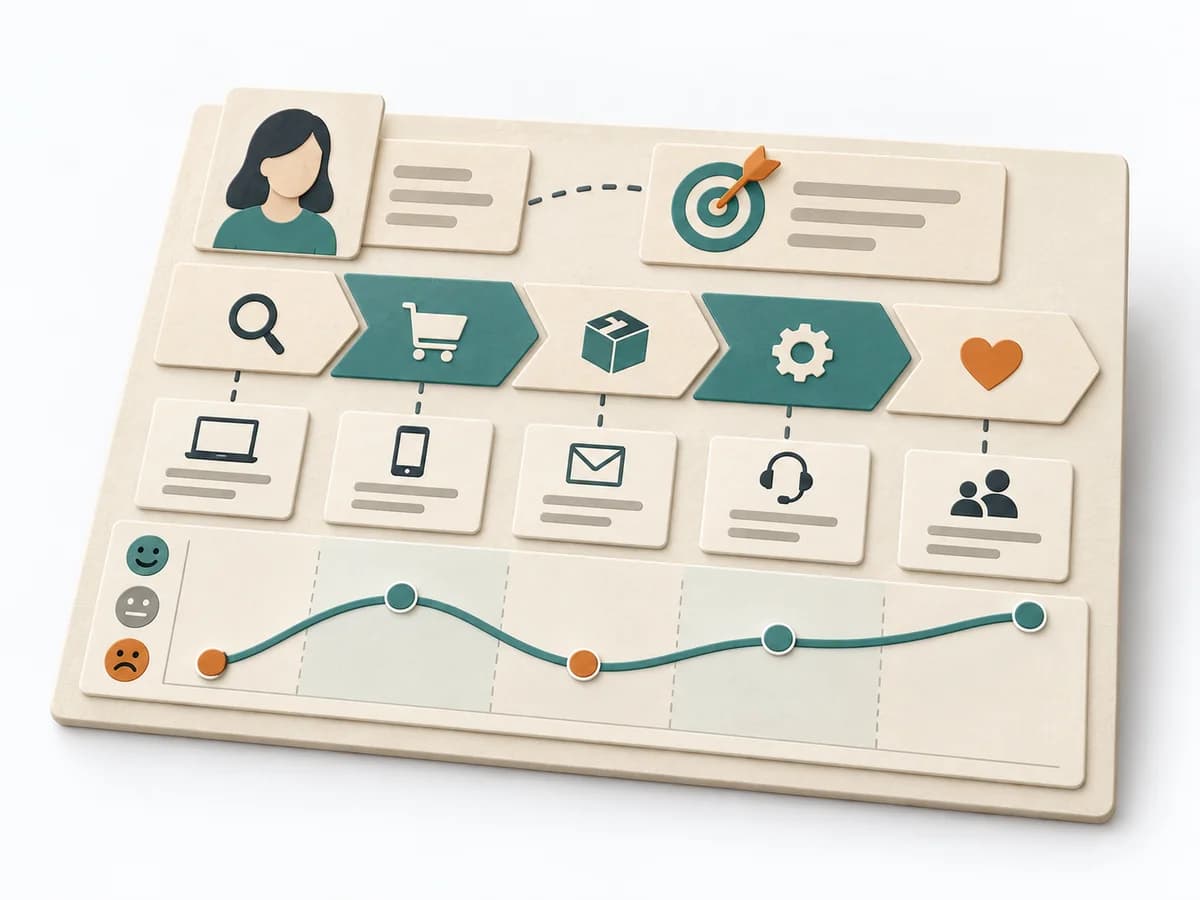 UX Design Customer Journey Canvas |
|---|---|---|---|---|
Purposedifferent | The Lean UX Canvas helps clarify user behavior, touchpoints, and concept decisions. It makes assumptions and desired outcomes visible and captures the result as a completed canvas, hypothesis list, and first experiment. | When target groups stay too vague and teams talk about the same people differently, personas create a shared, solid picture of usage. Condensed profiles make needs, contexts, and differences tangible enough for decisions. | When research notes, feedback, or observations sit unconnected side by side, affinity diagramming sorts the raw material into solid themes. Many individual points turn into patterns that make decisions and opportunities clearer. | When a journey needs to be understood across several phases, it arranges experience, touchpoints, and opportunities into one picture. It makes gaps and friction along the user path clear. |
Complexitydifferent | Medium | Medium | Low | Medium |
Timedifferent | 2-3 h | 1-3 Tage | 45–90 min | 1-3 h |
Participantsdifferent | 3-8 | Internes Team | 3-10 | 3-10 |
Formatdifferent | Workshop + async | Workshop + async | Workshop | Workshop |
Outputdifferent | Completed Lean UX Canvas, Hypothesis list, First experiment | Persona Profiles, Needs Summary, Scenario Notes | Theme clusters, Insight statements, Opportunity areas | Customer Journey Canvas, Pain Points, Experience Opportunities |
Tagsno overlap | CanvasHypothesisOutcomesDiscovery | ResearchCustomerSynthesis | SynthesisQualitativeRoot cause | JourneyCustomerService designCanvas |