View methods side by side.
Choose up to four methods. Add them using the search and share the comparison by copying its link.
| Criterion |  UX Design Lean UX Canvas | 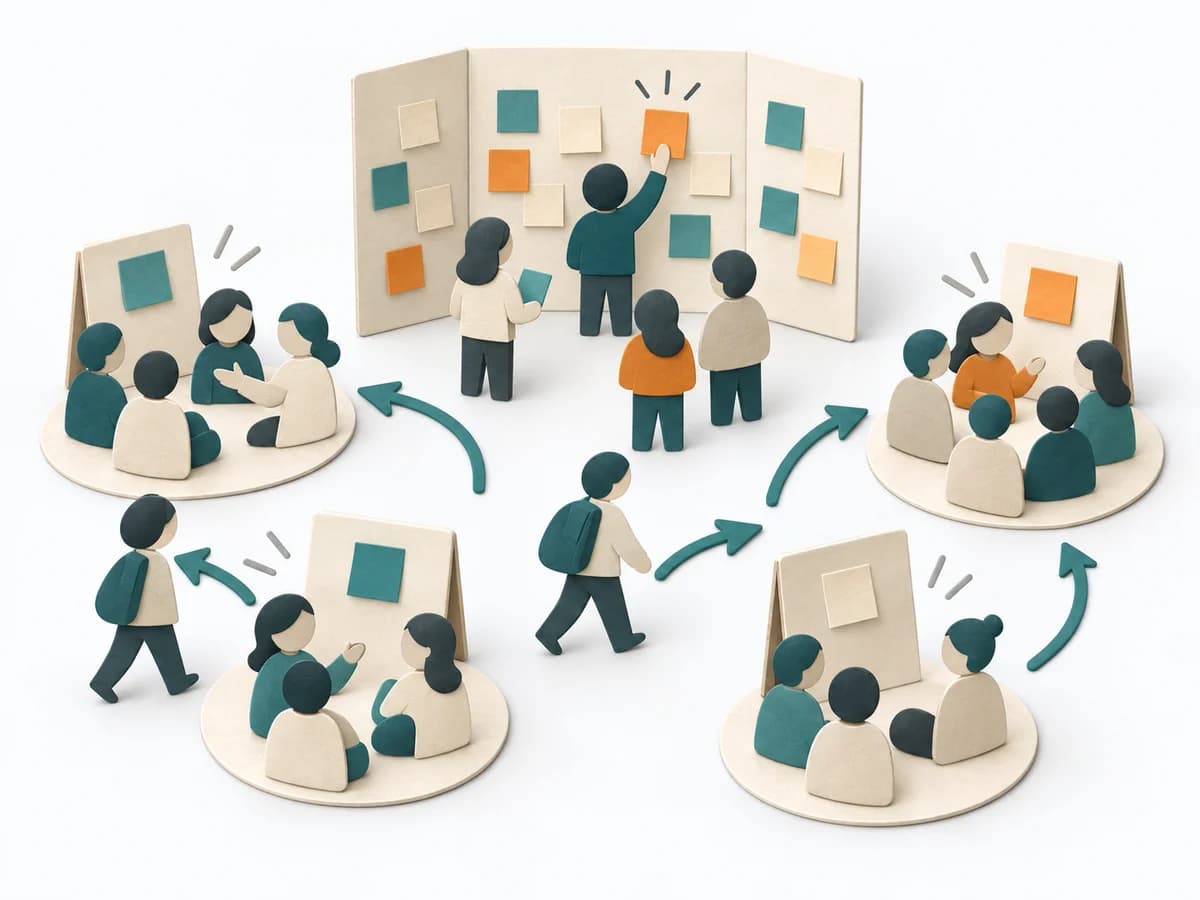 Facilitation Open Space Technology | 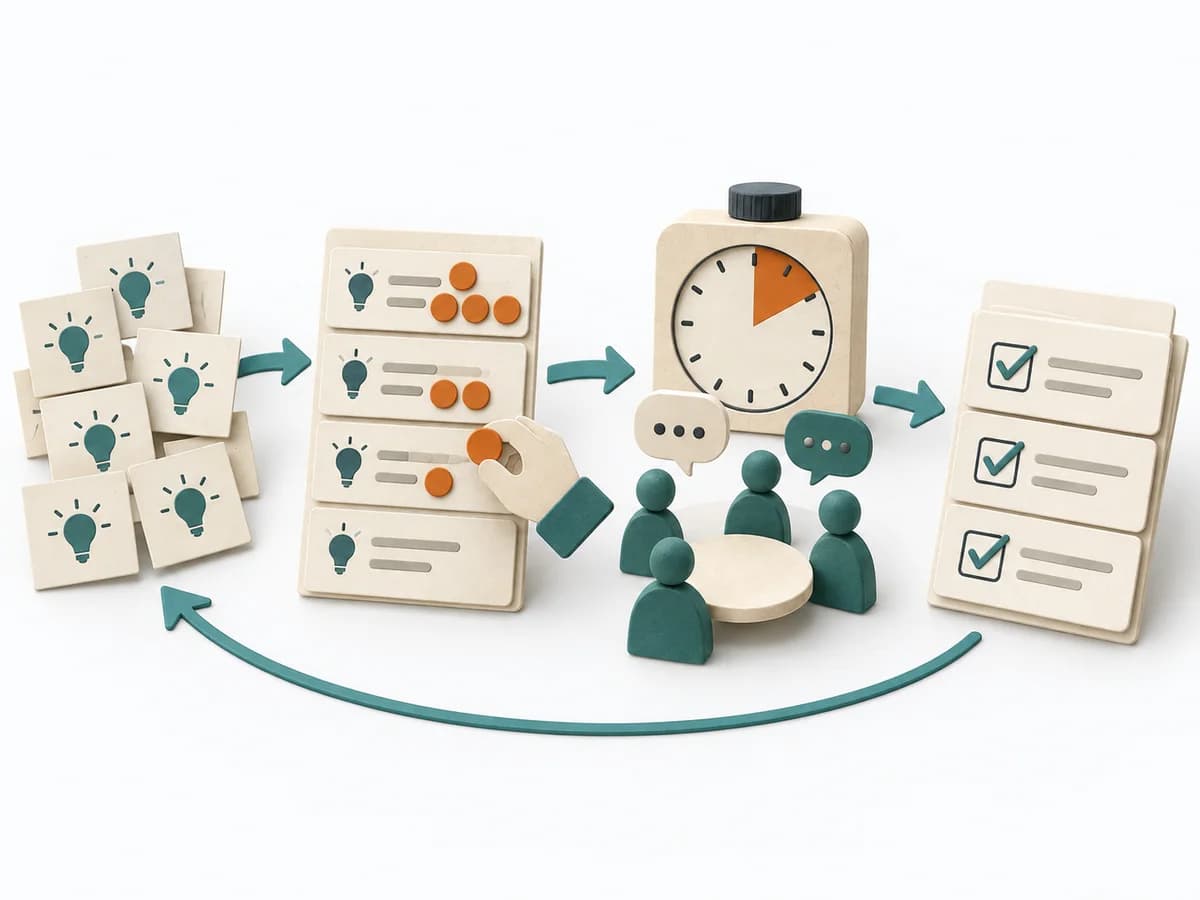 Facilitation Lean Coffee |  Product Discovery Experiment Canvas |
|---|---|---|---|---|
Purposedifferent | The Lean UX Canvas helps clarify user behavior, touchpoints, and concept decisions. It makes assumptions and desired outcomes visible and captures the result as a completed canvas, hypothesis list, and first experiment. | When a complex topic does not yet have a fitting agenda, Open Space Technology hands topic ownership back to the participants. The format suits questions that only move forward when real interest determines the order. | When a group without a fixed agenda needs to get into useful conversations quickly, Lean Coffee structures the start around interests rather than a presentation. The group itself negotiates which topics get time first and which wait. | When experiments become unreadable after the fact, it arranges hypothesis, signal, and learning goal on a single canvas. It separates problem, assumption, solution, and evidence. The result is captured as a Completed Experiment Canvas and a Success Metric. |
Complexitydifferent | Medium | High | Low | Low |
Timedifferent | 2-3 h | 0.5-2 Tage | 30-90 min | 30-60 min |
Participantsdifferent | 3-8 | 20-500+ | 3-20 | 1-5 |
Formatdifferent | Workshop + async | Workshop | Workshop | Workshop + async |
Outputdifferent | Completed Lean UX Canvas, Hypothesis list, First experiment | Session Marketplace, Proceedings, Action Topics | Prioritized Topics, Discussion Notes, Action Items | Completed Experiment Canvas, Success Metric |
Tagsno overlap | CanvasHypothesisOutcomesDiscovery | FacilitationLarge groupAutonomy | FacilitationAutonomyDialogue | ExperimentsValidationDiscoveryHypothesis |