View methods side by side.
Choose up to four methods. Add them using the search and share the comparison by copying its link.
| Criterion | 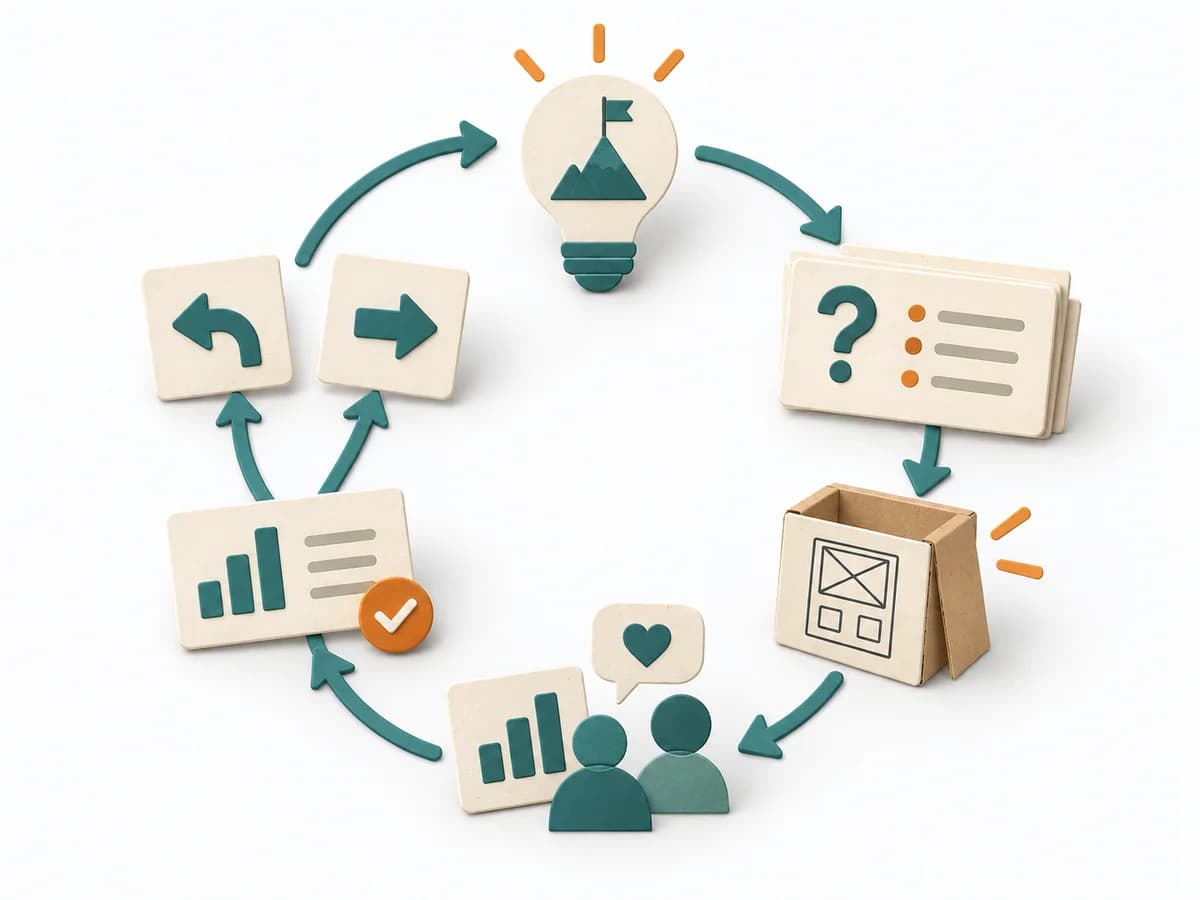 Innovation Lean Startup |  Agile WSJF | 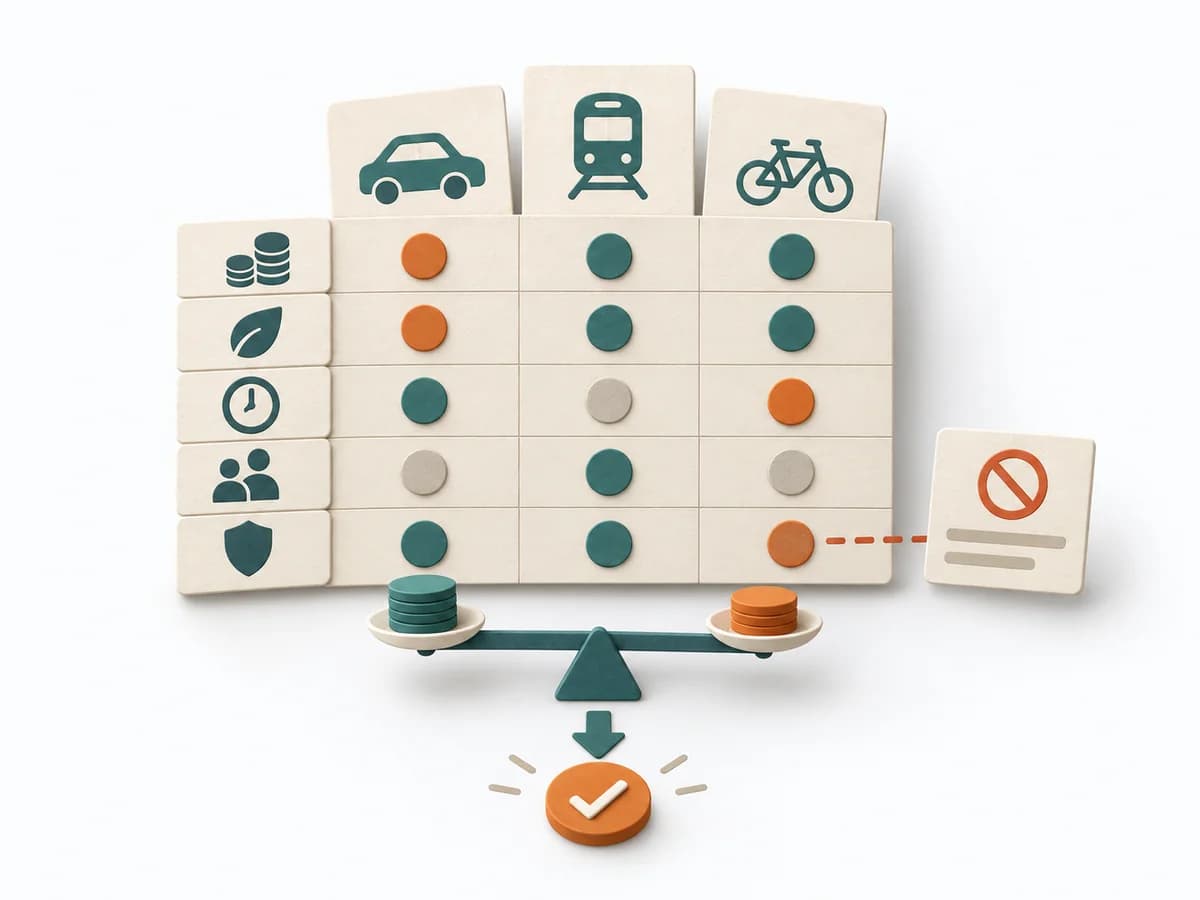 Decision Making Trade-off Analysis |  Decision Making Constraint Analysis |
|---|---|---|---|---|
Purposedifferent | For uncertain business assumptions, the method forces the idea into contact with real market reactions early. It separates wishful picture, assumption, and observable behavior, so that learning becomes faster than planning. This translates uncertainty into measurable insight. | When many tasks compete for the same capacity, it orders work by economic impact. It makes time lost, benefit, and effort comparable together. | With limited resources, quality, speed, cost, and risk almost always compete with each other. Trade-off Analysis makes these tensions explicit and prevents decisions from producing hidden side effects. | When an initiative stalls, the limit often lies not in the idea but in hard or soft boundary conditions. Constraint Analysis separates these limits and shows which of them can actually be shaped. |
Complexitydifferent | Medium | High | Medium | Low |
Timedifferent | Wochen bis Monate je Lernzyklus | 45-90 min | 45-120 min | 30-90 min |
Participantsdifferent | 2-8 | 3-10 | 2-8 | 2-8 |
Formatdifferent | Workshop + async | Workshop | Workshop + async | Workshop + async |
Outputdifferent | Hypothesis list, MVPs, Learning reports, Pivot or persevere decision | Ranked Backlog, Cost-of-Delay Assumptions | Trade-off Matrix, Criteria List, Decision Rationale, Accepted Downsides | Constraint List, Hard/Soft Classification, Option Impact Notes, Decision Boundaries |
Tagsno overlap | LeanStartupValidationMVP | LeanEconomicsSequencePrioritization | TradeoffsDecisionCriteriaOptions | ConstraintsDecisionPlanningOptions |