View methods side by side.
Choose up to four methods. Add them using the search and share the comparison by copying its link.
| Criterion | 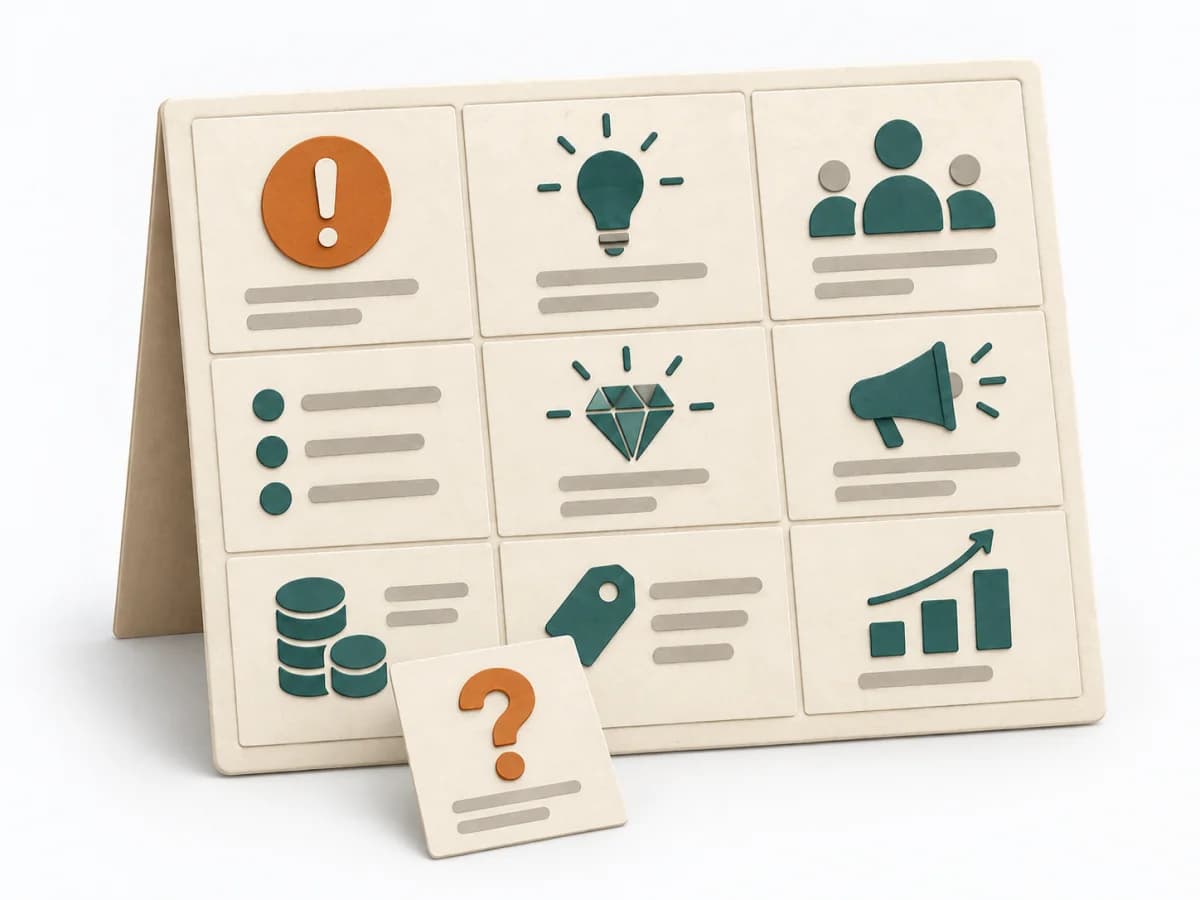 Product Strategy Lean Canvas | 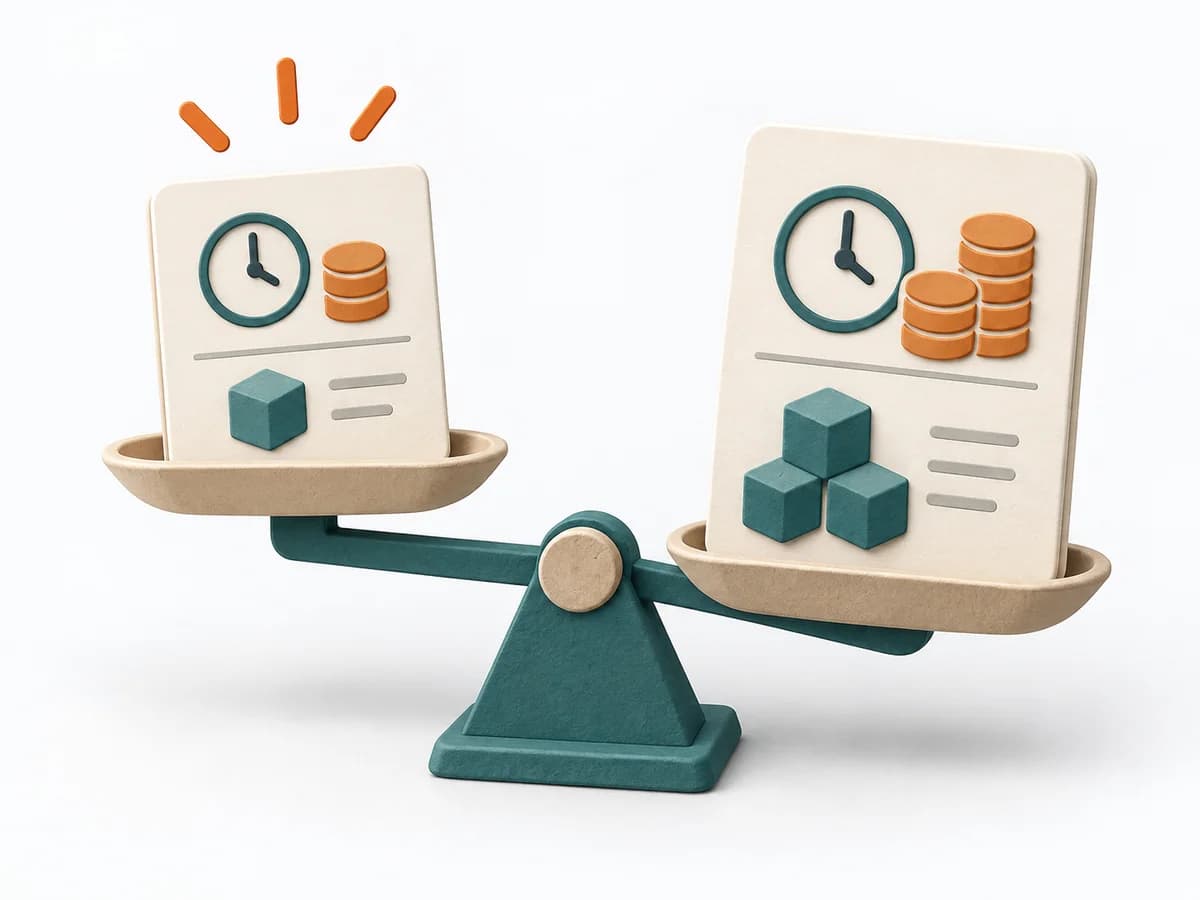 Agile WSJF | 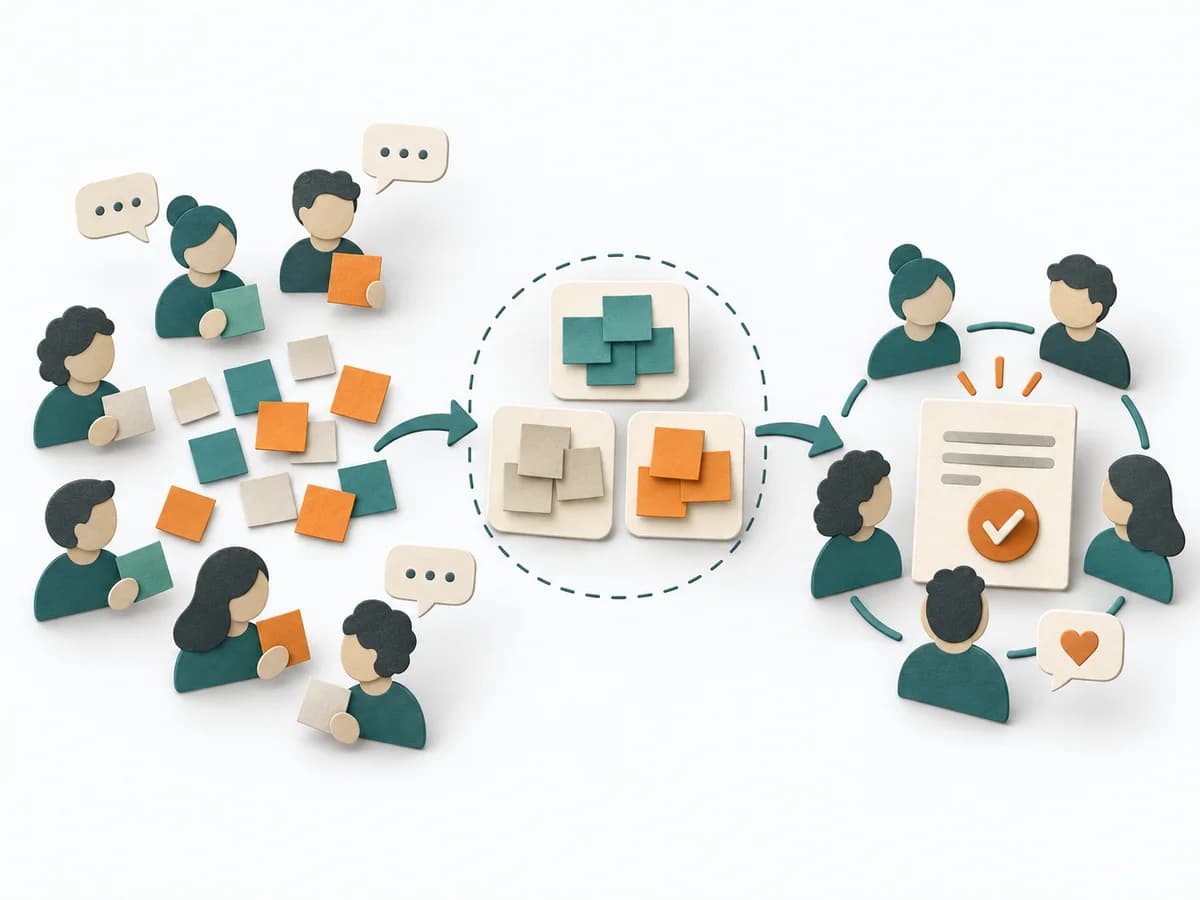 Facilitation Consensus Workshop |  Facilitation Alignment Mapping |
|---|---|---|---|---|
Purposedifferent | When an early product bet still has too many open points, it brings target group, problem, and assumptions into a single view. It condenses the idea so core risks become nameable. | When many tasks compete for the same capacity, it orders work by economic impact. It makes time lost, benefit, and effort comparable together. | When a group needs a solid decision without outvoting individual factions, a Consensus Workshop creates a negotiable common ground. It makes agreement, reservations, and open tensions discussable at the same time. | When several people work toward one goal but hold different mental maps, Alignment Mapping makes the discrepancies visible. It arranges goals, assumptions, and priorities so shared direction becomes verifiable. |
Complexitydifferent | Medium | High | Medium | Medium |
Timedifferent | 45-90 min | 45-90 min | 1-3 h | 1-2 h |
Participantsdifferent | 1-6 | 3-10 | 5-30 | 4-12 |
Formatdifferent | Workshop + async | Workshop | Workshop | Workshop |
Outputdifferent | Lean Canvas, Core Assumptions, Experiment Backlog | Ranked Backlog, Cost-of-Delay Assumptions | Consensus Clusters, Theme Titles, Priority Areas | Alignment Map, Open Issues, Decision Questions |
Tagsno overlap | StartupLeanAssumptionsBusiness model | LeanEconomicsSequencePrioritization | FacilitationConsensusWorkshopAlignment | AlignmentStakeholdersStrategyFacilitation |