View methods side by side.
Choose up to four methods. Add them using the search and share the comparison by copying its link.
| Criterion | 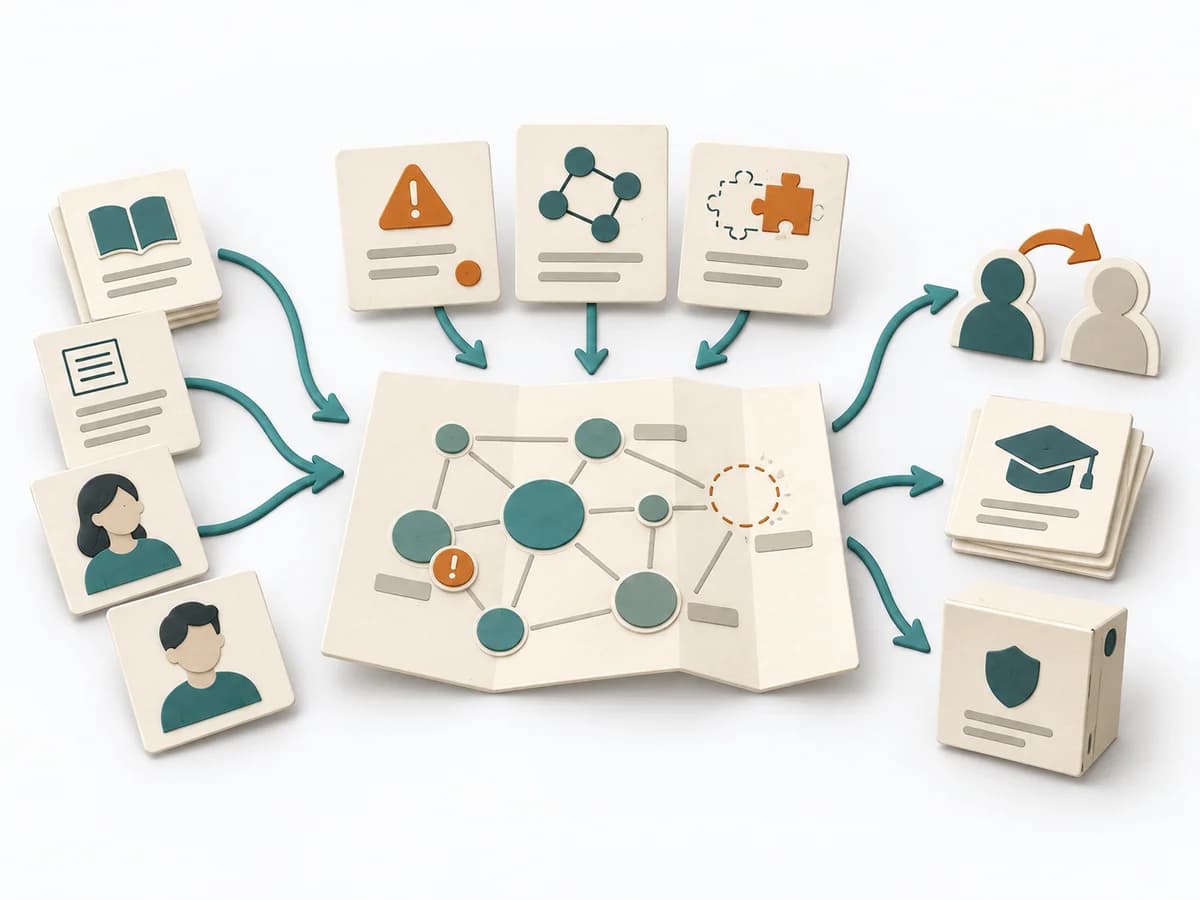 Knowledge Modeling Knowledge Mapping |  UX Design Storyboarding | 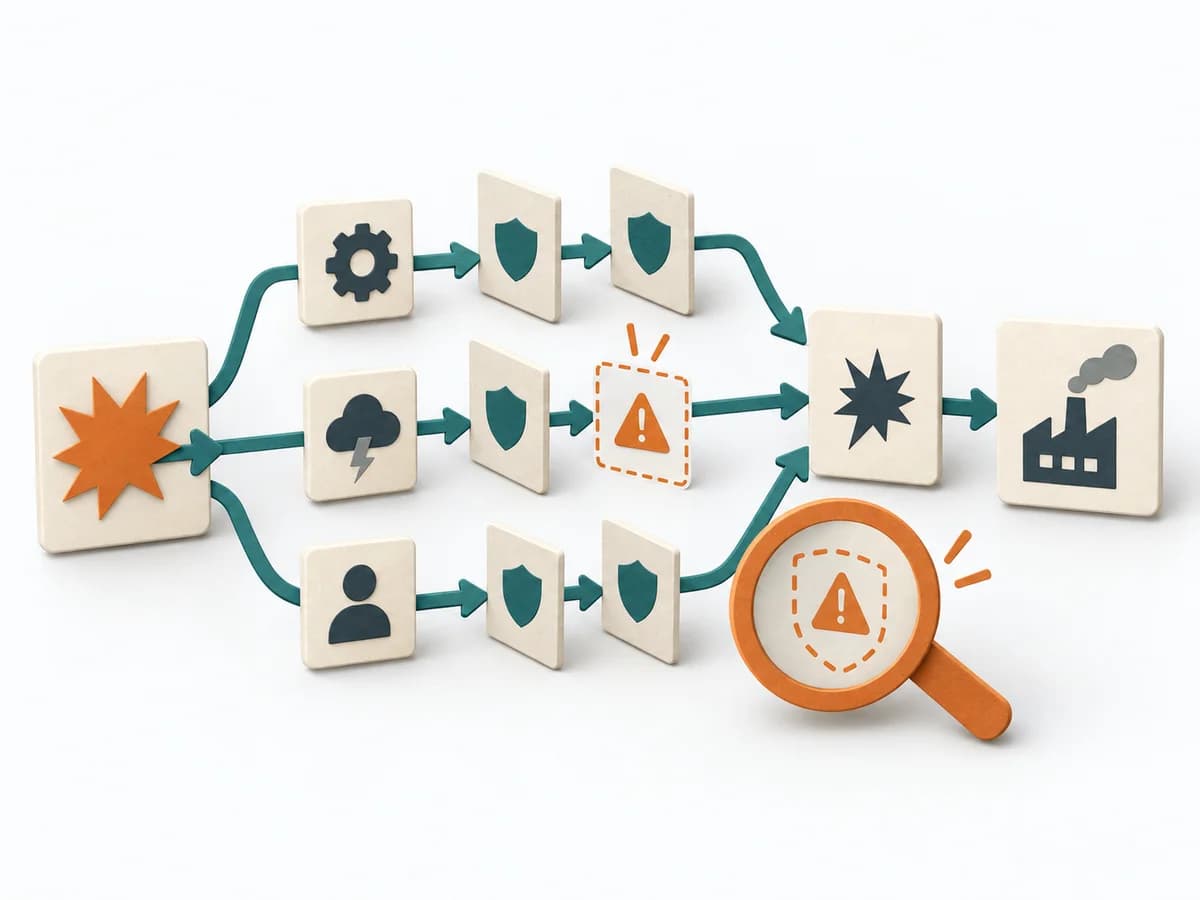 Engineering Failure Scenario Analysis |  Product Discovery Assumption Mapping |
|---|---|---|---|---|
Purposedifferent | Knowledge Mapping makes knowledge, gaps, and transfer paths visible across a field. It fits when expertise should not just exist but also be findable and transferable. | When a usage scenario needs to become understandable early, it condenses situations, context, and flow into a legible sequence. It helps check concept ideas before anything gets built. | In critical processes, it is not enough to plan only for the normal case. Failure Scenario Analysis looks at the path into failure and shows which failures, chains, and control gaps cause the most damage. | When assumptions still sit unordered in the room, it weighs uncertainty against leverage. It makes visible which hypotheses should be checked first. |
Complexitysame | Medium | Medium | Medium | Medium |
Timedifferent | 1-3 h | 30-90 min | 1-3 h | 45-60 min |
Participantsdifferent | 3-12 | 1-8 | 3-8 | 2-8 |
Formatdifferent | Workshop | Workshop + async | Workshop | Workshop + async |
Outputdifferent | Knowledge Map, Critical Knowledge Areas, Transfer Plan | Storyboard, Concept Narrative, Testable Assumptions | Failure Scenarios, Risk Notes, Control Gaps, Test and Response Actions | Assumption map, Test backlog, Risk ranking |
Tagsno overlap | KnowledgeMappingRisk | VisualizationConceptsSequencePrototype | FailureResilienceRisk | AssumptionsRiskExperimentsValidation |