View methods side by side.
Choose up to four methods. Add them using the search and share the comparison by copying its link.
| Criterion |  Knowledge Modeling Knowledge Mapping | 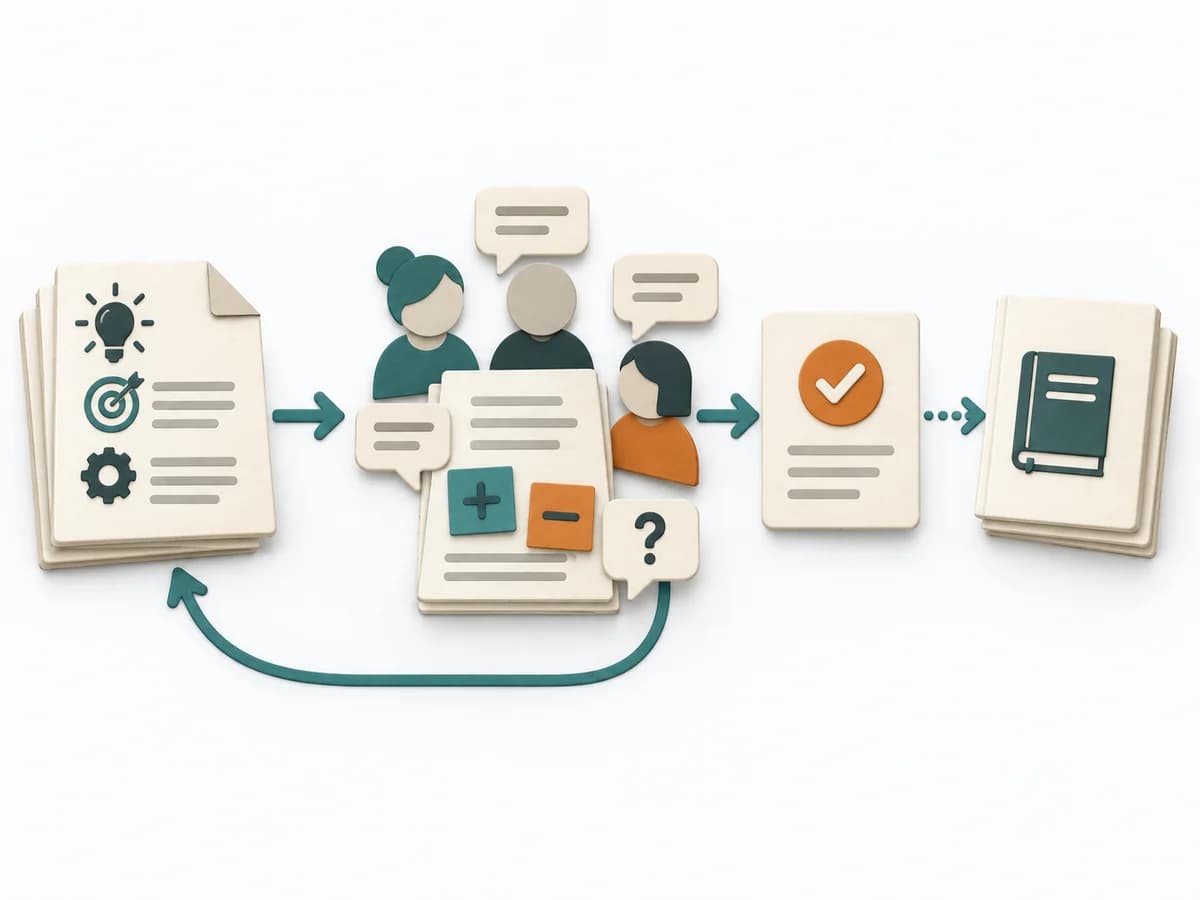 Architecture Request for Comments |  Decision Making Decision Rights Mapping |  Decision Making Assumption Surfacing |
|---|---|---|---|---|
Purposedifferent | Knowledge Mapping makes knowledge, gaps, and transfer paths visible across a field. It fits when expertise should not just exist but also be findable and transferable. | An RFC clarifies architecture context, options, and consequences. It structures technical context, alternatives, tradeoffs, open questions, and review feedback, and captures the result as an RFC document, reviewer comments, and a decision rationale. | In organizations with many stakeholders, it often blurs who actually decides and who is merely consulted. It separates options, evaluation criteria, and open risks. The result is captured as a Decision Rights matrix and an agreement. | Plans often contain assumptions that were never openly stated and remain dangerous precisely because of that. Assumption Surfacing makes these silent premises visible and prioritizes which of them carry the initiative or could sink it. |
Complexitydifferent | Medium | Medium | Medium | Low |
Timedifferent | 1-3 h | 1-3 Wochen vom Draft bis zur Entscheidung | 90-180 min | 45-90 min |
Participantsdifferent | 3-12 | 3-20 Reviewer | 4-12 | 2-8 |
Formatdifferent | Workshop | Async | Workshop | Workshop + async |
Outputdifferent | Knowledge Map, Critical Knowledge Areas, Transfer Plan | RFC document, Reviewer comments, Decision rationale, Follow-up ADR or tickets | Decision Rights Matrix, Agreement | Assumption List, Critical Assumptions, Learning Plan |
Tagsno overlap | KnowledgeMappingRisk | ArchitectureDecisionAsyncGovernance | DecisionGovernanceAlignmentResponsibility | AssumptionsRiskDecisionDiscovery |