View methods side by side.
Choose up to four methods. Add them using the search and share the comparison by copying its link.
| Criterion | 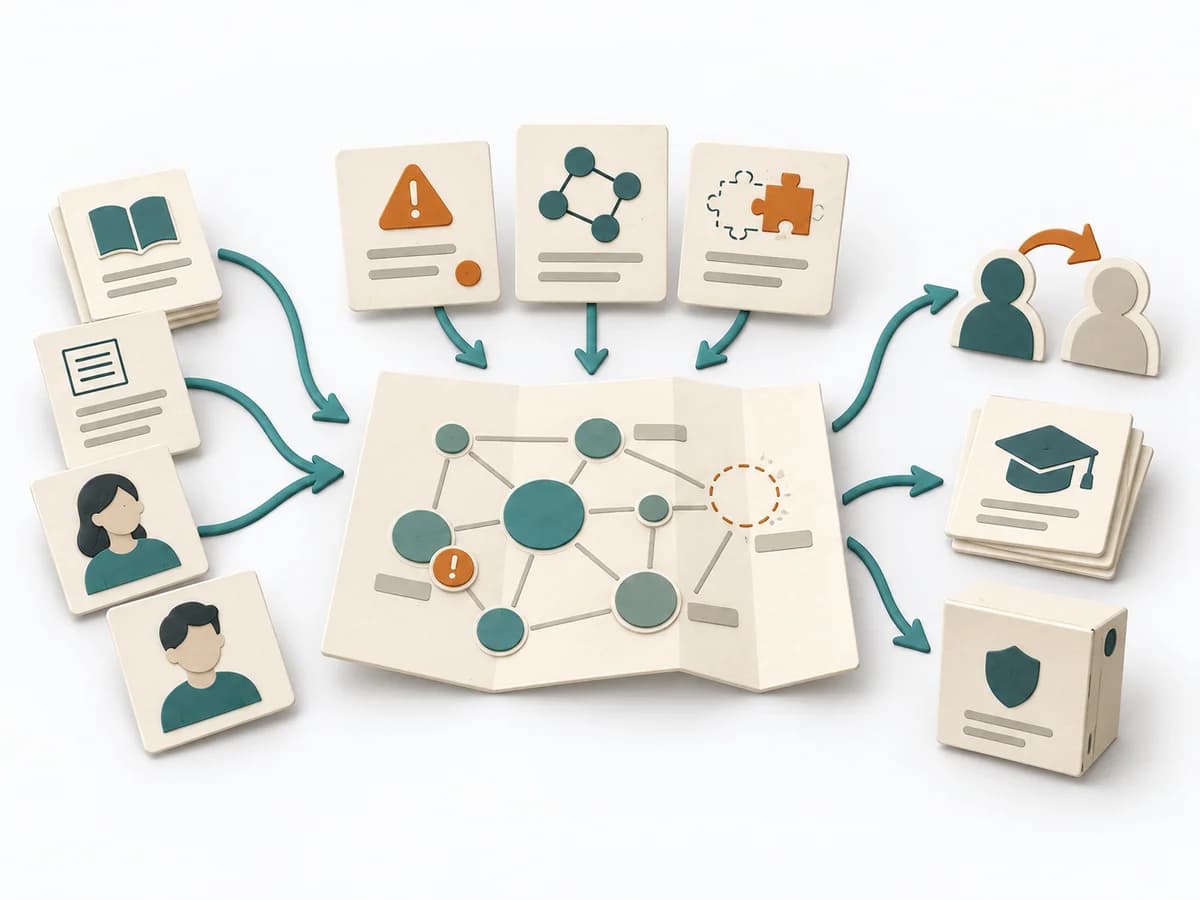 Knowledge Modeling Knowledge Mapping | 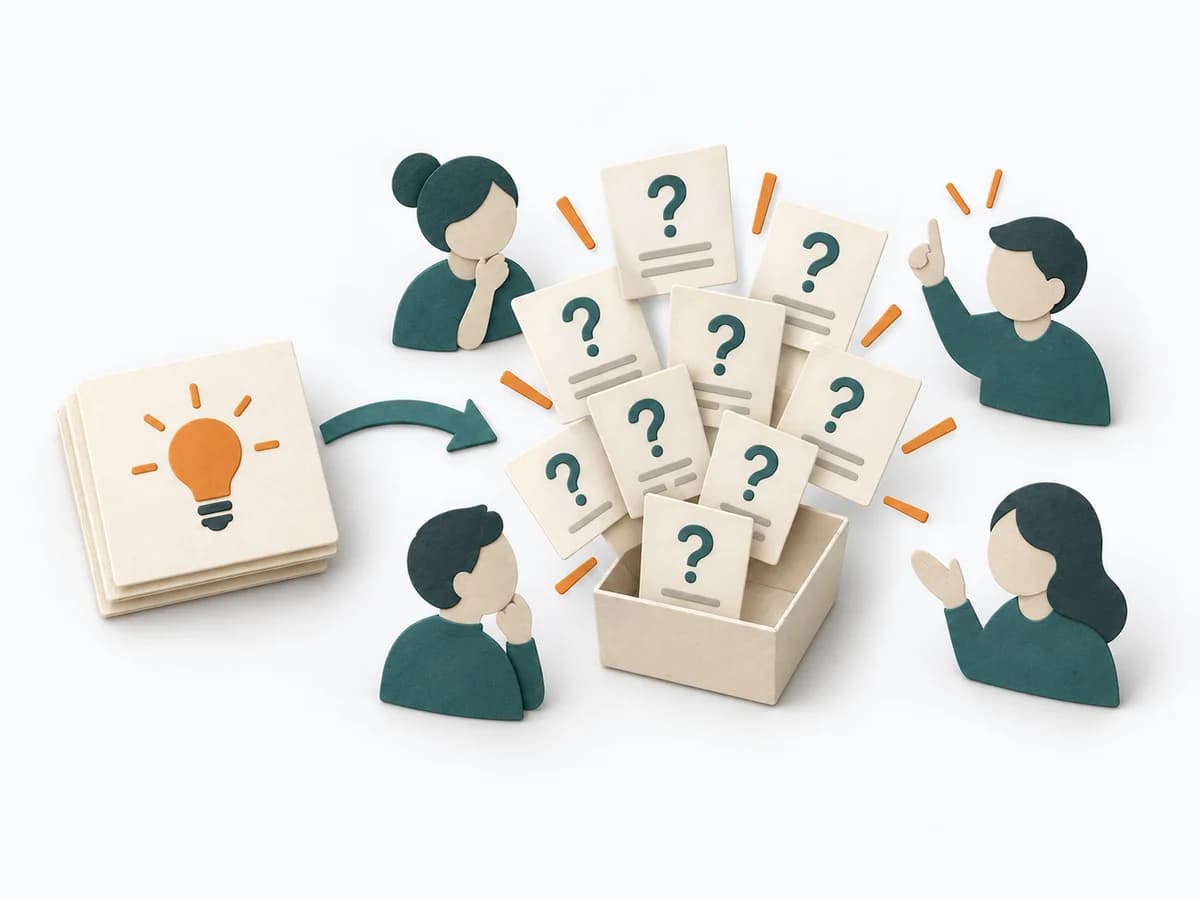 Facilitation Question Burst | 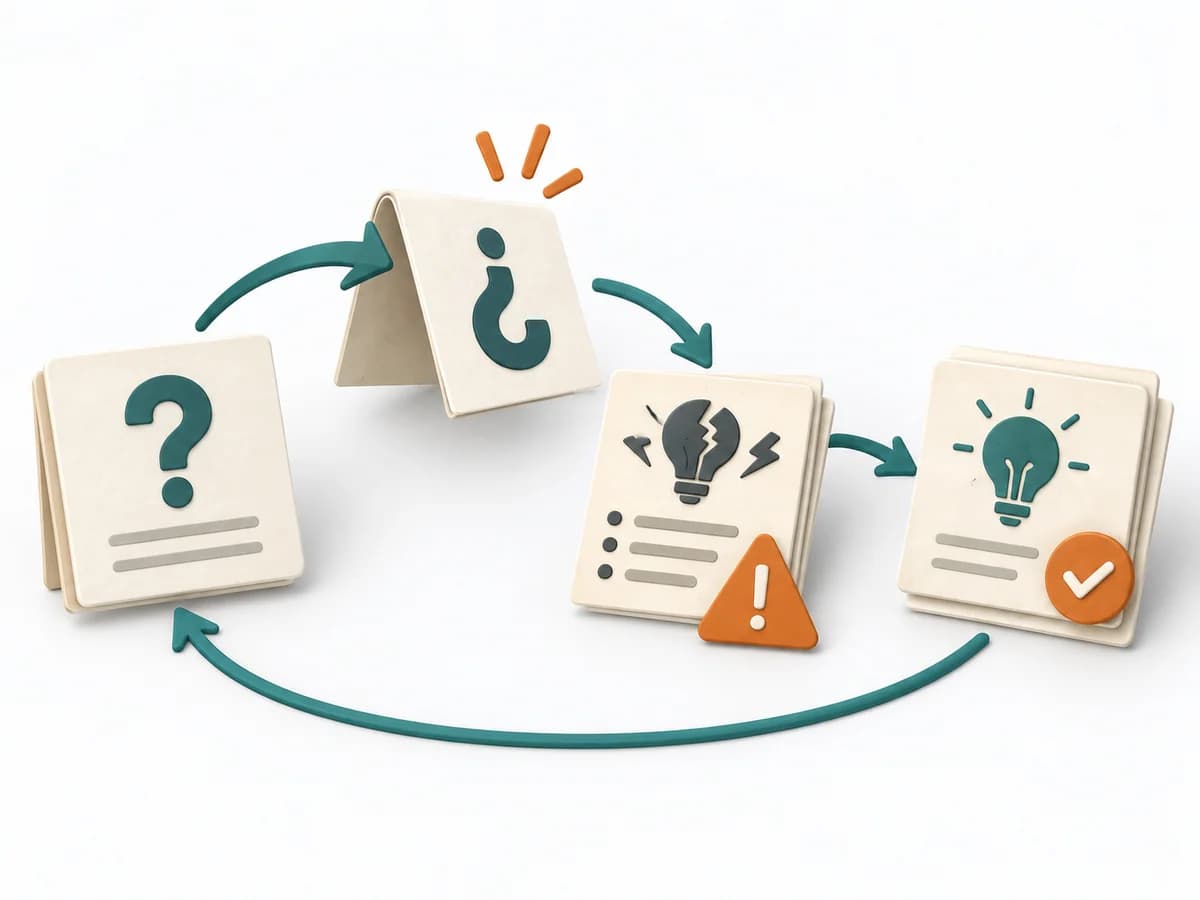 Innovation Reverse Brainstorming | 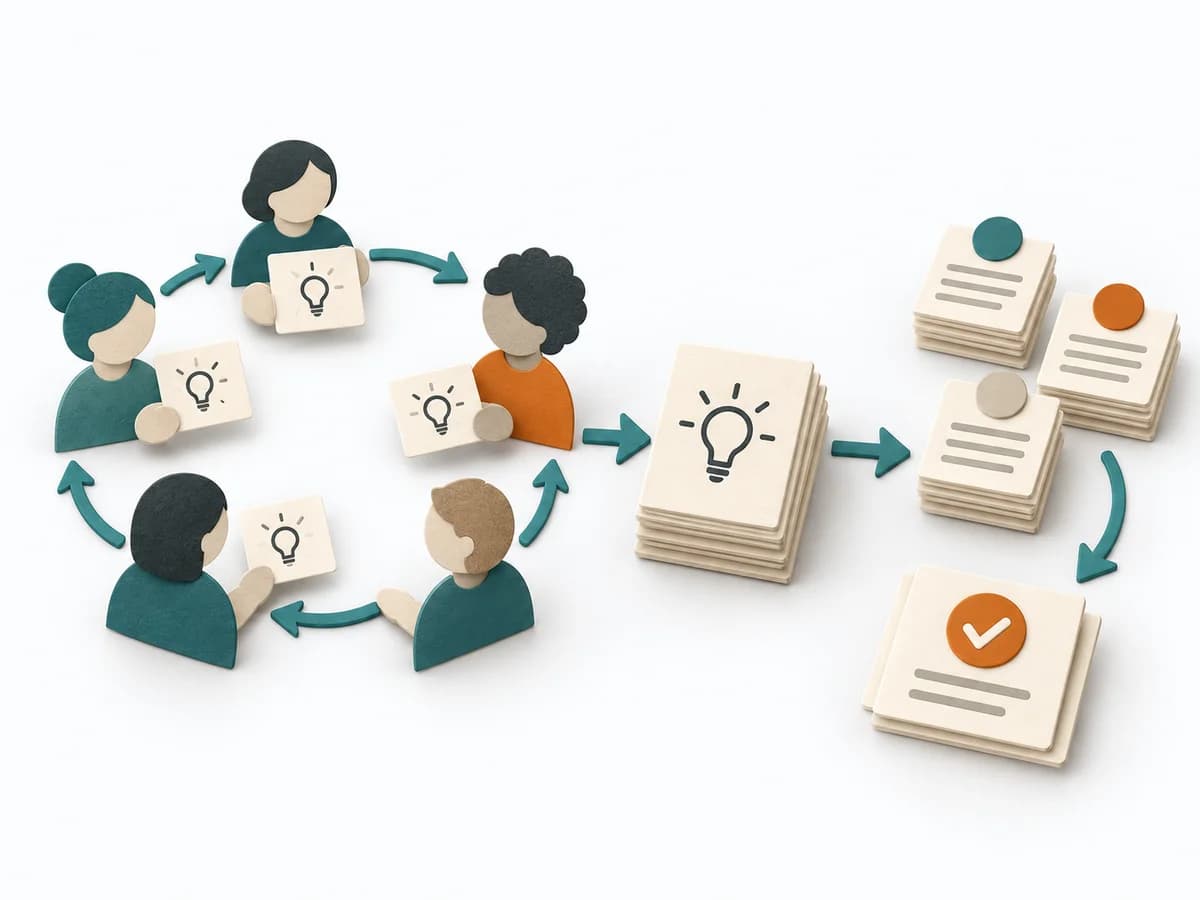 Innovation Round Robin Brainstorming |
|---|---|---|---|---|
Purposedifferent | Knowledge Mapping makes knowledge, gaps, and transfer paths visible across a field. It fits when expertise should not just exist but also be findable and transferable. | When a problem gets covered up too quickly with answers, Question Burst puts the better question at the center. The format opens the thinking space before the group commits to an interpretation. | For persistent errors or blockages, the method shifts the view to the opposite of the desired effect. It exposes the mechanics of failure and makes hidden causes easier to grasp. This makes improvement more concrete and the problem clearer. | With unevenly distributed speaking time, the method brings every person into the contribution one after another. It prevents early voices from setting the direction while still producing a shared idea space. This makes participation plannable and the team's diversity visible. |
Complexitydifferent | Medium | Low | Low | Low |
Timedifferent | 1-3 h | 15-30 min | 30-60 min | 20-45 min |
Participantsdifferent | 3-12 | 2-8 | 3-12 | 4-10 |
Formatsame | Workshop | Workshop | Workshop | Workshop |
Outputdifferent | Knowledge Map, Critical Knowledge Areas, Transfer Plan | Question List, Reframed Challenge, Learning Prompts | Reverse Ideas, Risk Themes, Solution Ideas | Idea List, Cluster, Shortlist |
Tagsno overlap | KnowledgeMappingRisk | QuestionsReframingFacilitationSensemaking | BrainstormingIdeationCreativityRisk | BrainstormingIdeationFacilitationInclusionCreativity |