View methods side by side.
Choose up to four methods. Add them using the search and share the comparison by copying its link.
| Criterion | 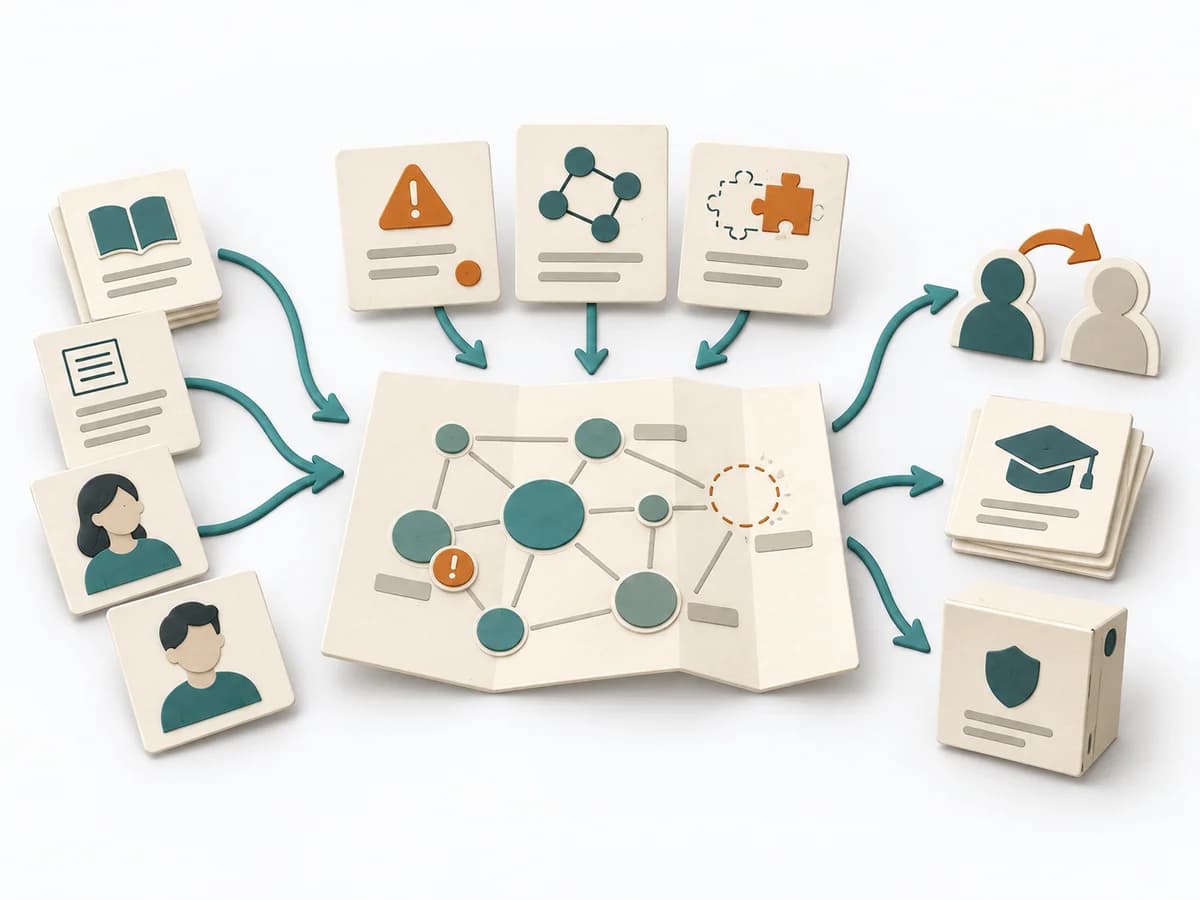 Knowledge Modeling Knowledge Mapping |  Decision Making Assumption Surfacing | 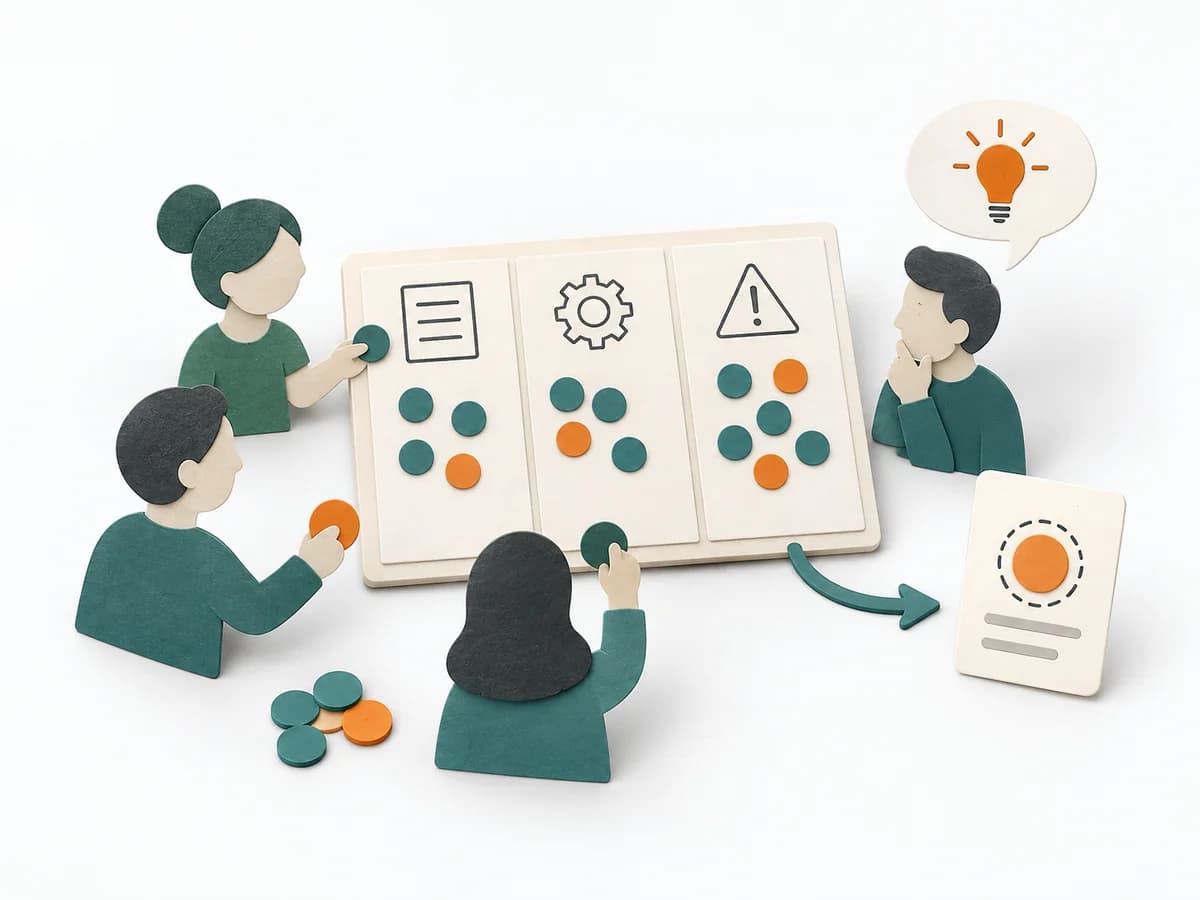 Facilitation Dot Estimation | 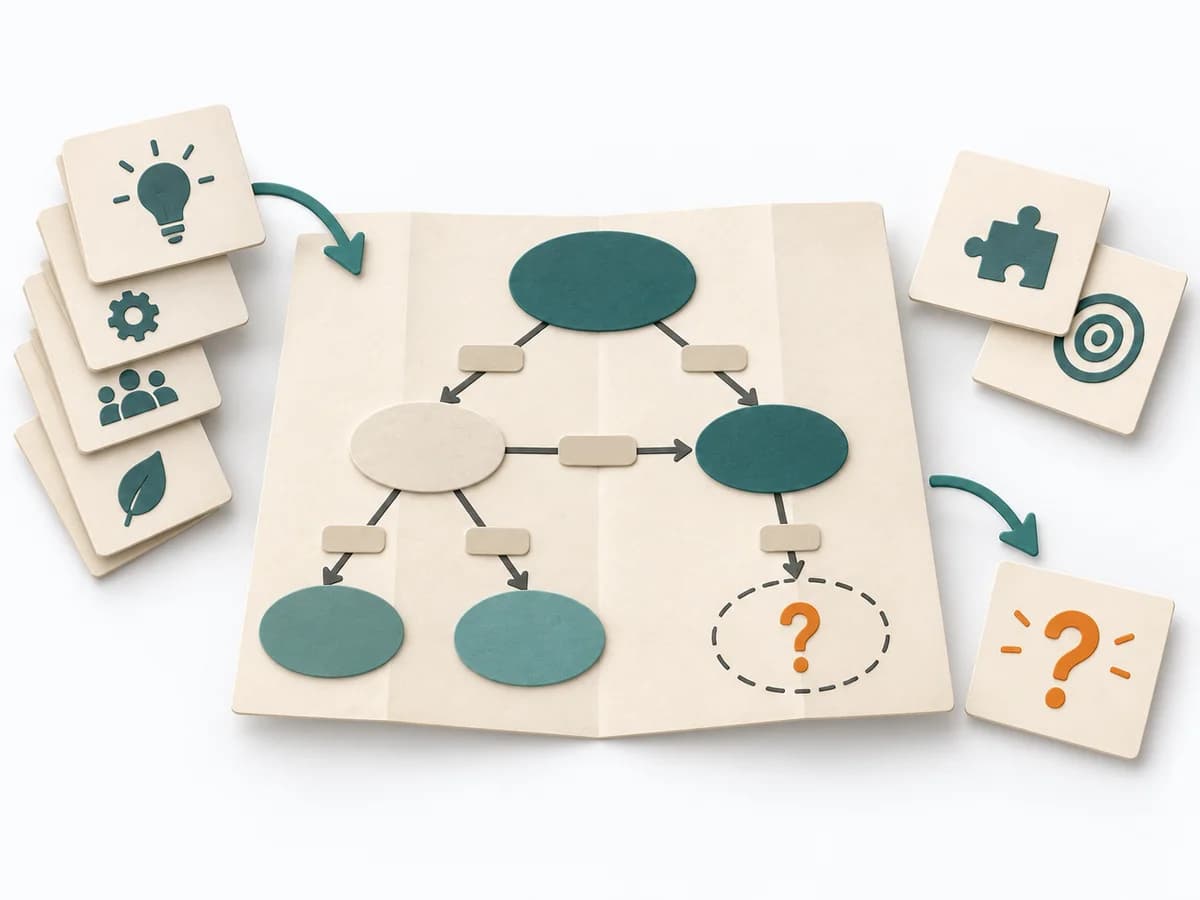 Knowledge Modeling Concept Mapping |
|---|---|---|---|---|
Purposedifferent | Knowledge Mapping makes knowledge, gaps, and transfer paths visible across a field. It fits when expertise should not just exist but also be findable and transferable. | Plans often contain assumptions that were never openly stated and remain dangerous precisely because of that. Assumption Surfacing makes these silent premises visible and prioritizes which of them carry the initiative or could sink it. | When size or effort can only be estimated roughly, Dot Estimation condenses the group's experience into a quick range. It turns individual contributions into a visible selection. The result is captured as an Effort Heatmap, Risk Signals, and Discussion Targets. | Concept Mapping arranges terms and relationships in a network that makes subject-matter connections tangible. It fits when a topic needs to be understood structurally rather than linearly. |
Complexitydifferent | Medium | Low | Low | Medium |
Timedifferent | 1-3 h | 45-90 min | 5-20 min | 1-2 h |
Participantsdifferent | 3-12 | 2-8 | 3-20 | 1-8 |
Formatdifferent | Workshop | Workshop + async | Workshop | Workshop + async |
Outputdifferent | Knowledge Map, Critical Knowledge Areas, Transfer Plan | Assumption List, Critical Assumptions, Learning Plan | Effort Heatmap, Risk Signals, Discussion Targets | Concept Map, Relationship Labels, Knowledge Gaps |
Tagsno overlap | KnowledgeMappingRisk | AssumptionsRiskDecisionDiscovery | EstimationEffortRisk | KnowledgeConceptsMappingSensemaking |