View methods side by side.
Choose up to four methods. Add them using the search and share the comparison by copying its link.
| Criterion | 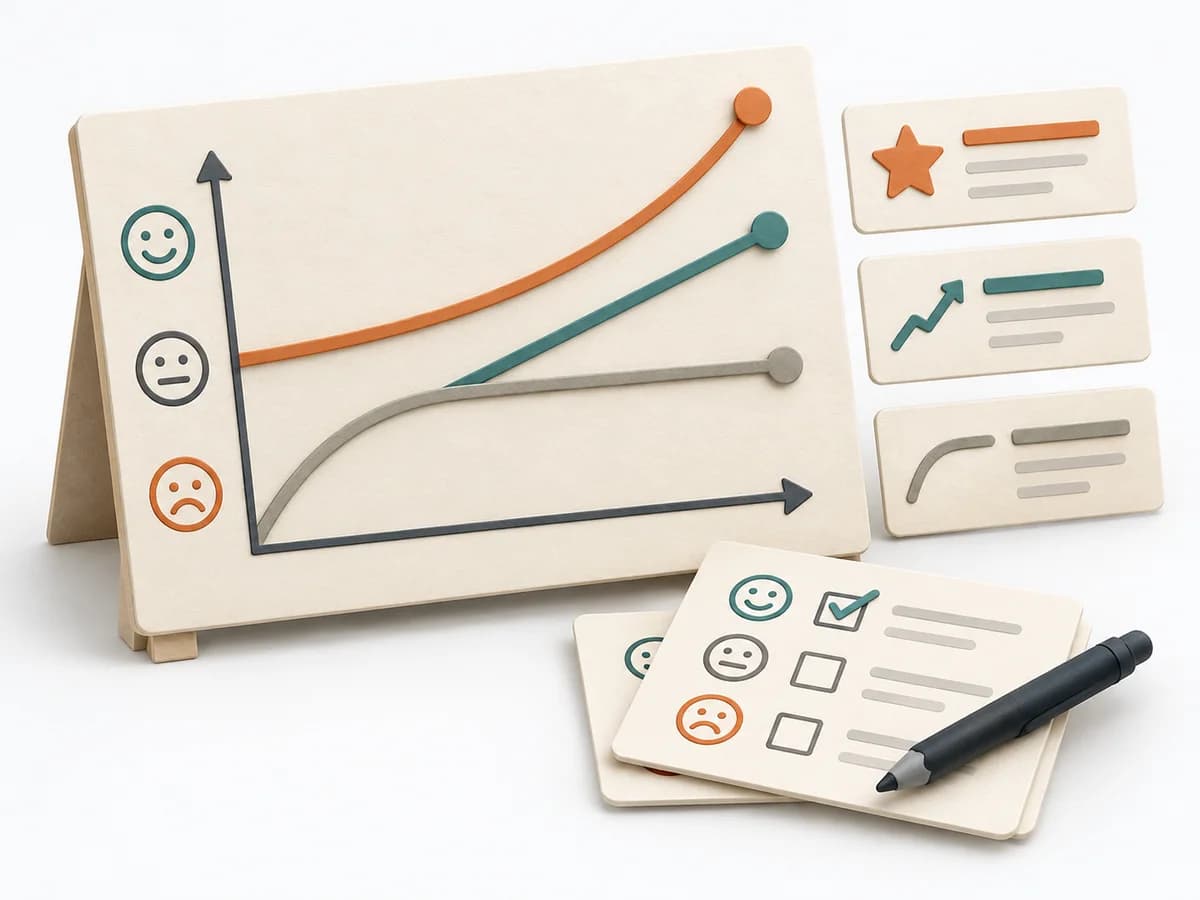 Product Discovery Kano Model |  Agile WSJF |  Facilitation Mind Mapping |  Facilitation Nominal Group Technique |
|---|---|---|---|---|
Purposedifferent | When features need to be distinguished by their effect on satisfaction, it makes expectations and surprises comparable. It separates basic needs, performance contribution, and delight. | When many tasks compete for the same capacity, it orders work by economic impact. It makes time lost, benefit, and effort comparable together. | When a topic is still unclear and too many thoughts surface at once, Mind Mapping creates an open surface for ordering them. It makes connections, subtopics, and starting points visible without fixing them too early. | When loud voices could dominate a round, Nominal Group Technique protects individual thinking time from group effects. It collects ideas separately first and only then enables shared weighting. |
Complexitydifferent | Medium | High | Low | Medium |
Timedifferent | 1-2 Tage | 45-90 min | 15-45 min | 60-120 min |
Participantsdifferent | 10-50 | 3-10 | 1-10 | 5-12 |
Formatdifferent | Workshop + async | Workshop | Workshop + async | Workshop |
Outputdifferent | Kano Matrix, Feature Classes, Priority Themes | Ranked Backlog, Cost-of-Delay Assumptions | Mind Map, Topic Clusters, Open Questions | Ranked Ideas, Clarified Options, Group Priority |
Tagsno overlap | SatisfactionPrioritizationCustomer | LeanEconomicsSequencePrioritization | BrainstormingIdeasMappingStructureFacilitation | FacilitationPrioritizationVotingInclusion |