View methods side by side.
Choose up to four methods. Add them using the search and share the comparison by copying its link.
| Criterion | 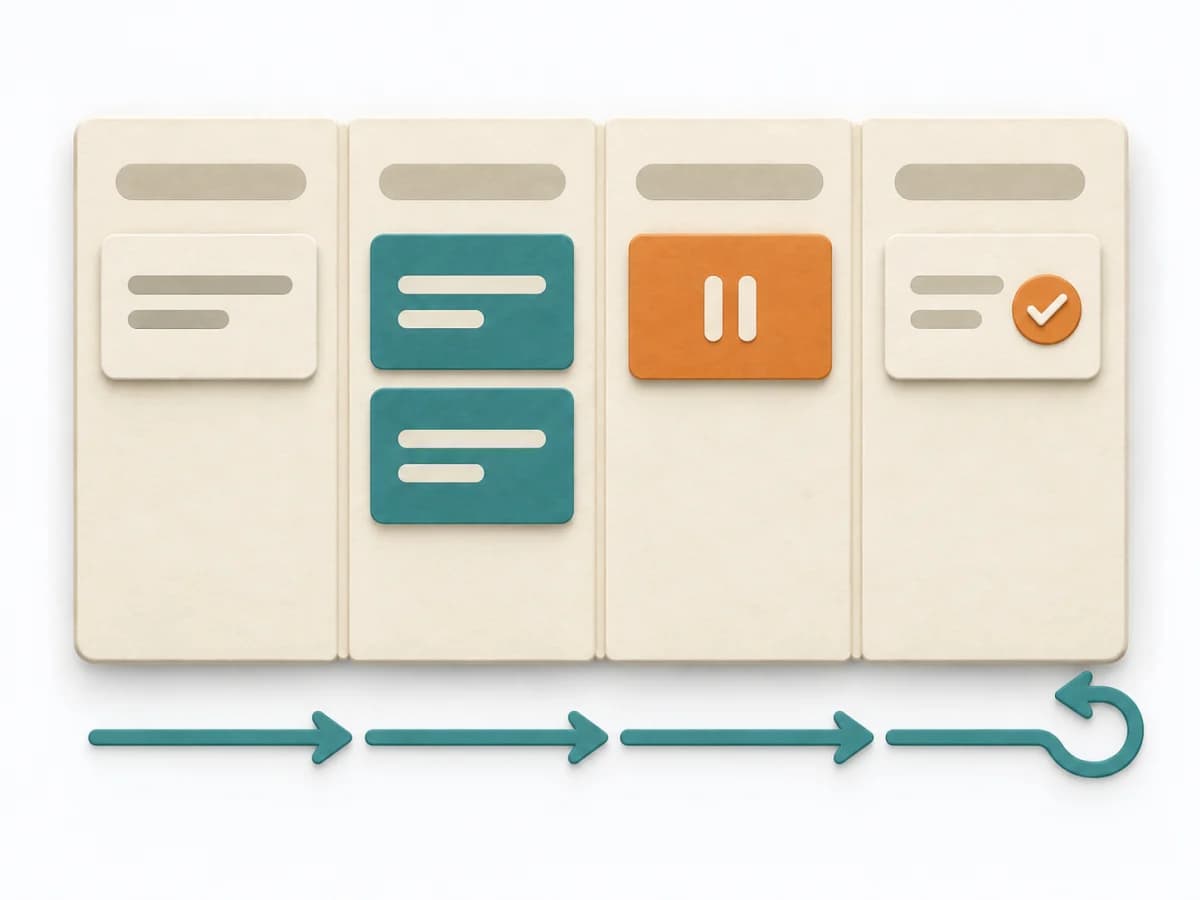 Engineering Kanban | 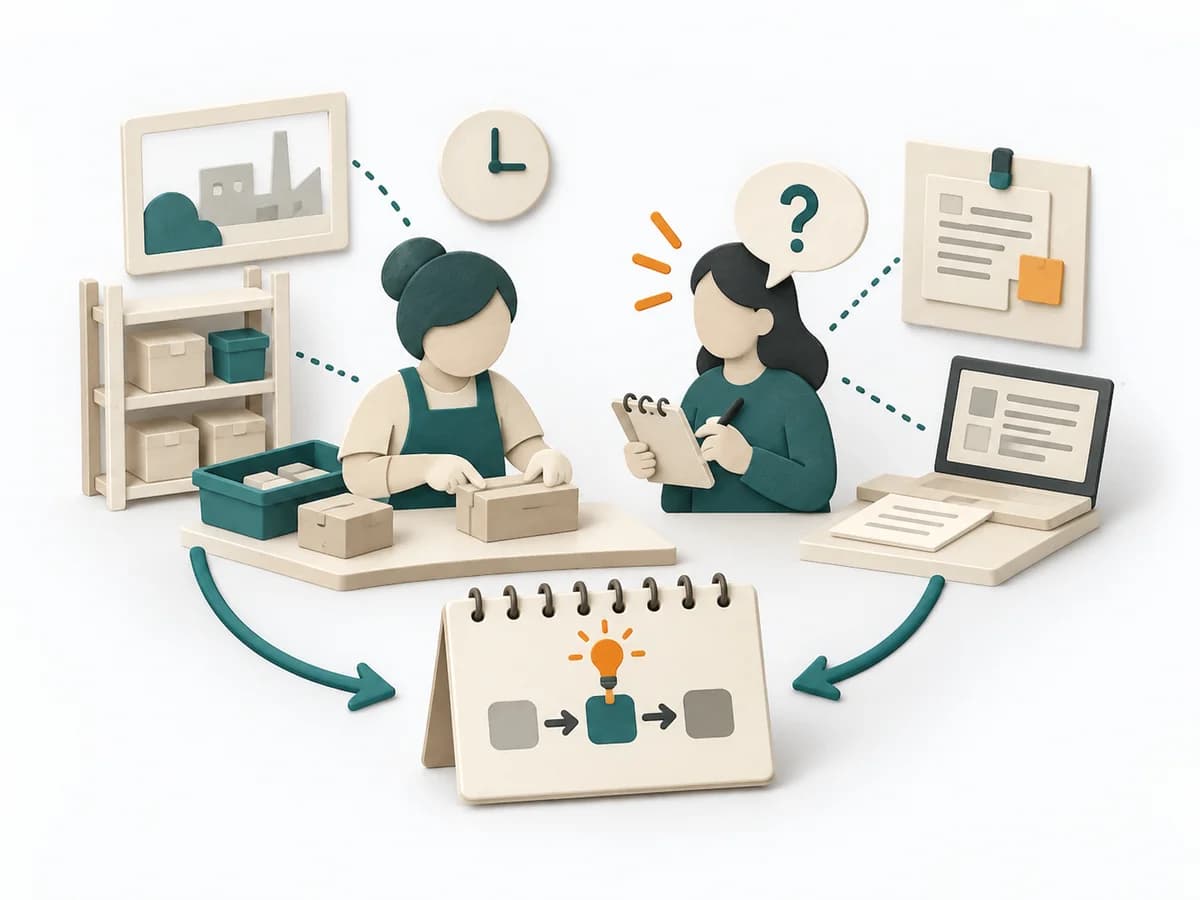 UX Research Contextual Inquiry | 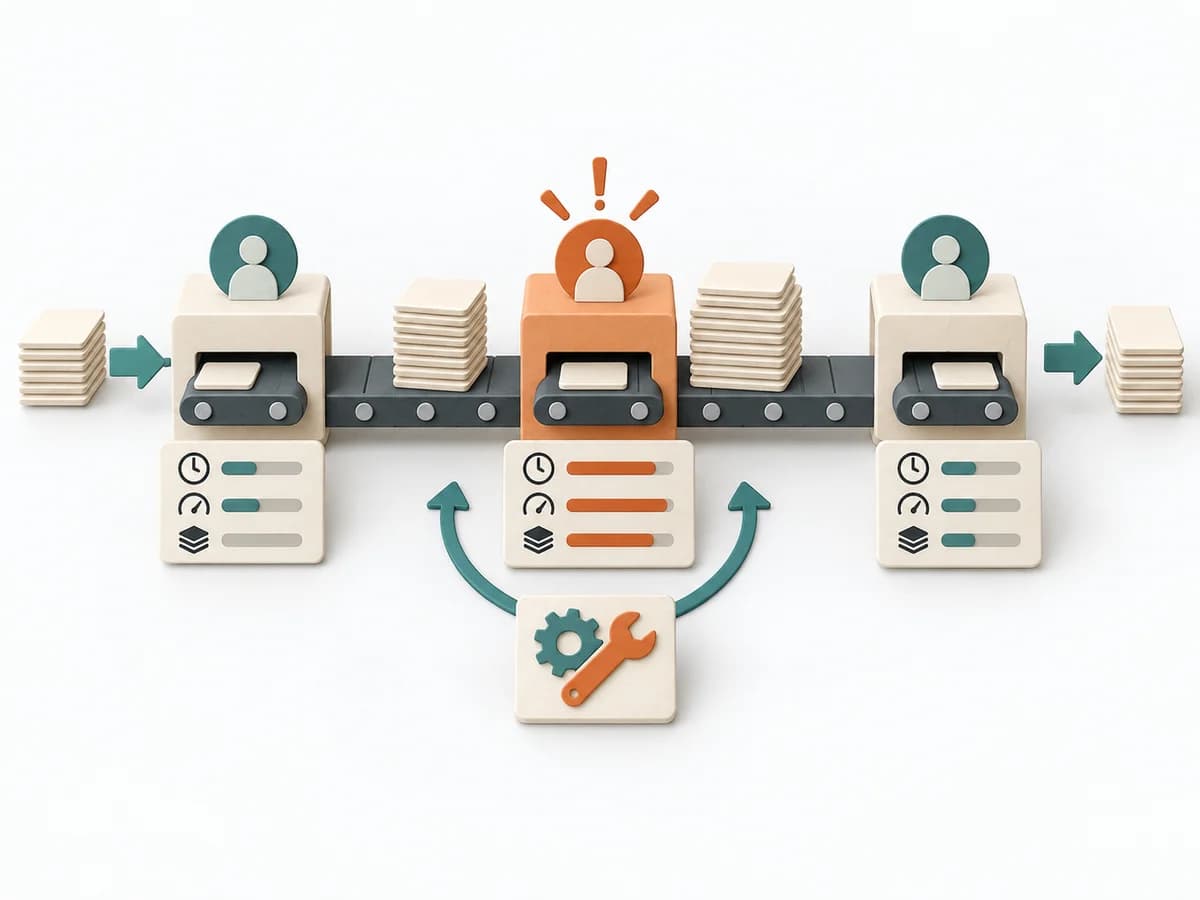 Operations Bottleneck Analysis | 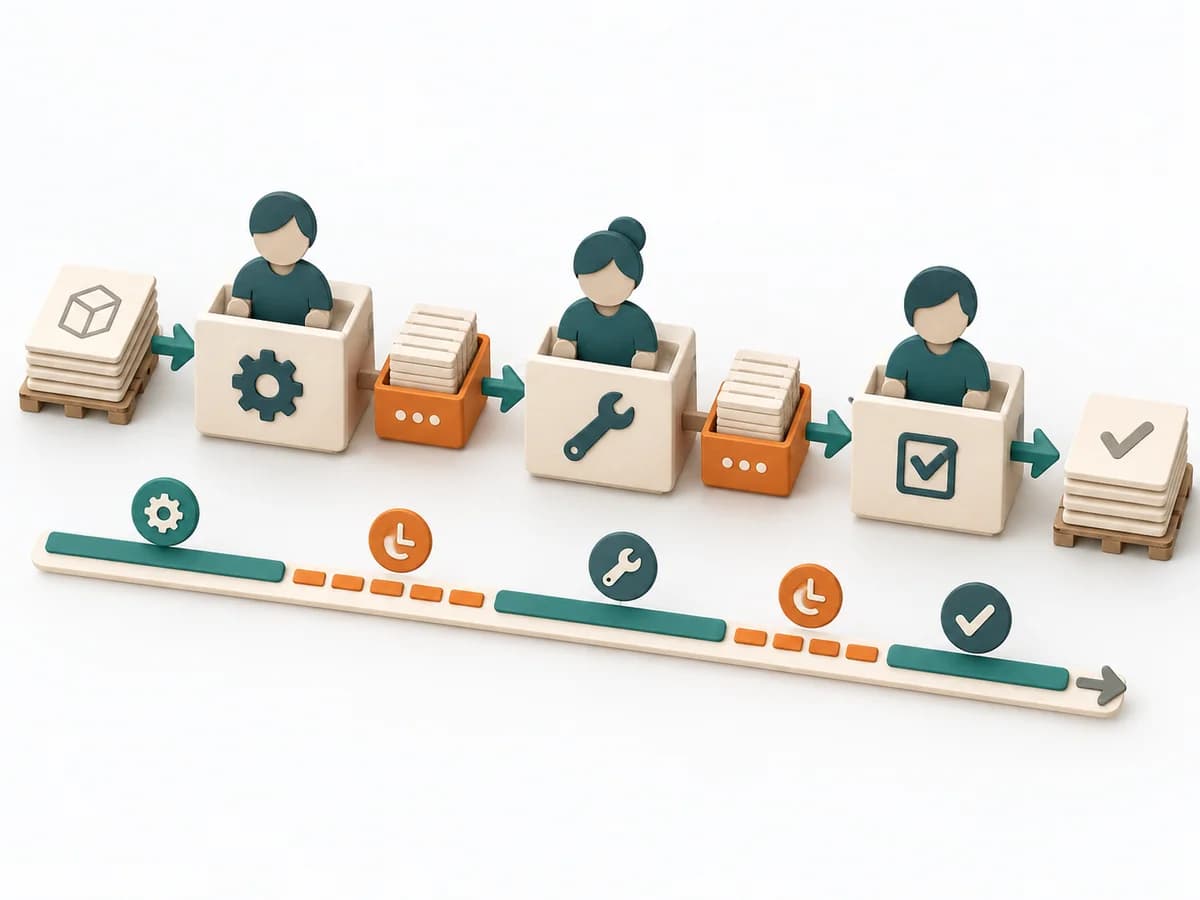 Delivery Value Stream Mapping |
|---|---|---|---|---|
Purposedifferent | When work sits in too many parallel streams, throughput suffers and no one sees the bottlenecks. Kanban makes the flow of work visible and limits overload so a system becomes calmer and more predictable. | When work processes are known only from accounts and the real context stays hidden, Contextual Inquiry makes behavior at the workplace visible. Observation and follow-up questions together show how people actually work, get interrupted, and improvise. | For a flow that backs up at one point, the method looks for the capacity limit with the greatest leverage. It explains why extra effort elsewhere barely improves throughput. | When delivery work dissolves into wait times, handoffs, and hidden effort, Value Stream Mapping makes the actual flow visible. The method exposes bottlenecks, idle time, and feedback loops so lead time and improvement levers become tangible. |
Complexitysame | Medium | Medium | Medium | Medium |
Timedifferent | Ongoing | 1-3 Wochen | 1-3 h | 1-3 h |
Participantsdifferent | 2-12 | 4-12 Beobachtungen | 3-8 | 4-10 |
Formatdifferent | Workshop + async | Workshop + async | Workshop + async | Workshop |
Outputdifferent | Kanban board, WIP policies, Flow metrics | Field Notes, Workflow Insights, Pain Points | Bottleneck Map, Flow Metrics, Improvement Options, Follow-up Measures | Current-state map, Future-state map, Bottleneck list |
Tagsno overlap | FlowVisual managementDelivery | UX researchObservationContext | FlowMeasurementConstraints | LeanFlowWasteDelivery |