View methods side by side.
Choose up to four methods. Add them using the search and share the comparison by copying its link.
| Criterion | 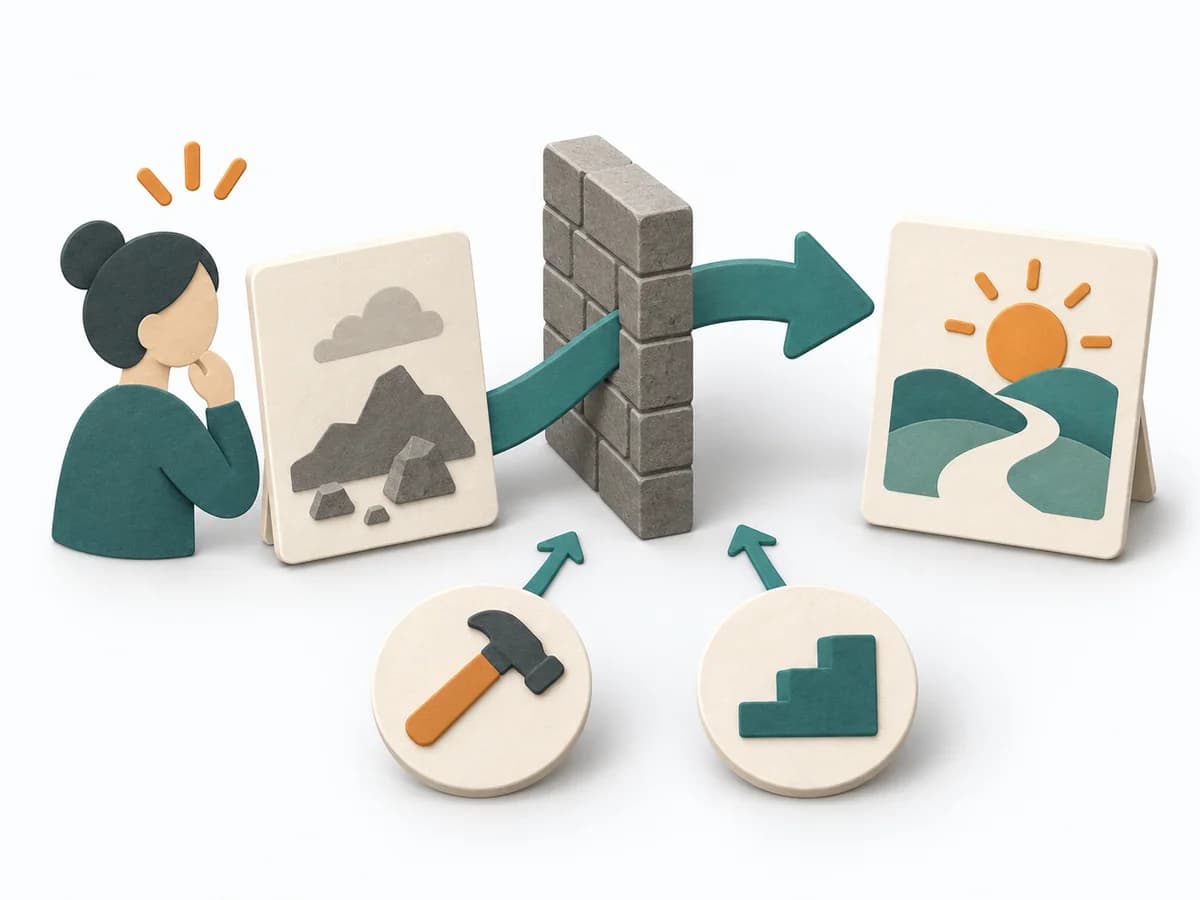 Product Discovery Jobs to Be Done | 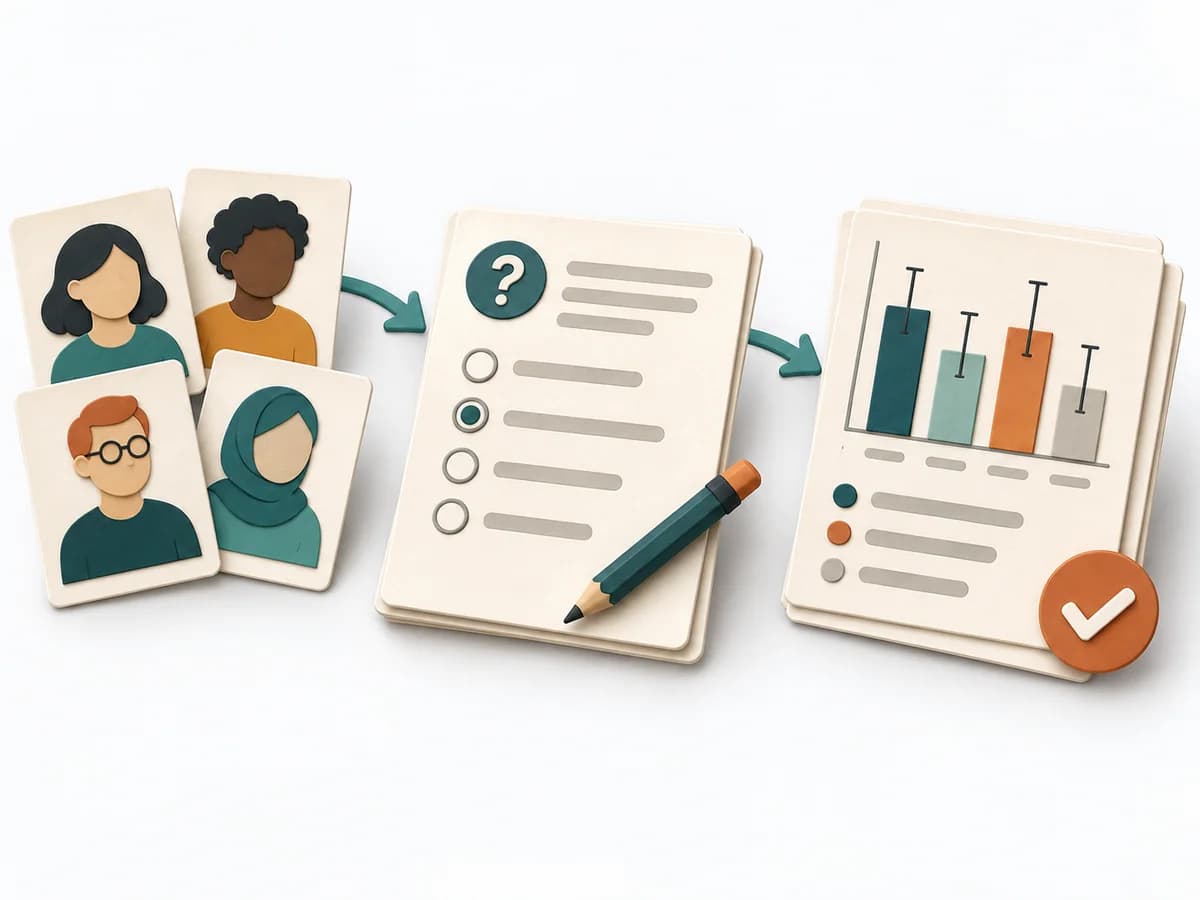 UX Research Surveys | 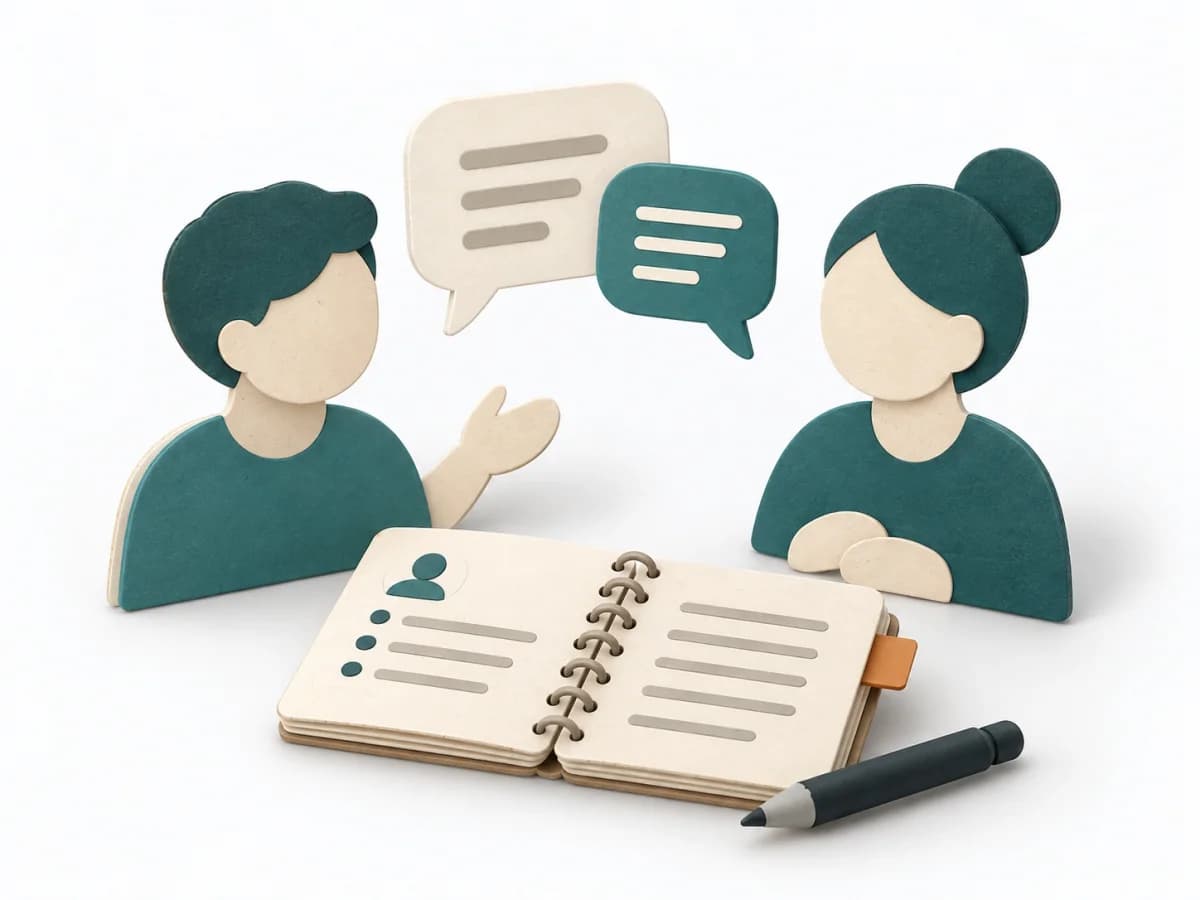 UX Research User Interviews | 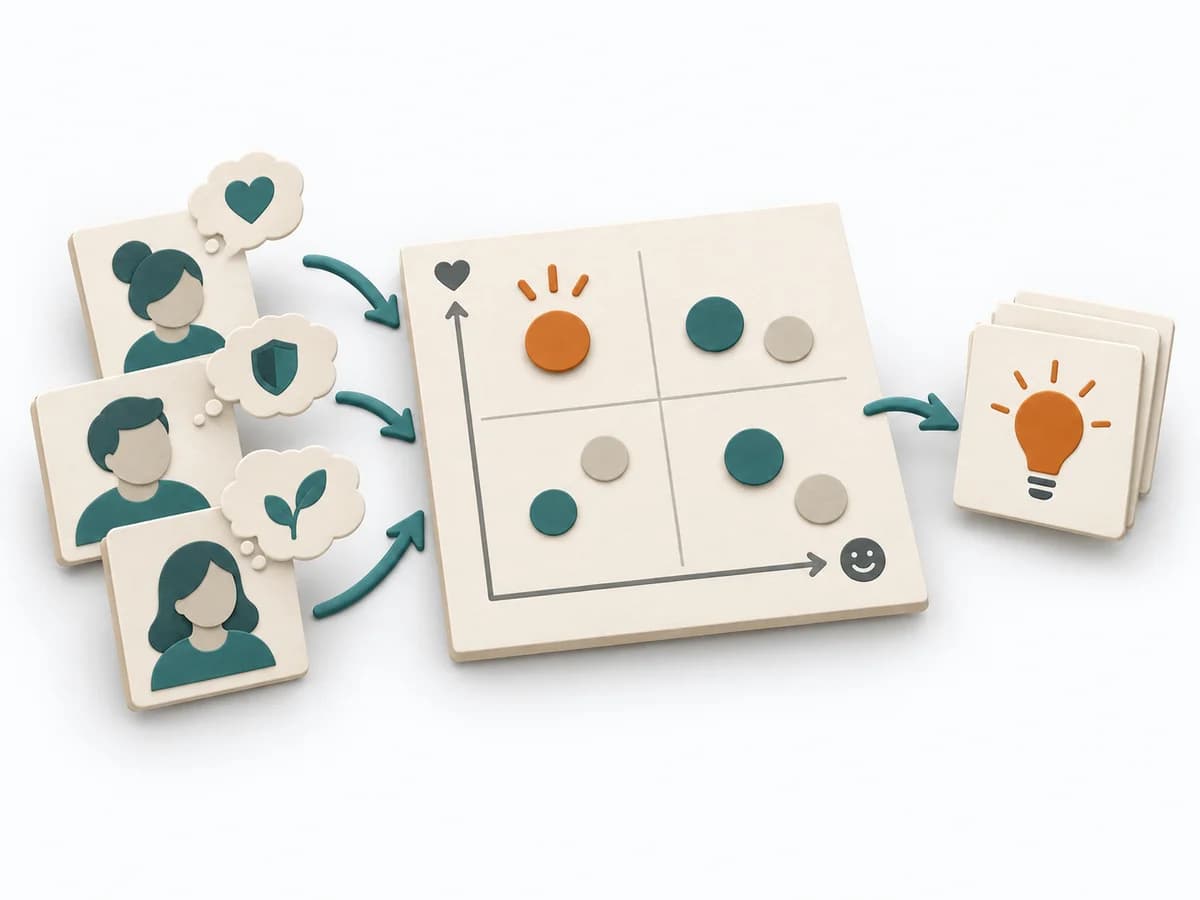 Product Discovery Outcome-Driven Innovation |
|---|---|---|---|---|
Purposedifferent | When switching motives and progress are unclear, it reconstructs the situation from real customer circumstances. It shows why a switch happens and what kind of progress is being sought. | When a topic needs to be validated broadly and many people can answer the same question, surveys gather structured feedback in a scalable form. Answers become comparable and segmentable instead of remaining merely anecdotal. | When teams derive needs only from assumptions and real motives are missing, user interviews give direct access to behavior and meaning. Conversations from the target group's everyday life make patterns, tensions, and open questions solidly visible. | Outcome-Driven Innovation clarifies customer problems, solution opportunities, and evidence. It separates jobs, desired outcomes, importance, satisfaction, and opportunity, and captures results as desired outcome statements, an opportunity landscape, and segments by underserved needs. |
Complexitydifferent | Medium | Medium | Low | High |
Timedifferent | 1-3 Wochen | 3-14 Tage | 30–60 min per interview | Mehrere Wochen |
Participantsdifferent | 5-12 Interviews | 50+ | 1 participant per interview | 2-6 researchers plus sample |
Formatdifferent | Workshop + async | Async | Workshop + async | Workshop + async |
Outputdifferent | Job Stories, Outcome Statements, Opportunity List | Survey Results, Charts, Segment Insights | Interview Notes, Themes, Insight Summary | Desired outcome statements, Opportunity landscape, Segmentation by underserved needs, Innovation hypotheses |
Tagsno overlap | CustomerOutcomesNeeds | QuantitativeResearchValidation | QualitativeResearchCustomerDiscovery | OutcomesInnovationResearchQuantitative |