View methods side by side.
Choose up to four methods. Add them using the search and share the comparison by copying its link.
| Criterion |  UX Research Customer Journey Mapping | 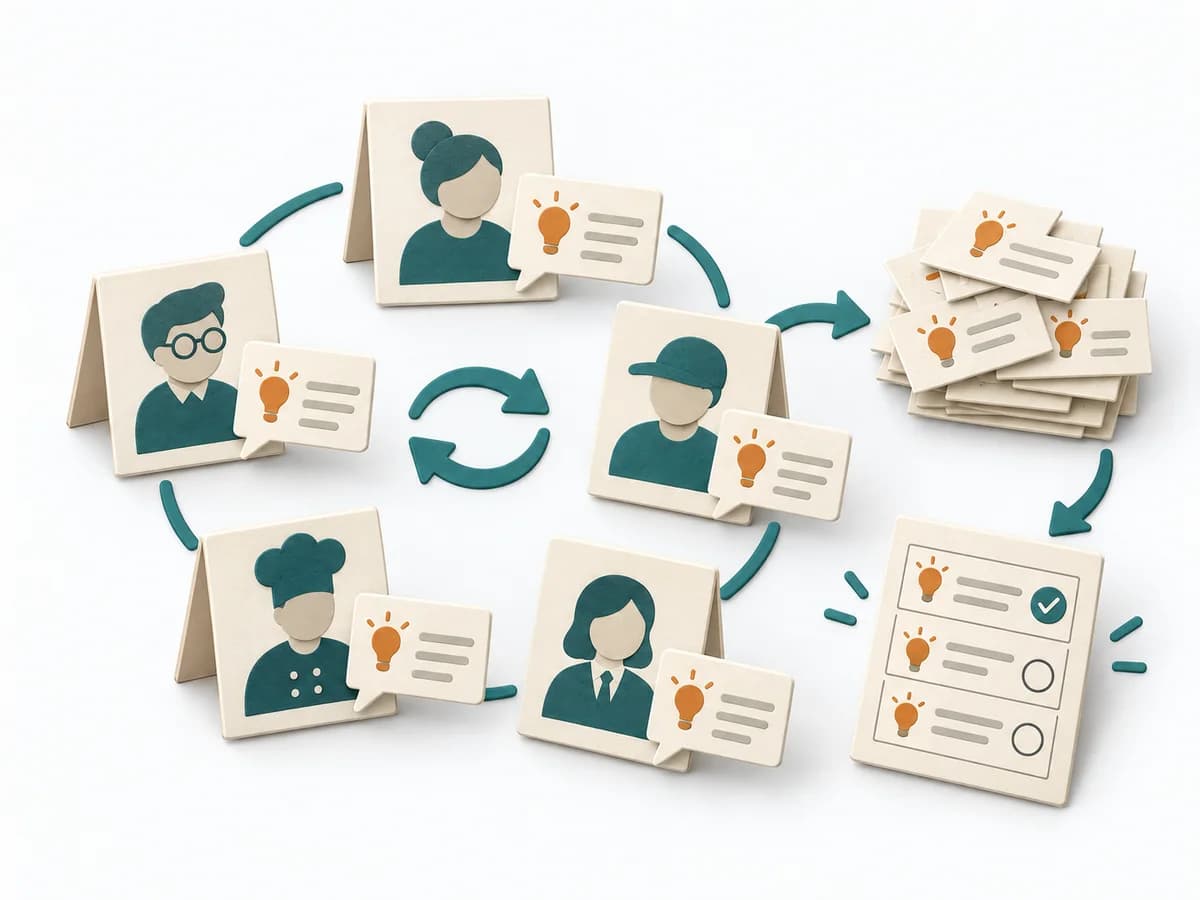 Innovation Rolestorming | 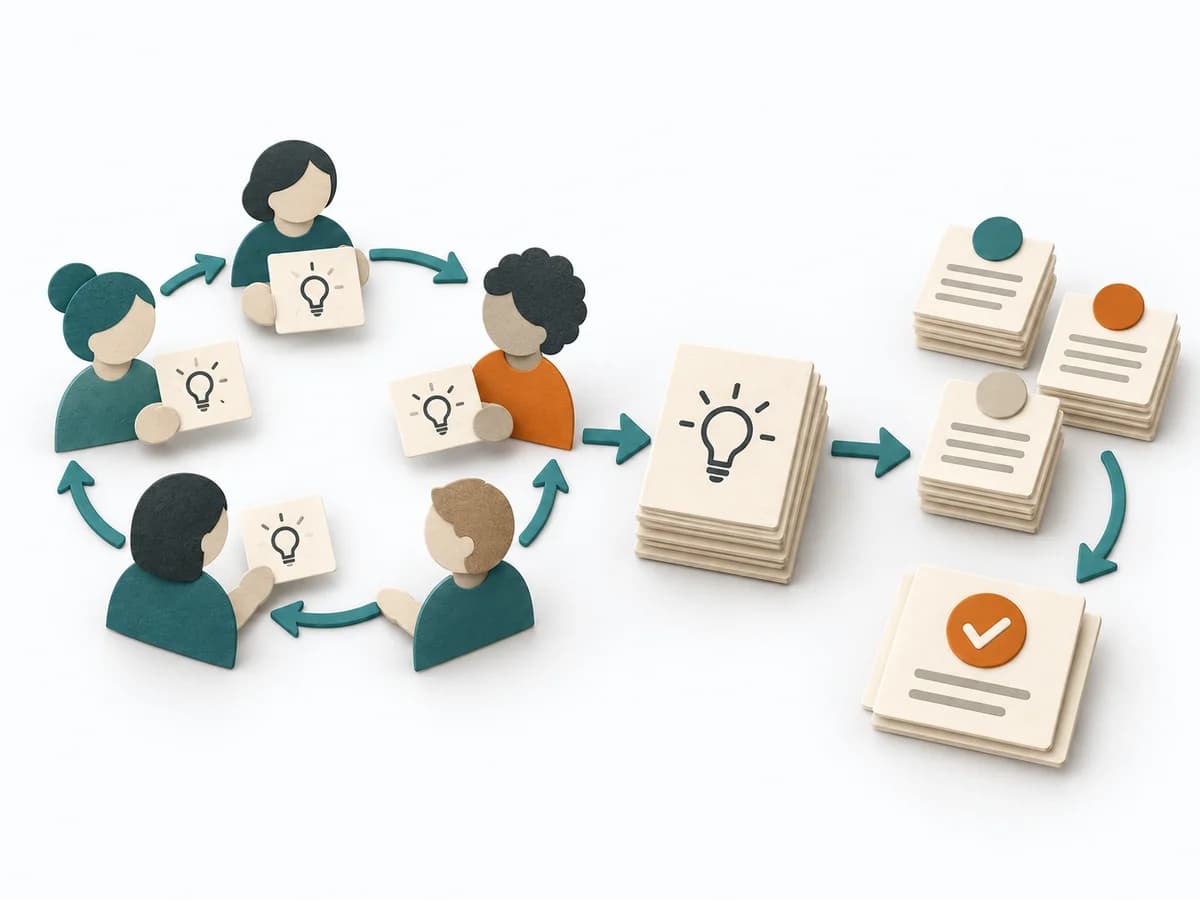 Innovation Round Robin Brainstorming |  Innovation Lotus Blossom |
|---|---|---|---|---|
Purposedifferent | When a user journey falls apart across many touchpoints, customer journey mapping makes the experience visible as a coherent arc. Phases, emotions, and breaks become legible enough to prioritize critical moments deliberately. | When a search for ideas stalls, switching roles helps people step outside their own perspective and activate new logics of action. The method reduces habit because contributions arise from a different stance. This brings unfamiliar, often fitting solution approaches into play. | With unevenly distributed speaking time, the method brings every person into the contribution one after another. It prevents early voices from setting the direction while still producing a shared idea space. This makes participation plannable and the team's diversity visible. | When a central question feels too large, the method breaks it into neighboring topic fields with their own depth of ideation. It holds structure and openness at the same time, so adjacent perspectives don't get lost. This grows an idea space out of a core problem. |
Complexitydifferent | Medium | Low | Low | Low |
Timedifferent | 2-4 h | 30-60 min | 20-45 min | 45-90 min |
Participantsdifferent | 4-10 | 3-12 | 4-10 | 3-10 |
Formatsame | Workshop | Workshop | Workshop | Workshop |
Outputdifferent | Journey Map, Pain-point List, Opportunity Backlog | Rollenkarten, Ideenpool pro Rolle, Konsolidierte Shortlist | Idea List, Cluster, Shortlist | Lotus Diagram, Idea Themes, Shortlist |
Tagsno overlap | JourneyServiceService design | BrainstormingIdeationCreativity | BrainstormingIdeationFacilitationInclusionCreativity | BrainstormingIdeationCreativityDivergenceWorkshop |