View methods side by side.
Choose up to four methods. Add them using the search and share the comparison by copying its link.
| Criterion | 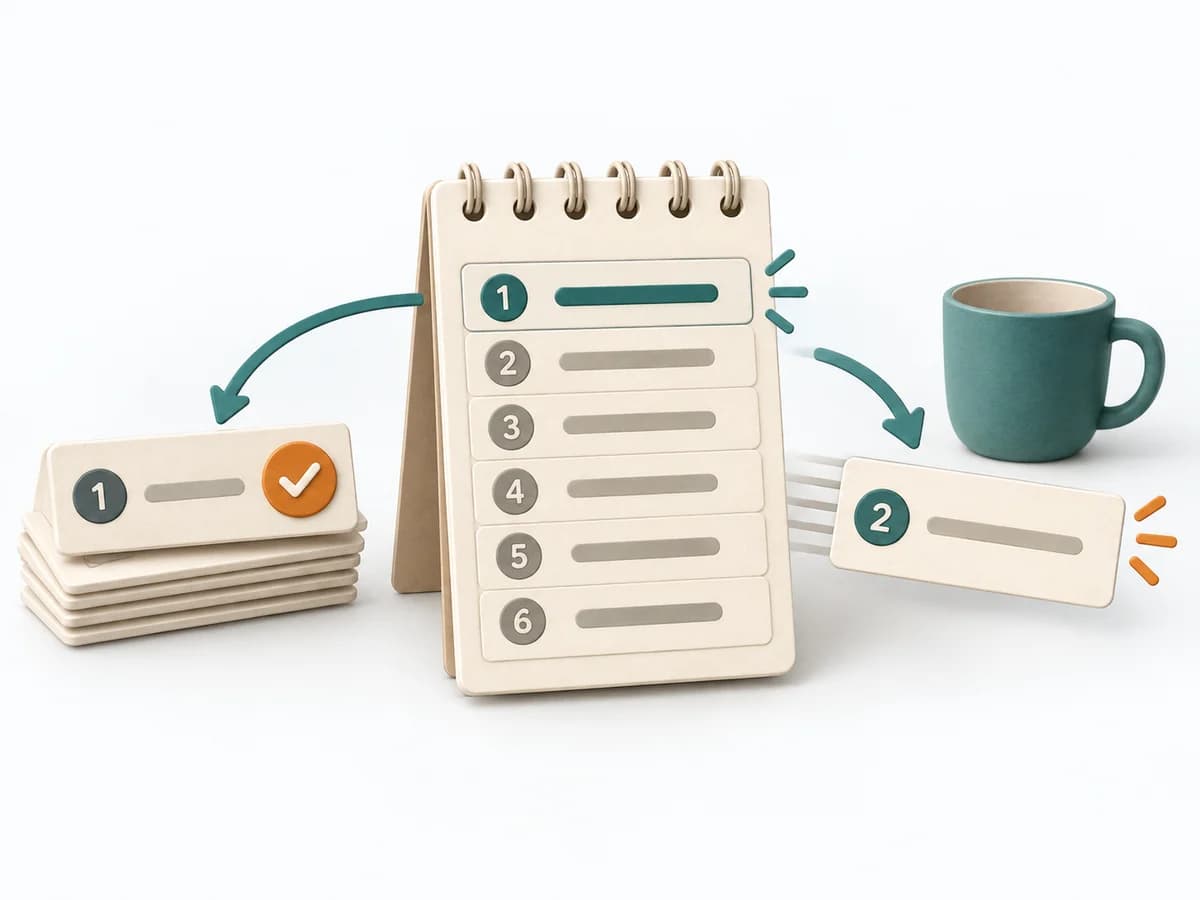 Operations Ivy Lee Method |  Operations Pomodoro Technique |  Facilitation Stakeholder Mapping |  Facilitation Power Interest Grid |
|---|---|---|---|---|
Purposedifferent | With a restless workday full of too many open items, the method creates radical simplicity. It directs attention to a short sequence instead of a broad, still-open field. | For easily distracted solo work, the method sets clear time boundaries for concentrated work. It protects attention when large tasks would otherwise fall apart into small avoidance moves. | When an initiative depends on many people, interests, and power dynamics, Stakeholder Mapping systematically orders the environment. It shows who influences, who is affected, and where relationship management or safeguarding matters first. | When many stakeholders compete for attention at once, the Power Interest Grid sorts them by influence and stake. It turns individual contributions into a visible selection. The result is captured as a Power Interest Grid and a stakeholder-specific strategy. |
Complexitysame | Low | Low | Low | Low |
Timedifferent | 5-10 min daily | 25 min Zyklen | 60–90 min | 30-60 min |
Participantsdifferent | 1 | 1 | 2-8 | 2-8 |
Formatdifferent | Async | Async | Workshop + async | Workshop |
Outputdifferent | Daily Priority List, Completion Notes | Focus Sessions, Task Progress, Interruption Notes | Stakeholder Map, Engagement Plan, Risk Notes | Power Interest Grid, Strategy per Stakeholder |
Tagsno overlap | PrioritizationProductivityExecution | FocusTime managementProductivityExecution | StakeholdersAlignmentFacilitationChange | StakeholdersFacilitationAlignmentPlanning |