View methods side by side.
Choose up to four methods. Add them using the search and share the comparison by copying its link.
| Criterion |  Systems Thinking Intervention Mapping | 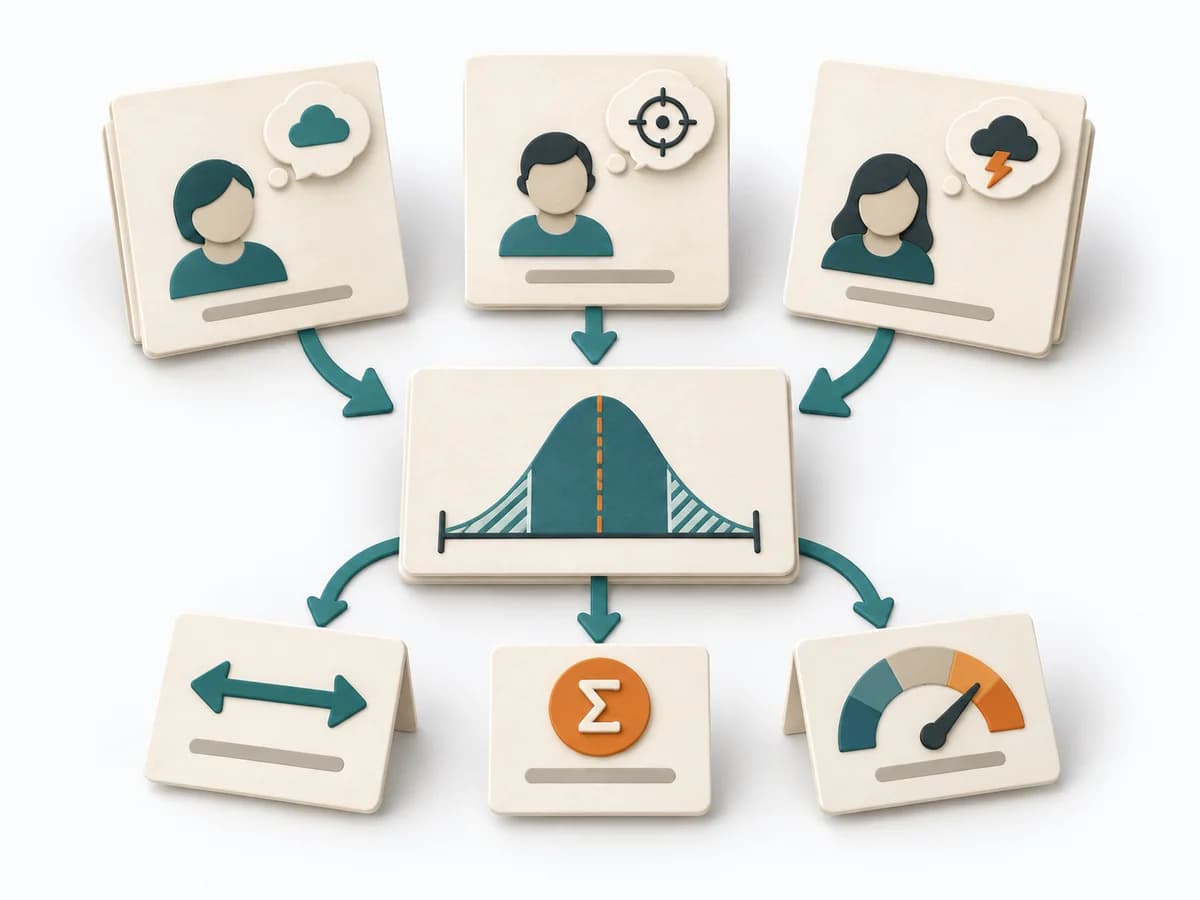 Decision Making Three-Point Estimation | 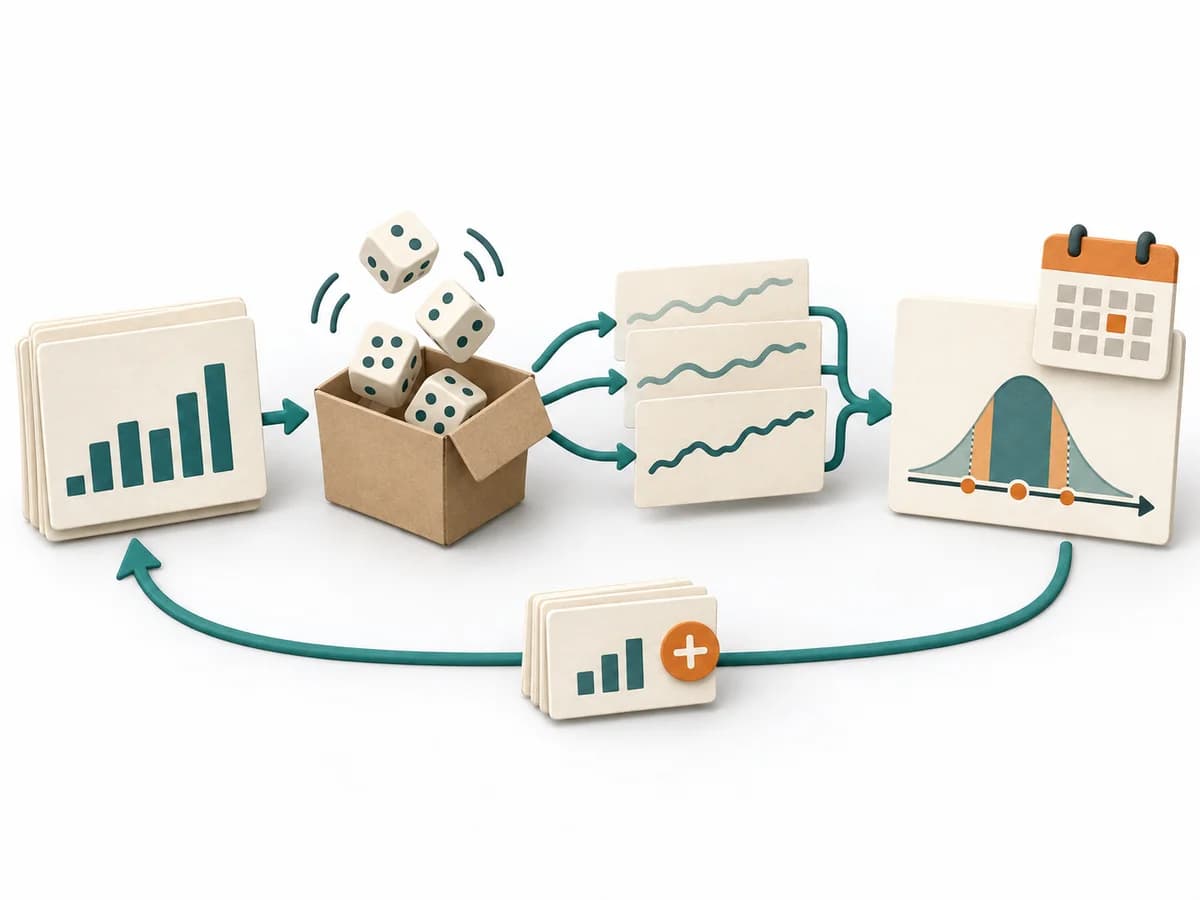 Delivery Monte Carlo Forecasting |  Systems Thinking Leverage Points |
|---|---|---|---|---|
Purposedifferent | Intervention Mapping translates a need for change into a planned, evaluable program. The method connects target group, determinants, actions, and measurement into a traceable chain. | A single estimate for effort, time, or risk often looks too smooth for the real uncertainty behind it. It separates options, evaluation criteria, and open risks. The result is captured as a Three-Point Estimate, Risk Range, and Assumption Notes. | Helps clarify scope, sequence, and delivery flow in concrete terms. It makes work, boundaries, and order steerable. The result is captured as Forecast Percentiles, Throughput Dataset, and Risk Communication. | Leverage Points show exactly where interventions in a system produce a disproportionate effect. It draws relationships, patterns, and feedback loops. The result is captured as a leverage map and action strategy. |
Complexitydifferent | High | Medium | High | High |
Timedifferent | 1-5 Tage | 10-30 min je Item | 30-90 min Setup, danach laufend | Half day |
Participantsdifferent | 4-12 | 1-8 | 1-8 | 3-12 |
Formatdifferent | Workshop + async | Workshop + async | Workshop + async | Workshop |
Outputdifferent | Logic Model, Change Objectives, Intervention Components, Evaluation Plan | Three-Point Estimate, Risk Range, Assumption Notes | Forecast Percentiles, Throughput Dataset, Risk Communication | Leverage Map, Action Strategy |
Tagsno overlap | ChangeSystems thinkingCapability | EstimationUncertaintyForecasting | ForecastingFlowDelivery | Systems thinkingChangeStrategy |