View methods side by side.
Choose up to four methods. Add them using the search and share the comparison by copying its link.
| Criterion |  DevOps Incident Command |  DevOps ChatOps | 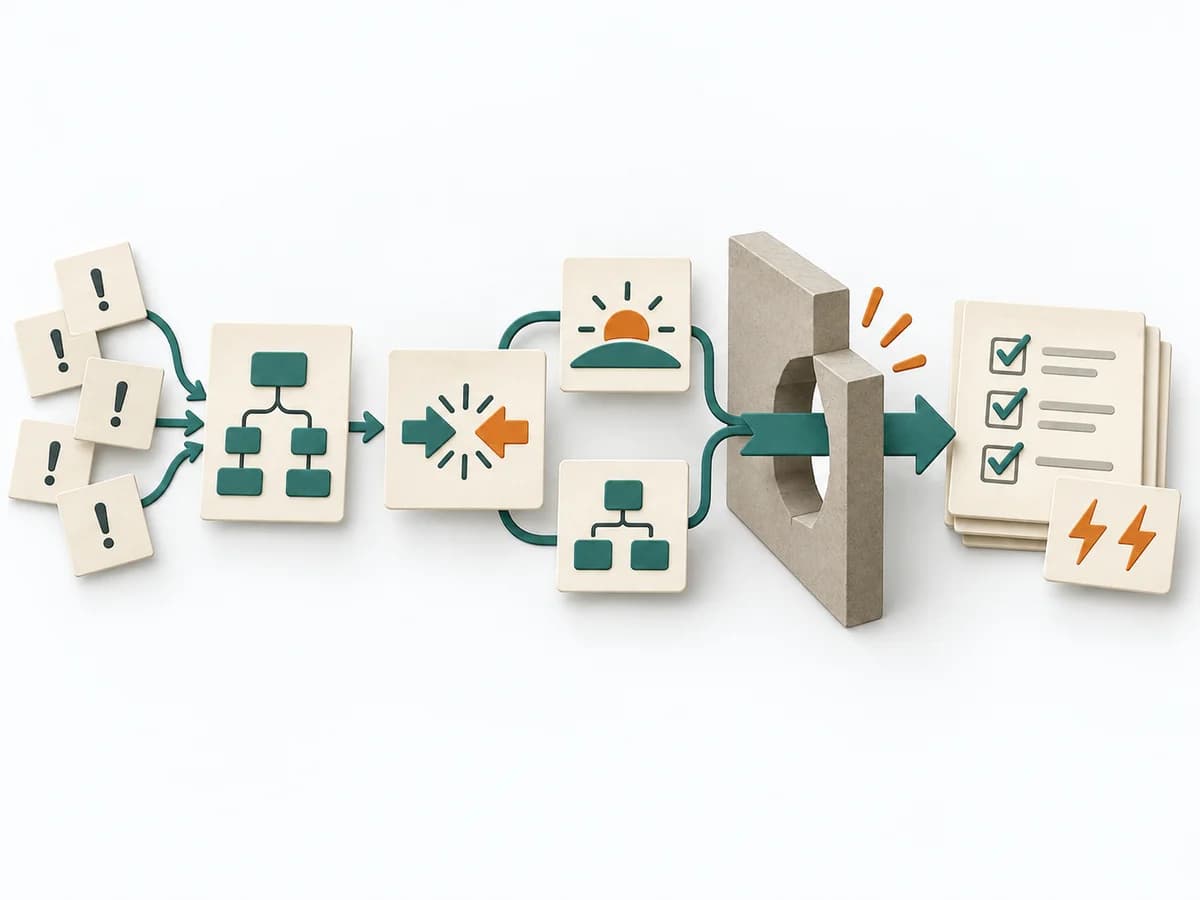 Systems Thinking Theory of Constraints Thinking Process |  Systems Thinking Causal Loop Diagram |
|---|---|---|---|---|
Purposedifferent | During an acute incident with several people involved, the method creates a clear leadership and communication structure. It reduces chaos when fast coordination and clean situational awareness are both needed at once. | For operational work in a distributed team, the method links communication with direct system control. It records decisions right where the signal, the context, and the execution come together. | The Theory of Constraints Thinking Process exposes a system's bottleneck and the logic behind it. It suits situations where many symptoms trace back to the same limiting relationship. | A Causal Loop Diagram makes feedback, reinforcement, and balance in a system legible. It uncovers side effects and self-reinforcement that stay hidden in linear explanations. |
Complexitydifferent | Medium | Medium | High | Medium |
Timedifferent | As needed | Ongoing | 0.5-3 Tage | 1-3 h |
Participantsdifferent | 4-15 | 2-20 | 4-10 | 2-8 |
Formatdifferent | Workshop + async | Workshop + async | Workshop | Workshop |
Outputdifferent | Incident Log, Action Tracker, Stakeholder Updates | Chat Transcript, Action Log, Automations | Current Reality Logic, Conflict Cloud, Future Reality Tree, Implementation Obstacles | Causal Loop Diagram, Feedback Notes, Leverage Points |
Tagsno overlap | IncidentOperationsReliability | CollaborationEngineeringIncident | Theory of ConstraintsConstraintsSystems thinkingCausality | FeedbackSystems thinkingCausalityDynamics |