View methods side by side.
Choose up to four methods. Add them using the search and share the comparison by copying its link.
| Criterion |  Knowledge Modeling IBIS | 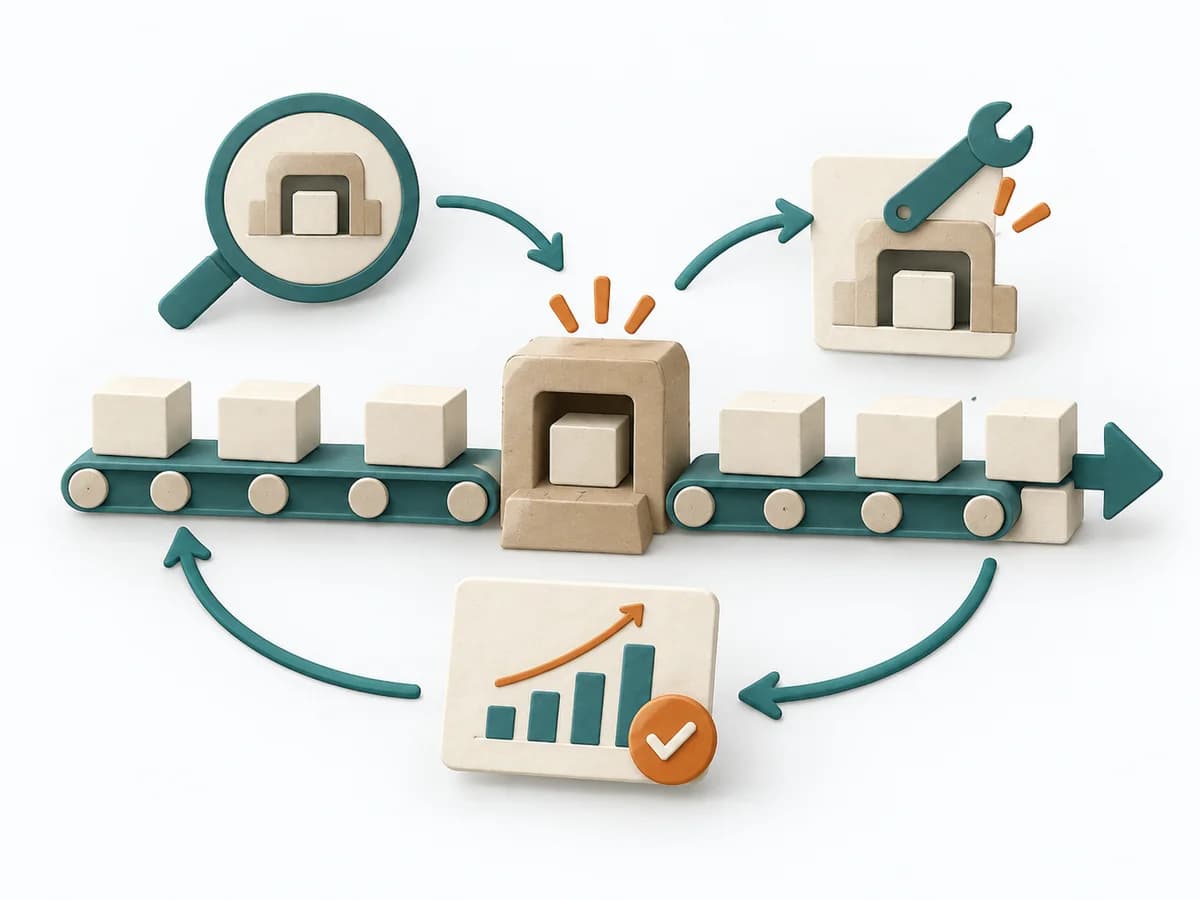 Operations Theory of Constraints |  Operations Bottleneck Analysis |  Operations Kepner-Tregoe |
|---|---|---|---|---|
Purposedifferent | IBIS structures thinking about complex questions as a sequence of issues, ideas, and arguments. The method keeps discussions open without forcing them into premature consensus. | For a system that does not get faster despite effort, the method directs attention to the bottleneck. It concentrates improvement on the point that actually limits throughput. | For a flow that backs up at one point, the method looks for the capacity limit with the greatest leverage. It explains why extra effort elsewhere barely improves throughput. | For a disturbance that's hard to pin down, the method cleanly separates problem, cause, and decision. It reduces mixing when symptoms allow several interpretations. |
Complexitydifferent | Medium | High | Medium | High |
Timedifferent | 1-3 h | 2-4 h Analyse, laufend | 1-3 h | 2-8 h |
Participantsdifferent | 2-8 | 3-12 | 3-8 | 2-8 |
Formatsame | Workshop + async | Workshop + async | Workshop + async | Workshop + async |
Outputdifferent | Issue Map, Positions, Argument Notes | Constraint Map, Improvement Plan, Flow Metrics | Bottleneck Map, Flow Metrics, Improvement Options, Follow-up Measures | Problem Analysis, Decision Analysis, Risk Plan |
Tagsno overlap | RationaleKnowledgeDecision | OperationsConstraintsFlowImprovement | FlowMeasurementConstraints | Problem solvingRoot causeDecisionOperations |