View methods side by side.
Choose up to four methods. Add them using the search and share the comparison by copying its link.
| Criterion |  Knowledge Modeling IBIS | 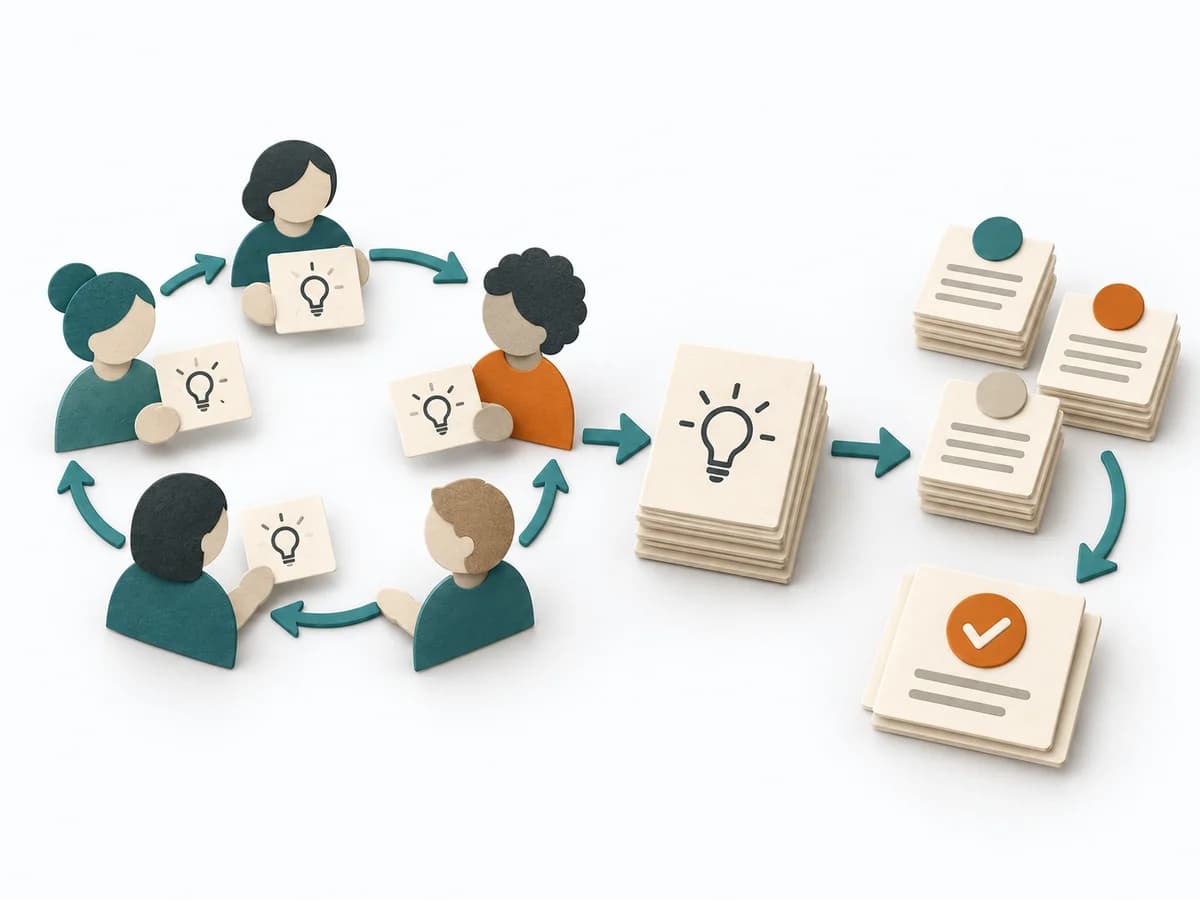 Innovation Round Robin Brainstorming | 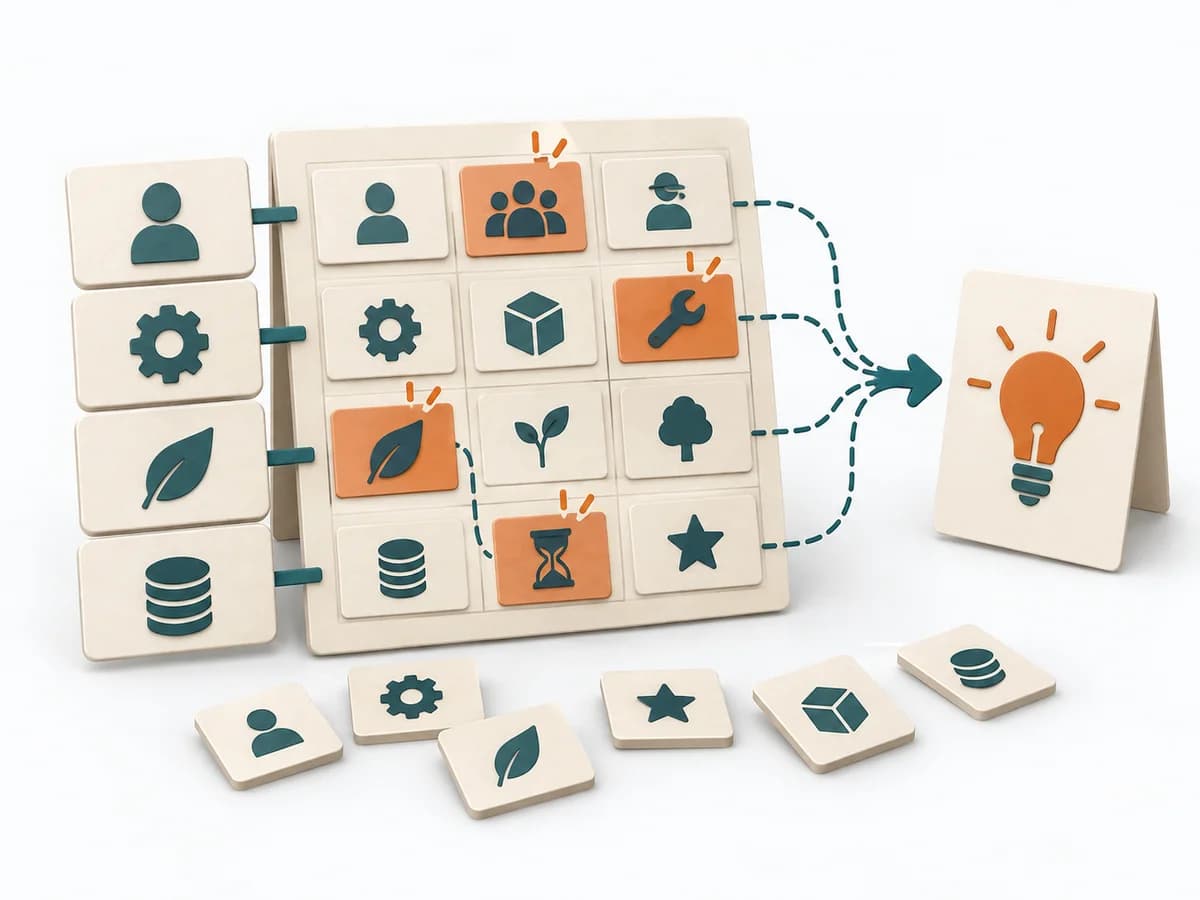 Innovation Morphological Analysis |  Facilitation 1-2-4-All |
|---|---|---|---|---|
Purposedifferent | IBIS structures thinking about complex questions as a sequence of issues, ideas, and arguments. The method keeps discussions open without forcing them into premature consensus. | With unevenly distributed speaking time, the method brings every person into the contribution one after another. It prevents early voices from setting the direction while still producing a shared idea space. This makes participation plannable and the team's diversity visible. | For a search for solutions with many degrees of freedom, a grid emerges for systematic combinations. The method separates features, variants, and exclusion criteria, so the space gets explored deliberately. | When many people in a group too rarely get to speak, 1-2-4-All distributes thinking time more fairly. The format builds participation step by step and makes quiet or still-unformed thoughts usable faster. |
Complexitydifferent | Medium | Low | Medium | Low |
Timedifferent | 1-3 h | 20-45 min | 1-3 h | 10-20 min |
Participantsdifferent | 2-8 | 4-10 | 2-8 | 4-100+ |
Formatdifferent | Workshop + async | Workshop | Workshop + async | Workshop |
Outputdifferent | Issue Map, Positions, Argument Notes | Idea List, Cluster, Shortlist | Morphological Box, Concept Combinations, Idea Shortlist | Idea List, Shared Insights, Emergent Themes |
Tagsno overlap | RationaleKnowledgeDecision | BrainstormingIdeationFacilitationInclusionCreativity | IdeationInnovationCreativity | FacilitationInclusionIdeation |